Last updated: 2026-11-19
Engine & powertrain
Hyundai Elantra Engine Problems
Hyundai Elantra engine problems center on 2018 to 2020 cars: heavy oil use, knocking, then a stall or a seized engine, often with no warning light.
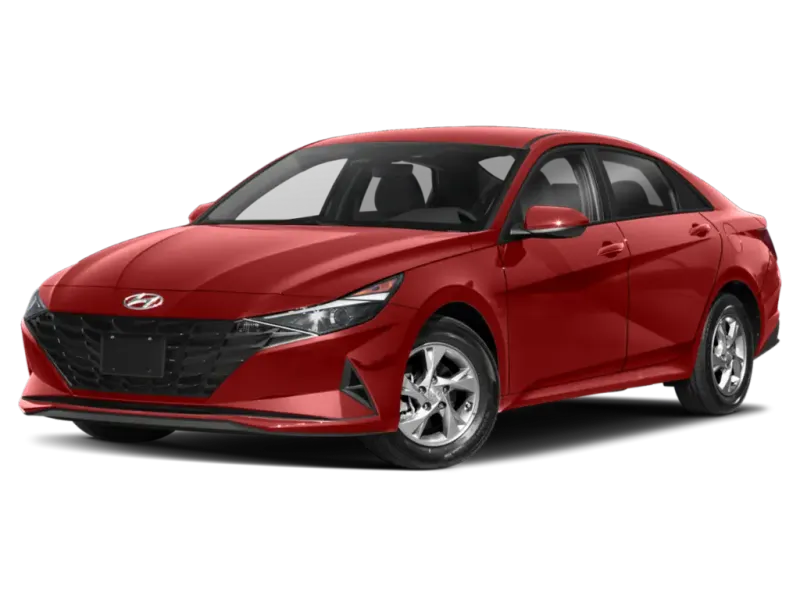
- Owner complaints
- 455
- Share of all complaints
- 31%
- Crash / fire / injury reports
- 7 / 9 / 4
- Related recalls
- 2
Hyundai Elantra engine complaints by model year
The 2018, 2019, and 2020 model years carry most of the engine complaints, with 149, 138, and 106. The 2020 year has the highest rate per vehicle sold. The 2021 through 2023 years have far fewer, between 12 and 22 each, and 2024 and 2025 have only a handful. Newer years have had less time on the road to collect complaints, so low counts there do not prove they are safer. The 2026 year has none yet, which says little. Even so, stalling shows up in every year from 2021 to 2025.
| Model year | Complaints | Per 10,000 sold | Crash, fire, injury reports |
|---|---|---|---|
| 2018 | 149 | 7.4 | 1, 4, 0 |
| 2019 | 138 | 7.9 | 2, 0, 1 |
| 2020 | 106 | 10 | 3, 3, 2 |
| 2021 | 17 | 1.3 | 0, 0, 0 |
| 2022 | 12 | 1 | 0, 1, 0 |
| 2023 | 22 | 1.6 | 0, 0, 0 |
| 2024 | 7 | 0.5 | 0, 1, 0 |
| 2025 | 4 | 0.3 | 1, 0, 1 |
| 2026 | 0 | n/a | 0, 0, 0 |
Owner complaints filed with NHTSA under engine, engine and engine cooling. Newer model years have had less time to collect complaints.
What goes wrong
Engine complaints make up 455 of the 1464 filed on this model, about 31%. The worst reports describe a car that burns oil, starts to knock or tick, then shuts off while driving. Owners often say no oil light or check engine light came on first. Dealers have found metal in the oil, and some engines had to be replaced.
The risk is real. A stall at highway speed or in traffic leaves the driver coasting with little control, and several owners say they nearly got hit. Complaints include crashes, injuries, and engine fires, some with smoke from the hood and flames under the car. One owner reports carbon monoxide in the cabin. Many cars end up undrivable, and owners say dealers sometimes refuse to cover the engine once the car is out of warranty, with quotes over $6,000.
Symptoms owners report
Sudden stall while driving
The engine shuts off at speed or in traffic, often with no warning light. Some cars restart and some do not. Owners describe coasting in highway lanes and being pushed through intersections. This pattern appears in every model year from 2018 to 2025.
Heavy oil consumption
Owners report the oil level dropping between changes, in some cases to nearly dry within 3,500 miles, with no low oil warning. Several say they checked and topped off oil often and still lost the engine. Oil use shows up early in the 2020 reports.
Knocking, ticking, or rattling
A knock, tick, or chain-like rattle often comes before failure. One owner heard knocking a week after buying a 2020 car. Others report a metallic rattle under hard acceleration with heavy exhaust smoke. Dealers sometimes could not reproduce the noise.
Seized engine with metal debris
Some engines fail outright. Reports include metal in the oil, chunks of aluminum on the road, a thrown rod, failed rod bearings, and a piston scarring a cylinder wall. The result is usually a tow and a replacement engine.
Limp mode and power loss
The car loses power, drops into limp mode, or will not go faster than 10 to 25 mph. Check engine lights return after dealer resets. Misfires and rough idle show up in some cars before the power loss.
Engine compartment fire
Fire reports describe smoke and flames from under the hood, some while driving and some in parked, unoccupied cars. One 2024 car was a total loss. Fire complaints appear in 2018, 2020, 2022, and 2024 filings.
When the problems start
Failures start earlier than many buyers expect. Oil use shows up from about 20,000 miles on 2020 cars. Engine failures in 2018 reports cluster between roughly 33,000 and 77,000 miles, and 2019 reports range from 34,000 to 126,000. Some 2020 failures fall between 41,000 and 101,000. A few owners report problems far later, with an engine giving out at 183,000 miles. A couple of newer cars failed under 10,000 miles.
Repairs and recalls
Many owners report a dealer visit that ends with a reset check engine light, a sensor replacement, or a request to return after another 1,000 miles. New ignition coils and a software update did not always cure misfires. Engine replacement is the fix when an engine fails. Some owners got it free under warranty, while others report refusals and quotes over $6,000. Recall 21V301000 covers certain 2019 and 2020 Elantras with 2.0L Nu MPI engines because piston oil rings may not have been properly heat-treated. Dealers inspect and replace the engine if necessary, free of charge, and add Piston Ring Noise Sensing System software. Recall 24V308000 covers certain 2024 Elantras for an EGR valve short that can cause loss of drive power. The fix is a replacement EGR valve assembly.
| Model years | Campaign | Problem |
|---|---|---|
| 2024 | 24V308000 | Hyundai Motor America (Hyundai) is recalling certain 2024 Elantra, Venue, and Kona vehicles. An electrical short circuit may occur in the exhaust gas recirculation (EGR) valve assembly, which can result in a loss of… |
| 2019, 2020 | 21V301000 | Hyundai Motor America (Hyundai) is recalling certain 2019-2020 Elantra, 2019-2021 Kona and Veloster vehicles equipped with 2.0L Nu MPI engines. The piston oil rings may not have been properly heat-treated, which could… |
Checking a used Elantra for engine problems
- Enter the VIN on Hyundai's recall lookup and confirm recall 21V301000 or 24V308000 work was completed, especially on 2019, 2020, and 2024 cars.
- Ask for service records showing oil changes and any oil consumption tests, and walk away if the seller cannot show them.
- Check the oil level on a cold engine, then again after a long test drive. A visible drop is a warning sign.
- Listen at idle and under hard acceleration for knocking, ticking, or a chain-like rattle, and watch for heavy exhaust smoke.
- Ask whether the engine was ever replaced and get the paperwork, including remaining powertrain warranty coverage.
- Look for dashboard warning lights, rough idle, or a stall during the test drive, and have an independent mechanic inspect the car before you buy.
For the rest of the car, use a full Hyundai Elantra inspection checklist.
2 engine recalls cover the Hyundai Elantra. A VIN check shows whether the car you're looking at had its recall work done, plus accident and title history.
Hyundai Elantra Engine Problems: common questions
- Which Elantra years have the most engine problems?
- The 2018, 2019, and 2020 model years lead, with 149, 138, and 106 engine complaints. The 2020 year has the highest rate per vehicle sold. Later years have far fewer complaints, but they have had less time to collect them, so that is not proof they are trouble-free.
- Is it safe to drive an Elantra with engine knocking or oil loss?
- Owners describe engines that failed without any warning light, including on highways and in traffic. A knock or fast oil loss is a sign to stop and have the car inspected. Driving on it risks a sudden stall or engine damage.
- Does a recall cover Elantra engine failure?
- Recall 21V301000 covers certain 2019 and 2020 Elantras with 2.0L Nu MPI engines. Dealers inspect and replace the engine if necessary, free of charge. Recall 24V308000 covers certain 2024 cars for an EGR valve problem. Check the VIN to see if your car is included.
- How much does an Elantra engine replacement cost?
- Some owners got a replacement engine free under warranty. Others report being refused and quoted over $6,000. Independent repair-cost data puts the model's overall annual repair cost at $452, but that figure does not reflect an engine failure.
- At what mileage do Elantra engines fail?
- Reports include failures between about 33,000 and 77,000 miles on 2018 cars, 34,000 to 126,000 on 2019 cars, and 41,000 to 101,000 on 2020 cars. Oil use on 2020 cars shows up from about 20,000 miles. One owner reports an engine giving out at 183,000 miles.
Other Hyundai Elantra problems
More on the Hyundai Elantra
See incorrect data? Report an issue