Last updated: 2026-11-19
Brakes, steering & tires
GMC Terrain Brake Problems
GMC Terrain brake failures most often point to a failed vacuum pump: the pedal goes rock hard and the SUV barely slows, often with no warning.
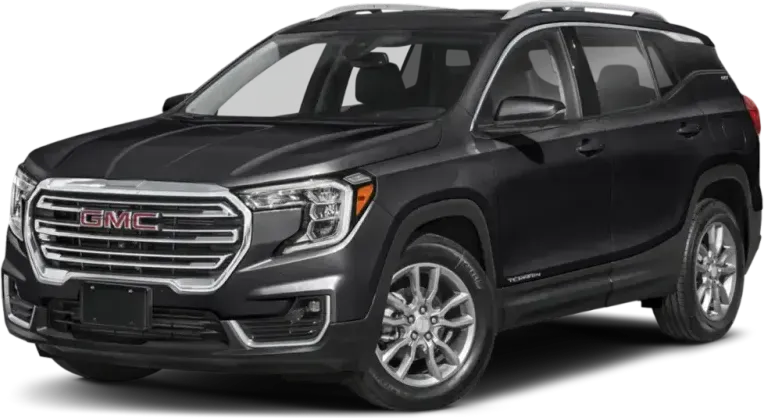
- Owner complaints
- 213
- Share of all complaints
- 24%
- Crash / fire / injury reports
- 9 / 0 / 8
- Related recalls
- 1
GMC Terrain brake complaints by model year
The 2018, 2019 and 2020 model years carry nearly all of the brake complaints, at 71, 60 and 65 filings. The 2020 year has the highest rate per vehicle sold. The 2021 year drops sharply but still includes two crash reports. Model years 2022 through 2026 show only a handful of complaints each, and 2023 shows none. Those years have had less time on the road to collect filings, so the low counts do not prove they are free of the problem. The 2026 reports describe master cylinder failure, a different part from the pump.
| Model year | Complaints | Per 10,000 sold | Crash, fire, injury reports |
|---|---|---|---|
| 2018 | 71 | 6.2 | 1, 0, 1 |
| 2019 | 60 | 5.9 | 1, 0, 3 |
| 2020 | 65 | 7.6 | 5, 0, 2 |
| 2021 | 7 | 1.5 | 2, 0, 2 |
| 2022 | 4 | 0.5 | 0, 0, 0 |
| 2023 | 0 | 0 | 0, 0, 0 |
| 2024 | 2 | 0.2 | 0, 0, 0 |
| 2025 | 1 | 0.1 | 0, 0, 0 |
| 2026 | 3 | n/a | 0, 0, 0 |
Owner complaints filed with NHTSA under service brakes, parking brake. Newer model years have had less time to collect complaints.
What goes wrong
The typical Terrain brake complaint is a sudden loss of power assist. The pedal turns rock hard, and stopping takes far more force and distance. Mechanics and dealers most often trace it to the brake vacuum pump, sometimes found broken into pieces. A "Service Brake Assist" message may come on, but many owners say nothing warned them first. It tends to happen at highway speed, on exit ramps, at stop lights and in parking lots.
This is a safety problem, not a nuisance. Brakes are 24% of the model's owner complaints, and the 2018 through 2021 model years together carry nine crash reports and eight injuries. No fires are reported. Several owners describe near misses with children in the car, and one used the shoulder's road bumps to slow down. Cars do not always become undrivable, but some owners say the failed pump damaged the camshaft or engine. Others report the same fault coming back after a repair.
Symptoms owners report
Rock-hard brake pedal
The pedal suddenly will not press, and the car barely slows. Owners describe standing on it with real force. It happens at highway speed, on exit ramps and at low speed in parking lots. Many say no warning came first.
Service Brake Assist message
A Service Brake Assist message, sometimes with a check engine light or code P050F, appears on the dash. It may show up only after the failure begins, or not at all. Some owners also hear an engine ticking noise first.
Pump failure damages the engine
Some owners say the vacuum pump broke apart and sent debris into the engine, damaging the camshaft, pistons or rods. One reports a repair bill of $7,200. This turns a brake repair into an engine repair.
Repeat failures after repair
Some cars lose brake assist again after a repair. One owner replaced the booster sensor twice, then the pump, then the booster. Another had three different parts replaced in three dealer visits and still had the problem.
Pitted rotors and noisy brakes
A smaller pattern on the 2018 year is pitted rotors on all four corners before 30,000 miles. A 2021 owner reports a noisy right rear brake after the car sits. Another describes a burning smell and drag the dealer could not duplicate.
Master cylinder failure
Newer 2026 reports describe the brakes going out entirely, and dealers confirmed master cylinder failure. One happened under 1,000 miles while pulling out of a parking lot. Another followed a brake warning and a service alert.
When the problems start
Owners report failures across a wide range. Some come early, such as one car at 27,000 miles whose trouble began at 6,000. Failures cluster between about 37,000 and 71,000 miles on the 2020 year and around 50,000 on the 2018 year. Others strike late, at 86,000, 110,501, 119,254 and even 150,000 miles. No mileage looks safe.
Repairs and recalls
Most owners end up at a dealer or independent shop that replaces the vacuum pump. Reported pump repairs run from about $540 to $1,000. Other parts add up. One owner paid $252.48 for a booster sensor, and another had a brake booster replaced for $1,441.63, which an extended warranty covered. Some owners say the first repair did not hold. Federal recall records list one brake recall, 18V576000, covering 2018 and 2019 Terrains. It involves rear brake caliper pistons with an insufficient coating. The remedy is a free brake system bleed at a dealer.
Checking a used Terrain for brake problems
- Ask for service records showing any vacuum pump, brake booster or booster sensor work. Repeat visits for the same fault are a warning sign.
- Run the VIN through federal recall records and confirm recall 18V576000 was completed on any 2018 or 2019 Terrain.
- On the test drive, brake firmly at highway speed and in a parking lot. The pedal should stay consistent, never turn hard or vibrate.
- Check for Service Brake Assist or check engine lights at startup, and have a shop scan for stored codes such as P050F.
- Inspect all four rotors for pitting, especially on a 2018, and listen for rumbling or noise when braking.
- Ask whether an extended warranty transfers, since several owners say it covered pump or booster repairs.
For the rest of the car, use a full GMC Terrain inspection checklist.
1 brake recall cover the GMC Terrain. A VIN check shows whether the car you're looking at had its recall work done, plus accident and title history.
GMC Terrain Brake Problems: common questions
- Which GMC Terrain years have the most brake problems?
- The 2018, 2019 and 2020 model years have the most, at 71, 60 and 65 complaints. The 2020 year has the highest rate per vehicle sold. Later years show far fewer, but they have had less time to collect complaints, so treat low counts with caution.
- Is it safe to drive a Terrain with a Service Brake Assist message?
- Owners describe the pedal going rock hard with the car barely slowing, sometimes with no message at all. Dash alerts can come before or after the failure. Have the car inspected before relying on it, because losing brake assist is a direct crash risk.
- Is there a recall for Terrain brake problems?
- Federal recall records list recall 18V576000 for 2018 and 2019 Terrains. It covers rear brake caliper pistons with an insufficient coating, and dealers bleed the brake system free of charge. The records do not tie it to the vacuum pump failures owners describe.
- How much does a Terrain brake vacuum pump repair cost?
- Owners report pump repairs from about $540 to $1,000. Costs rise if more parts fail. One owner paid $252.48 for a sensor, another $1,441.63 for a booster, and one reports $7,200 after pump debris damaged the engine.
- Can a failed vacuum pump damage the Terrain's engine?
- Several owners say so. They report the pump breaking apart, with debris reaching the camshaft, pistons and rods or lodging in engine components. One owner says a mechanic could not remove the small particles with a magnet, so the motor needed to be taken apart.
Other GMC Terrain problems
More on the GMC Terrain
See incorrect data? Report an issue