Last updated: 2026-10-10
Audi A5 vs Mercedes-Benz A-Class: Reliability Compared
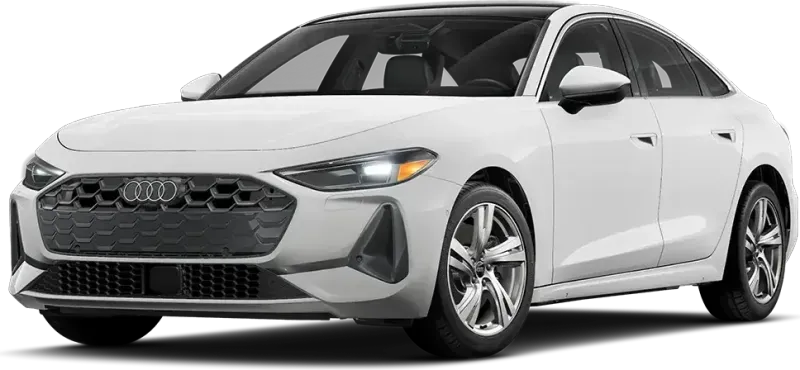
Audi A5

Mercedes-Benz A-Class
The Audi A5 comes out well ahead of the Mercedes-Benz A-Class on reliability, with far fewer recalls and complaints per car sold. The A-Class adds reports of lost drive in traffic and several crash-linked problem areas, while the A5's main fault is a failing instrument panel.
How Do the Audi A5 and Mercedes-Benz A-Class Generations Compare?
Verdict
The Audi A5 is more reliable than the Mercedes-Benz A-Class, scoring 76/100 vs 57/100.
The more reliable car is the Audi A5, and the gap is large. The deciding reason is the volume and severity of trouble. Owners filed about ten times as many complaints per car sold on the A-Class, and federal recall records show far more recalls for it. The A-Class also has reports of lost drive in traffic and crashes tied to several systems. The A5's main weakness is a failing instrument panel, which is a real hassle but a less dangerous one.
Key Differences
- 1Audi A5 has 39 fewer total recalls
- 2Audi A5 has 27.3 fewer complaints per 10k sold
- 3Audi A5 scores 19 points higher in reliability
Category Scoreboard
Audi A5 vs Mercedes-Benz A-Class: Which Is More Reliable?
| Metric | Audi A5 | Mercedes-Benz A-Class |
|---|---|---|
| Reliability Score | 76/100 | 57/100 |
| Years Tracked | 8 | 7 |
| Total Recalls | 16 | 55 |
| Complaints per 10k Sold | 2.9 | 30.2 |
| Year Wins | 6 | 0 |
What Are the Common Problems With the Audi A5 and Mercedes-Benz A-Class?
Electrical trouble leads on the A5: the instrument panel blinks, then goes dark, taking the speedometer and warning lights with it. Its other complaints are few, covering tire tread separation, Pre-Sense braking with no real threat, and MMI reboots in reverse. A-Class problems are more physical. Owners report lost drive in traffic, an engine shutting off, limp mode, and a blank rearview camera. Crash-linked reports appear in its electrical, power train, steering, and brake areas. The A5 has one crash-linked area, steering, and that report involved rear suspension hardware.
| Component | Audi A5 | Mercedes-Benz A-Class |
|---|---|---|
| ELECTRICAL SYSTEM | 1.5Low | 7.2Above Avg |
| UNKNOWN OR OTHER | 0.5Very Low | 4.8Average |
| POWER TRAIN | —None | 3.5Average |
| STEERING | 0.1Very Low | 1.9Low |
| ENGINE | 0.1Very Low | 1.4Low |
| SERVICE BRAKES | —None | 1.4Low |
| AIR BAGS | —None | 1.2Low |
| FUEL SYSTEM | —None | 1Very Low |
| VEHICLE SPEED CONTROL | 0.1Very Low | 0.8Very Low |
| TIRES | 0.1Very Low | 0.6Very Low |
| FUEL/PROPULSION SYSTEM | —None | 0.6Very Low |
| EXTERIOR LIGHTING | —None | 0.6Very Low |
| SEATS | —None | 0.4Very Low |
| SUSPENSION | —None | 0.4Very Low |
| WHEELS | —None | 0.4Very Low |
| VISIBILITY | —None | 0.4Very Low |
| BACK OVER PREVENTION | 0.1Very Low | —None |
Complaints per 10,000 units sold, aggregated across all tracked model years from NHTSA owner reports.
How Does Audi A5 vs Mercedes-Benz A-Class Reliability Compare by Year?
| Year | Audi A5 | Mercedes-Benz A-Class | Edge |
|---|---|---|---|
| 2026 | 82/1000R / 0C | 64/1000R / 0C | Audi A5 |
| 2022 | 74/1003R / 5C | 65/1001R / 2C | Audi A5 |
| 2021 | 71/1005R / 7C | 58/10015R / 11C | Audi A5 |
| 2020 | 70/1005R / 60C | 59/1009R / 18C | Audi A5 |
| 2019 | 73/1003R / 12C | 55/10013R / 42C | Audi A5 |
| 2018 | 77/1000R / 6C | 48/10010R / 52C | Audi A5 |
Best years to cross-shop: The 2018 Audi A5 scored 77/100 and the 2022 Mercedes-Benz A-Class scored 65/100 — the strongest shared model years that have been on the road for at least two years, where available.
Who Should Buy the Audi A5 vs the Mercedes-Benz A-Class?
Audi A5 vs Mercedes-Benz A-Class: Common Questions
- Is the Audi A5 more reliable than the Mercedes-Benz A-Class?
- Yes, by a large margin. The A5 has 2.9 owner complaints per 10,000 sold, against 30.2 for the A-Class. Federal recall records also show fewer recalls for the A5. The A5 is rated good for reliability, and the A-Class is rated mixed.
- Which has more recalls, the A5 or the A-Class?
- The A-Class has far more. Federal recall records show 55 recalls across 7 model years for the A-Class, against 16 across 8 model years for the A5. Many A-Class owners also describe long waits for recall parts and over-the-air fixes.
- What is the most common Audi A5 problem?
- Electrical trouble, mainly the instrument panel. Owners describe it blinking on and off, then going dark, which removes the speedometer and warning lights. One report puts it near 56,795 miles. The dealer found the panel needed replacement and had to wait for parts.
- Are there safety problems on the Mercedes-Benz A-Class?
- Yes, several. Owners report the car losing drive in traffic, either with an unresponsive accelerator or an engine shutoff. The rearview camera can also go blank in reverse. Crash-linked complaints appear in the electrical, power train, steering, and brake areas.
- Which A5 and A-Class years should I avoid?
- For the A5, avoid 2020 and 2021, its weakest years, and look at 2023 instead. For the A-Class, avoid 2018 and 2024, and look at 2022. Confirm that all recall work is finished on whichever car you choose.
Related Reliability Comparisons
More Audi A5 comparisons
More Mercedes-Benz A-Class comparisons
Decided between Audi A5 and Mercedes-Benz A-Class? Run a VIN check before you buy — uncover hidden accidents, title issues, and open recalls.
How we score the Audi A5 and Mercedes-Benz A-Class
Scores weight complaint severity at 35%, repair costs at 30%, recall impact at 20%, and the spread of complaints across systems at 15%, with complaint counts adjusted for US sales. Read the full methodology.
See incorrect data? Report an issue