Last updated: 2026-11-20
Brakes, steering & tires
Toyota RAV4 Brake Problems
Toyota RAV4 owners most often report brakes that fail to stop the car at parking speeds, with many of these complaints ending in crashes.
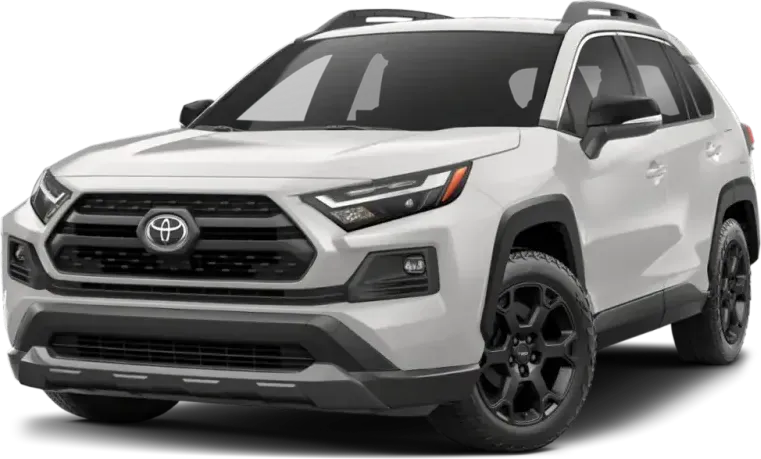
- Owner complaints
- 150
- Share of all complaints
- 5%
- Crash / fire / injury reports
- 42 / 2 / 20
- Related recalls
- 1
Toyota RAV4 brake complaints by model year
The 2019 model year has the most brake complaints at 32, followed closely by 2021 with 31 and 2018 with 27. The 2021 year has the highest rate per vehicles sold. The 2020 year sits in the middle with 17. The 2022 through 2025 years show fewer complaints, but they have had less time on the road to collect them, so low counts do not make them safer. Crash reports appear in every one of these years, and 2025 already includes a four-person injury report.
| Model year | Complaints | Per 10,000 sold | Crash, fire, injury reports |
|---|---|---|---|
| 2018 | 27 | 0.6 | 8, 2, 2 |
| 2019 | 32 | 0.7 | 7, 0, 4 |
| 2020 | 17 | 0.4 | 2, 0, 3 |
| 2021 | 31 | 0.8 | 9, 0, 0 |
| 2022 | 9 | 0.2 | 2, 0, 1 |
| 2023 | 14 | 0.3 | 6, 0, 3 |
| 2024 | 15 | 0.3 | 6, 0, 3 |
| 2025 | 5 | 0.1 | 2, 0, 4 |
Owner complaints filed with NHTSA under service brakes, parking brake. Newer model years have had less time to collect complaints.
What goes wrong
The most serious complaint is a RAV4 that does not slow down when the driver presses the brake. Owners describe it mostly while pulling into a parking space. The car surges or keeps rolling, sometimes with the engine revving, and the pedal may feel firm or sink to the floor. Hybrid and Prime owners add brake booster faults, a stiff pedal, and a brief loss of braking when the car switches from regenerative to friction brakes. Milder reports cover squealing, grinding, and electronic parking brake faults.
Brake problems make up only 5% of this model's complaints, but the severity is high. Crashes are reported in every model year from 2018 to 2025, into walls, storefronts, trees, and other cars. Injuries show up in most model years, and 2018 complaints include fire reports. Many owners say no warning light came on first. Dealers often report they cannot reproduce the fault, so some drivers are left with a car they no longer trust, and a few cars were totaled.
Symptoms owners report
Car won't stop while parking
The driver presses the brake at parking-lot speed and the car keeps moving or speeds up. Owners describe jumping curbs and hitting walls, storefronts, and poles. Many say the pedal was held down the whole time and no warning light appeared.
Pedal sinks or goes hard
Some owners feel the pedal drop to the floor. Others find it suddenly stiff, with weak braking. On 2025 cars, a hard pedal came with lost steering assist and Check Engine, battery, and Not Ready to Drive warnings.
Braking drops out over bumps
On 2022 and 2023 cars, hitting a manhole cover, rough patch, or railroad track while braking sets off ABS or traction control. The pedal shudders and the car coasts for one to three seconds. Dealers often call it normal or cannot reproduce it.
Hybrid and Prime brake faults
Hybrid and Prime owners report booster or brake assist failures, brake system warnings telling them to pull over, and a short loss of braking as the car hands off from regenerative to friction braking. Some report unexpected lock-ups in stop-and-go traffic.
Squeal, grind, and scraping
Front brakes squeal or grind, sometimes before 5,000 miles. A 2018 owner had the noise return after new rotors and pads. Dealers often could not reproduce the noise, and owners said it continued after repeat visits.
Parking brake problems
Owners report an electronic parking brake that will not release, parking brake malfunction warnings, and a brake that locked in traffic. One 2025 owner says a flashing park indicator left the car stuck in a traffic lane.
When the problems start
Brake trouble does not wait for high mileage. One 2022 owner reports a failure to slow at highway exit speed at 8,000 miles, and a 2018 owner says the car was 3 days old. Squealing starts before 5,000 miles on some 2023 cars and between about 10,000 and 28,000 on 2024 cars. A 2018 owner heard noise around 18,000 miles, and it returned by 35,000 after new rotors and pads.
Repairs and recalls
Owners report little that fixed the stopping and surging complaints. Dealers often could not reproduce them, and in one case an investigator sent by Toyota found no brake issue. Repairs named in the 2020 complaints include the brake booster and master cylinder. Squeal complaints led to new rotors and pads, though noise came back for one owner. Federal recall records list one brake recall, 24V911000, covering 2024 RAV4s. It addresses loose front brake caliper and wheel hub bearing bolts, and dealers inspect and tighten them free, replacing any damaged parts. Independent repair-cost data puts yearly repair cost for the model overall at $429.
Checking a used RAV4 for brake problems
- Enter the VIN on Toyota's recall lookup and confirm recall 24V911000 work is done if the car is a 2024.
- Test the brakes in a parking lot at walking speed. Press firmly and confirm the car stops smoothly every time.
- Press the pedal with the engine running. It should feel firm and consistent, never sinking or suddenly hard.
- Drive over a bump or rough patch while braking lightly. Watch for ABS or VSC lights and a brief loss of braking.
- On hybrids, brake gently to a stop several times and notice any lurch or lapse when regenerative braking hands off.
- Ask for service records showing brake noise visits, and check that the electronic parking brake sets and releases cleanly.
For the rest of the car, use a full Toyota RAV4 inspection checklist.
1 brake recall cover the Toyota RAV4. A VIN check shows whether the car you're looking at had its recall work done, plus accident and title history.
Toyota RAV4 Brake Problems: common questions
- Which Toyota RAV4 years have the most brake complaints?
- The 2019 model year has the most with 32 complaints, then 2021 with 31 and 2018 with 27. Later years show fewer, but they have had less time to collect reports. Crash reports appear in every year from 2018 through 2025.
- Is a Toyota RAV4 with brake problems safe to drive?
- Not if it shows the main symptom. Owners report cars that failed to slow, ended in crashes, and caused injuries. Squeal or grinding is milder but still needs inspection. If the pedal sinks, goes hard, or a brake warning appears, have the car checked before driving.
- Is there a recall for RAV4 brake problems?
- Federal recall records list one: 24V911000, covering 2024 RAV4s. It concerns loose bolts on the front brake caliper and wheel hub bearing. Dealers inspect and tighten them free and replace damaged parts. The data lists no other brake recall.
- How much does it cost to fix RAV4 brake problems?
- The data has no brake-specific price. Independent repair-cost data puts the yearly repair cost for the model overall at $429. Owners name rotors, pads, the brake booster, and the master cylinder as repairs. Recall work on a 2024 is free.
- Do hybrid and Prime RAV4s have different brake problems?
- Partly. Hybrid and Prime owners report booster and brake assist faults, a stiff or delayed pedal, and a brief loss of braking when the car switches from regenerative to friction brakes. Surging at parking speed appears on both gas and hybrid cars.
Other Toyota RAV4 problems
Electrical & lighting
Engine & powertrain
Airbags & seat belts
Body & interior
Brakes, steering & tires
More on the Toyota RAV4
See incorrect data? Report an issue