Last updated: 2026-10-10
Rivian R1T vs Toyota Tundra: Reliability Compared
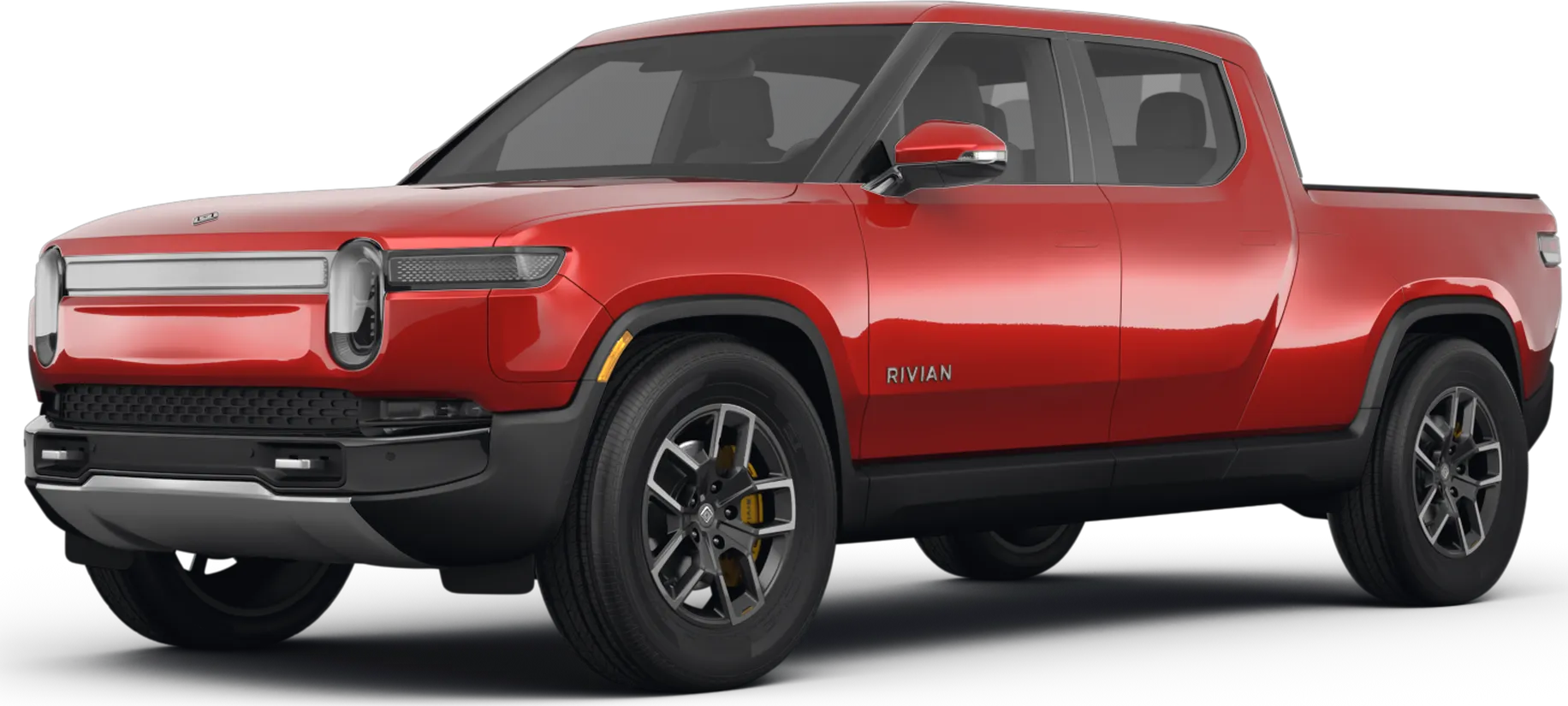
Rivian R1T

Toyota Tundra
Reliability favors the Toyota Tundra by a slight margin over the Rivian R1t. Both stand well, but the Tundra has a long record and independent repair-cost data, while the R1t has only three model years and complaints ranging from airbag shutoffs to sudden power loss.
How Do the Rivian R1T and Toyota Tundra Generations Compare?
Verdict
The Toyota Tundra is more reliable than the Rivian R1T, scoring 69/100 vs 66/100.
Toyota's full-size pickup holds a slight edge. Both trucks stand well on reliability, so the gap is small. What tips it is the evidence behind each. The Tundra has a long record, plus independent repair-cost data showing about 0.3 unscheduled shop visits a year. The R1t has fewer complaints per truck sold, but only three model years, 21 recalls, and a complaint mix that includes airbag shutoffs and sudden power loss. The Tundra's main flaw, throttle hesitation, is common and unnerving in traffic. It is also a better-documented problem.
Key Differences
- 1Rivian R1T has 69 fewer total recalls
- 2Toyota Tundra scores 3 points higher in reliability
- 3Rivian R1T has 1.9 fewer complaints per 10k sold
Category Scoreboard
Rivian R1T vs Toyota Tundra: Which Is More Reliable?
| Metric | Rivian R1T | Toyota Tundra |
|---|---|---|
| Reliability Score | 66/100 | 69/100 |
| Years Tracked | 3 | 9 |
| Total Recalls | 21 | 90 |
| Complaints per 10k Sold | 10 | 11.9 |
| Year Wins | 2 | 1 |
What Are the Common Problems With the Rivian R1T and Toyota Tundra?
Throttle lag from a stop runs through the Tundra's complaints. Drivers press the pedal and get nothing for 1 to 3 seconds, then a lurch. A few reports describe the engine dying while driving. The R1t's complaints are fewer and more varied: the passenger airbag shutting off for lighter adults, loose front half shafts, turtle mode, and one battery fire. Crash-linked reports exist on both sides. The Tundra has them in power train, engine, and electrical. The R1t has them in service brakes, including a parking brake that failed to hold on a snowy slope, and in vehicle speed control.
| Component | Rivian R1T | Toyota Tundra |
|---|---|---|
| AIR BAGS | 2.8Low | 0.1Very Low |
| POWER TRAIN | 0.6Very Low | 2.3Low |
| ENGINE | —None | 2Low |
| ELECTRICAL SYSTEM | 0.8Very Low | 1.1Low |
| UNKNOWN OR OTHER | 0.8Very Low | 0.5Very Low |
| SERVICE BRAKES | 0.4Very Low | 0.7Very Low |
| VEHICLE SPEED CONTROL | 0.4Very Low | 0.7Very Low |
| FUEL/PROPULSION SYSTEM | —None | 0.9Very Low |
| STEERING | 0.4Very Low | 0.3Very Low |
| ENGINE AND ENGINE COOLING | —None | 0.7Very Low |
| FORWARD COLLISION AVOIDANCE | 0.4Very Low | —None |
| FUEL SYSTEM | —None | 0.4Very Low |
| STRUCTURE | —None | 0.2Very Low |
| SEATS | —None | 0.1Very Low |
| ELECTRONIC STABILITY CONTROL (ESC) | —None | 0.1Very Low |
| EXTERIOR LIGHTING | —None | —None |
| SUSPENSION | —None | —None |
| TIRES | —None | —None |
| VISIBILITY/WIPER | —None | —None |
| LANE DEPARTURE | —None | —None |
Complaints per 10,000 units sold, aggregated across all tracked model years from NHTSA owner reports.
How Does Rivian R1T vs Toyota Tundra Reliability Compare by Year?
| Year | Rivian R1T | Toyota Tundra | Edge |
|---|---|---|---|
| 2025 | 65/1008R / 8C | 73/1006R / 88C | Toyota Tundra |
| 2024 | 67/1006R / 7C | 65/10014R / 235C | Rivian R1T |
| 2023 | 65/1007R / 35C | 59/10022R / 321C | Rivian R1T |
Best years to cross-shop: The 2024 Rivian R1T scored 67/100 and the 2024 Toyota Tundra scored 65/100 — the strongest shared model years that have been on the road for at least two years, where available.
Who Should Buy the Rivian R1T vs the Toyota Tundra?
Rivian R1T vs Toyota Tundra: Common Questions
- Is the Rivian R1t more reliable than the Toyota Tundra?
- No, the Tundra has a slight edge. Both trucks stand well, but the Tundra has a longer record and independent repair-cost data showing about 0.3 unscheduled shop visits a year. The R1t has only three model years of history, so its good standing rests on less evidence.
- Which has more recalls, the R1t or the Tundra?
- The Tundra has more in total, 90 across nine model years, against 21 for the R1t across three. The totals are not a fair match, since the Tundra has been on the road much longer. The R1t's 21 recalls in three years is still a notable number.
- What is the biggest problem with the Toyota Tundra?
- Throttle hesitation from a stop. Owners press the pedal and get no response for 1 to 3 seconds, then the truck lurches forward. Many describe near misses while turning or merging. A few reports also describe the engine dying while driving and refusing to restart.
- What is the biggest problem with the Rivian R1t?
- The passenger airbag turning itself off is the most common complaint, with 14 reports. It mostly affects riders between about 110 and 150 pounds, and service centers often call the system within spec. Owners also report loose front half shafts and sudden power loss.
- Which Tundra and R1t model years should I avoid?
- For the Tundra, 2022 and 2023 rank weakest, while 2021 ranks among the strongest. For the R1t, 2025 and 2023 rank weakest, and 2024 ranks among the strongest. All R1t years are recent, so complaint counts will keep growing.
Related Reliability Comparisons
More Rivian R1T comparisons
Decided between Rivian R1T and Toyota Tundra? Run a VIN check before you buy — uncover hidden accidents, title issues, and open recalls.
How we score the Rivian R1T and Toyota Tundra
Scores weight complaint severity at 35%, repair costs at 30%, recall impact at 20%, and the spread of complaints across systems at 15%, with complaint counts adjusted for US sales. Read the full methodology.
See incorrect data? Report an issue