Last updated: 2026-07-26
Ford F-150 vs Ram 1500: Reliability Compared
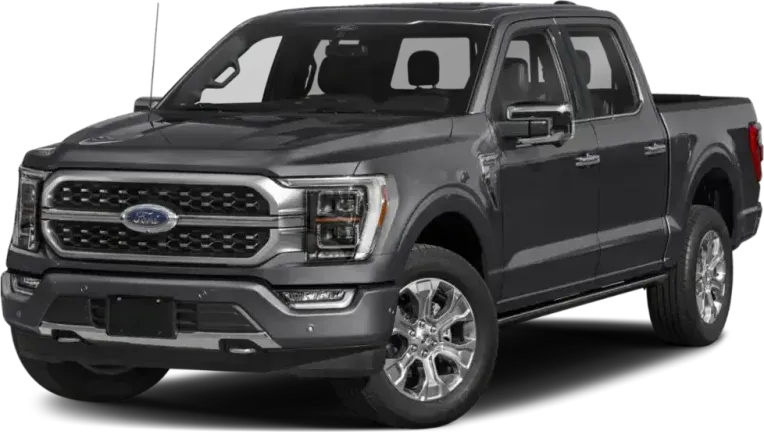
Ford F-150

Ram 1500
Choosing between the Ford F-150 and the Ram 1500? This page compares their reliability scores, NHTSA recall history, owner-reported complaints, and estimated annual repair costs so you can make a confident long-term ownership decision between these two full-size trucks.
Our reliability scores are based on NHTSA recall and complaint data, independent repair cost estimates, and sales-normalized complaint rates. Both models currently share an average reliability score of 68/100. Scroll down for the full year-by-year breakdown, common problem areas, and repair cost comparison.
How Do the Ford F-150 and Ram 1500 Generations Compare?
Verdict
The Ford F-150 and Ram 1500 are evenly matched with a reliability score of 68/100.
The Ford F-150 and Ram 1500 both have an average reliability score, with Ford at 68/100 and Ram at 69/100, indicating similar reliability performance. Both trucks have experienced 107 recalls over nine years, but the Ford F-150 outperforms the Ram 1500 in owner complaints per 10,000 sold, with 5.4 compared to Ram's 11.9. Despite this, the Ram 1500 offers a lower estimated annual repair cost at $691, compared to the F-150's $788. If complaint rates are a primary concern, the F-150 holds a slight edge, while the Ram 1500 is more cost-effective in terms of annual repairs.
Key Differences
- 1Ram 1500 costs $97 less per year to repair
- 2Ford F-150 has 6.5 fewer complaints per 10k sold
- 3Ram 1500 has 2% lower major repair risk
Category Scoreboard
Ford F-150 vs Ram 1500: Which Is More Reliable?
| Metric | Ford F-150 | Ram 1500 |
|---|---|---|
| Reliability Score | 68/100 | 68/100 |
| Years Tracked | 9 | 9 |
| Total Recalls | 107 | 107 |
| Complaints per 10k Sold | 5.4 | 11.9 |
| Annual Repair Cost | $788/yr | $691/yr |
| Repair Frequency | 0.3/yr | 0.2/yr |
| Major Repair Risk | 15% | 13% |
| Safety RatingNHTSA overall | 2026 NHTSA | 2026 NHTSA |
| Frontal | ||
| Side | ||
| Rollover | ||
| Year Wins | 4 | 5 |
What Are the Common Problems With the Ford F-150 and Ram 1500?
The Ford F-150 and Ram 1500 exhibit distinct problem profiles, with the F-150 experiencing a higher volume of complaints related to the power train, totaling 1,657 complaints, including 14 crash-linked incidents. Conversely, the Ram 1500 has a pronounced issue with its electrical system, accounting for 871 complaints and 13 crash-linked cases. Notably, the Ram 1500's steering system has a significant impact, with 530 complaints and 30 crash-linked incidents, a concern not mirrored in the F-150's data. Additionally, the Ram 1500's air bags category stands out with 129 complaints, 74 of which are crash-linked, indicating a critical safety concern absent from the F-150's profile.
| Component | Ford F-150 | Ram 1500 |
|---|---|---|
| POWER TRAIN | 1.6Low | 1.5Low |
| ELECTRICAL SYSTEM | 0.3Very Low | 2.6Low |
| STEERING | 0.1Very Low | 1.6Low |
| ENGINE | 0.5Very Low | 1.2Low |
| UNKNOWN OR OTHER | 0.4Very Low | 1.1Low |
| SERVICE BRAKES | 0.1Very Low | 0.6Very Low |
| STRUCTURE | 0.2Very Low | 0.2Very Low |
| AIR BAGS | —None | 0.4Very Low |
| FUEL/PROPULSION SYSTEM | —None | 0.4Very Low |
| ENGINE AND ENGINE COOLING | 0.1Very Low | 0.2Very Low |
| VEHICLE SPEED CONTROL | —None | 0.2Very Low |
| EXTERIOR LIGHTING | 0.1Very Low | —None |
| VISIBILITY | 0.1Very Low | —None |
| SUSPENSION | —None | 0.1Very Low |
| FUEL SYSTEM | —None | 0.1Very Low |
| VISIBILITY/WIPER | —None | 0.1Very Low |
| ELECTRICAL SYSTEM, EQUIPMENT | —None | —None |
| LATCHES/LOCKS/LINKAGES | —None | —None |
| FORWARD COLLISION AVOIDANCE | —None | —None |
| BACK OVER PREVENTION | —None | —None |
| ELECTRICAL SYSTEM, UNKNOWN OR OTHER | —None | —None |
| POWER TRAIN, ELECTRICAL SYSTEM | —None | —None |
| SERVICE BRAKES, FORWARD COLLISION AVOIDANCE | —None | —None |
| ELECTRICAL SYSTEM, ENGINE, FUEL/PROPULSION SYSTEM | —None | —None |
| FORWARD COLLISION AVOIDANCE, LANE DEPARTURE | —None | —None |
| POWER TRAIN, VEHICLE SPEED CONTROL | —None | —None |
| ELECTRICAL SYSTEM, SERVICE BRAKES | —None | —None |
| STEERING, LANE DEPARTURE | —None | —None |
| ELECTRICAL SYSTEM, UNKNOWN OR OTHER, VISIBILITY/WIPER | —None | —None |
| VEHICLE SPEED CONTROL, FORWARD COLLISION AVOIDANCE | —None | —None |
| LANE DEPARTURE, FORWARD COLLISION AVOIDANCE | —None | —None |
| LANE DEPARTURE | —None | —None |
Complaints per 10,000 units sold, aggregated across all tracked model years from NHTSA owner reports.
Which Is Cheaper to Maintain: Ford F-150 or Ram 1500?
How Does Ford F-150 vs Ram 1500 Reliability Compare by Year?
| Year | Ford F-150 | Ram 1500 | Edge |
|---|---|---|---|
| 2026 | 82/1000R / 0C | 74/1002R / 18C | Ford F-150 |
| 2025 | 75/10013R / 64C | 73/1005R / 186C | Ford F-150 |
| 2024 | 74/1009R / 146C | 77/1004R / 57C | Ram 1500 |
| 2023 | 68/10010R / 383C | 72/10010R / 145C | Ram 1500 |
| 2022 | 62/10021R / 657C | 64/10015R / 506C | Ram 1500 |
| 2021 | 58/10026R / 1021C | 63/10014R / 611C | Ram 1500 |
| 2020 | 67/1007R / 517C | 65/10013R / 559C | Ford F-150 |
| 2019 | 65/1006R / 972C | 58/10029R / 1364C | Ford F-150 |
| 2018 | 58/10015R / 1852C | 64/10015R / 605C | Ram 1500 |
Best years to cross-shop: The 2026 Ford F-150 scored 82/100 and the 2024 Ram 1500 scored 77/100 — these represent the strongest model years in our tracking range.
Who Should Buy the Ford F-150 vs the Ram 1500?
Ford F-150 vs Ram 1500: Common Questions
- Is the Ford F-150 more reliable than the Ram 1500?
- They're very close — both average 68/100 in our reliability scoring. Other factors like repair costs and specific year models may tip the decision.
- Which has more recalls, the Ford F-150 or the Ram 1500?
- Both have 107 recalls across their tracked years. Review individual year pages for details on what each recall covers.
- Which has fewer owner complaints, the Ford F-150 or the Ram 1500?
- Adjusted for sales volume, the Ford F-150 has a lower complaint rate at 5.4 per 10,000 vehicles sold versus 11.9 for the Ram 1500. Normalizing by sales gives a fairer comparison than raw totals.
- Which is cheaper to maintain, the Ford F-150 or the Ram 1500?
- Based on independent repair cost estimates, the Ram 1500 is cheaper to maintain at $691/year versus $788/year for the Ford F-150.
- Is the Ford F-150 or Ram 1500 safer?
- Both the Ford F-150 and Ram 1500 received the same NHTSA overall safety rating of 5/5 stars. Check the frontal, side, and rollover sub-ratings above for a more detailed comparison.
Related Reliability Comparisons
More Ford F-150 comparisons
Decided between Ford F-150 and Ram 1500? Run a VIN check before you buy — uncover hidden accidents, title issues, and open recalls.
Affiliate link — we may earn a commission at no cost to you.
How We Calculate Reliability Scores
Auto Reliability Index scores are calculated on a 0–100 scale using a weighted formula that combines multiple public data sources. Each factor is weighted based on its predictive value for real-world ownership experience.
Key Ranking Factors
Complaint Severity
NHTSA owner complaints weighted by component category (e.g., powertrain, safety systems, electronics, cosmetic) — safety-critical issues carry more weight than cosmetic ones. Adjusted for sales volume so high-volume models aren't unfairly penalized.
Repair Costs
Independent reliability ratings based on repair frequency, average repair costs, and severity of typical repairs for each model.
Recall Impact
Number of NHTSA recalls weighted by severity. “Stop driving” and fire-risk recalls are penalized more heavily than minor software or labeling recalls.
Issue Diversity
Measures how many major vehicle systems (engine, transmission, electrical, braking, etc.) have recorded complaints. A vehicle with issues spread across many systems may indicate systemic quality issues.
Scores are grouped into four tiers:
- 80–100: Excellent— Top-tier reliability, minimal issues
- 60–79: Good— Reliable with some minor concerns
- 40–59: Mixed— Notable issues, research before buying
- 0–39: Risky— Significant problems, proceed with caution
Data is sourced from NHTSA recall records, owner complaint filings, and independent repair databases. Scores are recalculated as new data becomes available. While the weighting model is proprietary, all underlying data sources are public and traceable.
See incorrect data? Report an issue