Last updated: 2026-11-22
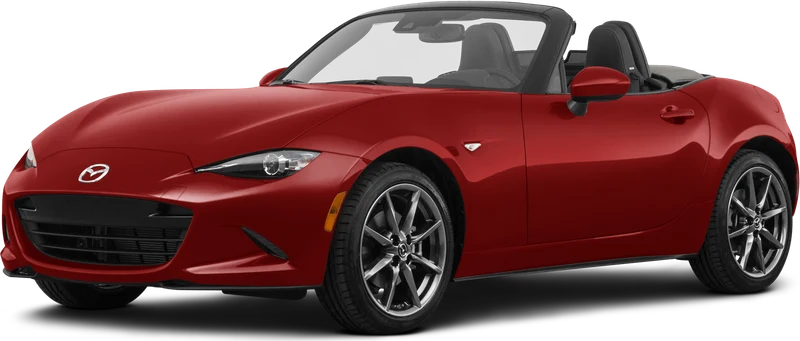
Mazda MX-5 Miata Years to Avoid
9 scored model years (2018–2026) · model average 71/100
No year is one to avoid. Every model year from 2018 to 2026 rates good, and what changes is recall count and complaint volume, with 2018 and 2019 the weakest. For a used purchase, 2024 is the year to buy.
Verdict
- Avoid
- No outlier years
- Buy
- 2024 71/100
- Model average
- 71/100
Know which year you're looking at? Check the exact Mazda MX‑5 Miata
A good year can still hide accident damage or recall work that was never done. A VIN check shows the history of the car you found.
What Are Common Mazda MX-5 Miata Problems?
POWER TRAIN
11 complaintsMost reported in 2023, 2024, 2022
2023: The manual six-speed gearbox loses the ability to shift reliably, often well before 10,000 miles.
ELECTRICAL SYSTEM
3 complaintsMost reported in 2024, 2018
2024: Cruise control fails to cancel when the brake is pressed in one report.
STRUCTURE
3 complaintsMost reported in 2019, 2018
2019: Paint chips badly across the front bumper and hood.
SEAT BELTS
2 complaintsMost reported in 2026, 2025
2026: The shoulder belt crosses the neck instead of the chest for shorter occupants, according to the 1 complaint on file.
AIR BAGS
2 complaintsMost reported in 2020
2020: An airbag repair that dealers cannot complete is the problem in both complaints.
EXTERIOR LIGHTING
1 complaintsMost reported in 2025
2025: A headlight malfunction warning appears on the dash after driving up or down slight hills with the headlights on.
Best Mazda MX-5 Miata Year to Buy Instead
2024 Mazda MX-5 Miata
2024 has been on the road long enough to show a modest record: one recall and five owner complaints. The 2018 and 2019 cars each have three recalls, and 2019 drew eight complaints. 2024 is not trouble free, with manual transmission and cruise control reports, so check those on any car you drive.
Found a Safe Year? Check the Specific Car
Even the 2024 Mazda MX-5 Miata has 1 recall on file. A VIN check confirms the recall work on the exact car and shows its accident, title, and service history.
- Accidents
- Open Recalls
- Title History
- Odometer Rollback
All Mazda MX-5 Miata Years by Generation
Mazda MX-5 Miata Reliability Scores by Year
Fourth generation (ND) (2016–2026)
2026 Mazda MX-5 Miata
0 recalls · 2 complaints
2025 Mazda MX-5 Miata
1 recalls · 3 complaints
2020 Mazda MX-5 Miata
1 recalls · 3 complaints
2021 Mazda MX-5 Miata
1 recalls · 1 complaints
2022 Mazda MX-5 Miata
1 recalls · 5 complaints
2023 Mazda MX-5 Miata
1 recalls · 7 complaints
2024 Mazda MX-5 Miata
1 recalls · 5 complaints
2019 Mazda MX-5 Miata
3 recalls · 8 complaints
2018 Mazda MX-5 Miata
3 recalls · 3 complaints
Frequently Asked Questions
Which Mazda MX-5 Miata years should I avoid?
Which Mazda MX-5 Miata years have transmission problems?
Are the 2018 and 2019 Mazda MX-5 Miata years worse?
Are the 2025 and 2026 Mazda MX-5 Miata the most reliable?
Does the 2024 Mazda MX-5 Miata have any problems?
How we score every Mazda MX-5 Miata model year
Scores weight complaint severity at 35%, repair costs at 30%, recall impact at 20%, and the spread of complaints across systems at 15%, with complaint counts adjusted for US sales. Read the full methodology.
See incorrect data? Report an issue