Last updated: 2026-11-23
Jeep Grand Cherokee vs Toyota Land Cruiser: Reliability Compared
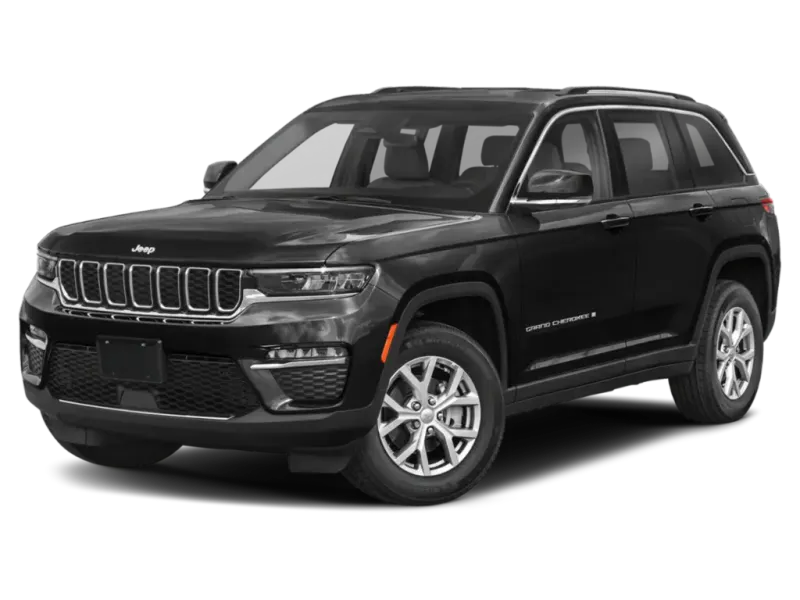 Jeep Grand Cherokee
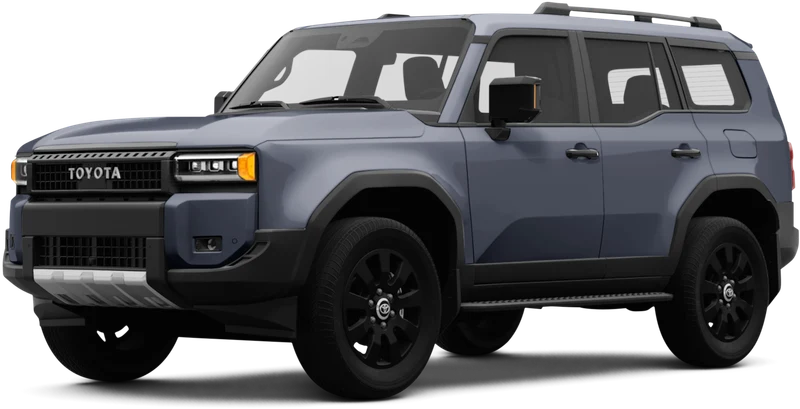 Toyota Land Cruiser
The Grand Cherokee takes 4 of 7 rounds
The Land Cruiser edges out the Grand Cherokee on reliability. Owners file about half as many complaints per vehicle sold, and recalls are far fewer. The Jeep is cheaper to repair, which keeps the gap slight.
How Do the Jeep Grand Cherokee and Toyota Land Cruiser Generations Compare?
Verdict
The Toyota Land Cruiser is more reliable than the Jeep Grand Cherokee, scoring 68/100 vs 64/100.
A slight edge goes to the Land Cruiser. Owners file about half as many complaints per vehicle sold, and federal recall records show 15 recalls against 114 for the Grand Cherokee. The Jeep's complaints also include stalling, engine shutoffs and brake failures with crashes attached. The edge stays slight because the Land Cruiser costs more to keep running, needs more shop visits, and is more likely to need a major repair. Both hold a good standing.
Biggest gaps
- Toyota Land Cruiser has 99 fewer total recalls
- Jeep Grand Cherokee needs 0.4 fewer repairs per year
- Toyota Land Cruiser has 10.2 fewer complaints per 10k sold
Round by round
- Reliability ScoreLand Cruiser
- Total RecallsLand Cruiser
- Complaint RateLand Cruiser
- Annual Repair CostGrand Cherokee
- Repair FrequencyGrand Cherokee
- Major Repair RiskGrand Cherokee
- Safety RatingGrand Cherokee
Leaning Jeep Grand Cherokee or Toyota Land Cruiser? Check the exact car before you buy
Whichever wins on paper, the car in front of you has its own past. A VIN check shows its accidents, title history and any open recalls.
Jeep Grand Cherokee vs Toyota Land Cruiser: Which Is More Reliable?
| Metric | Jeep Grand Cherokee | Toyota Land Cruiser |
|---|---|---|
| Reliability ScoreOut of 100, higher is better | 64/100 | 68/100 |
| Years Tracked | 9 | 7 |
| Total RecallsLower is better | 114 | 15 |
| Complaints per 10k SoldLower is better | 19.4 | 9.2 |
| Annual Repair CostLower is better | $666/yr | $843/yr |
| Repair FrequencyUnscheduled shop visits a year | 0.3/yr | 0.7/yr |
| Major Repair RiskChance a repair is major | 13% | 21% |
| Safety RatingNHTSA overall | 2026 NHTSA | 2026 NHTSA |
| Frontal | ||
| Side | ||
| Rollover | ||
| Year WinsModel years with the higher score | 2 | 5 |
What Are the Common Problems With the Jeep Grand Cherokee and Toyota Land Cruiser?
Losing power or stopping ability defines the Grand Cherokee's complaints. Owners report stalling while driving, engines shutting off at highway speed, and brake pedals that sink toward the floor. All five of its main problem areas have crash-linked reports, with brakes highest. The Land Cruiser's complaints are milder. Front brakes squeal while owners wait for scarce parts, and hard downshifts come while slowing to a stop. Its brake reports mention no crash or fire. Its worst cases are transmission failures, where a failed internal pump means replacing the whole transmission.
| Jeep Grand Cherokee | Problem area | Toyota Land Cruiser |
|---|---|---|
5.5 | Electrical | 0.5 |
1.5 | Brakes | 2.9 |
1.2 | Transmission | 1.5 |
2.2 | Engine | 0 |
0.7 | Fuel system | 0.2 |
0.9 | Suspension | 0 |
0.9 | Steering | 0 |
0.6 | Airbags | 0.2 |
0.5 | Automatic emergency braking | 0 |
<0.1 | Body and structure | 0.3 |
0 | Wipers and visibility | 0.3 |
0.3 | Headlights and exterior lights | 0 |
0.3 | Acceleration and cruise control | 0 |
0 | Wheels and tires | 0.2 |
0.2 | Seats | 0 |
1.8 | Other or unspecified | 1.5 |
Complaints per 10,000 units sold, counting each car's tracked model years that have US sales figures, from NHTSA owner reports. Shorter bars mean fewer complaints.
Jeep Grand Cherokee problem guides
- Jeep Grand Cherokee electrical problems
- Jeep Grand Cherokee brake problems
- Jeep Grand Cherokee transmission problems
- Jeep Grand Cherokee engine problems
- Jeep Grand Cherokee fuel system problems
- Jeep Grand Cherokee suspension problems
- Jeep Grand Cherokee steering problems
- Jeep Grand Cherokee airbag problems
- Jeep Grand Cherokee automatic emergency braking problems
Which Is Cheaper to Maintain: Jeep Grand Cherokee or Toyota Land Cruiser?
How Does Jeep Grand Cherokee vs Toyota Land Cruiser Reliability Compare by Year?
| Year | Jeep Grand Cherokee | Toyota Land Cruiser | Edge |
|---|---|---|---|
| 2026 | 66/1006 recalls · 68 complaints | 65/1001 recall · 8 complaints | Grand Cherokee+1 |
| 2025 | 71/1005 recalls · 125 complaints | 66/1004 recalls · 34 complaints | Grand Cherokee+5 |
| 2024 | 62/10018 recalls · 326 complaints | 64/1005 recalls · 41 complaints | Land Cruiser+2 |
| 2021 | 62/10016 recalls · 513 complaints | 71/1000 recalls · 1 complaint | Land Cruiser+9 |
| 2020 | 71/1003 recalls · 241 complaints | 75/1000 recalls · 0 complaints | Land Cruiser+4 |
| 2019 | 66/1007 recalls · 372 complaints | 70/1003 recalls · 0 complaints | Land Cruiser+4 |
| 2018 | 59/10011 recalls · 857 complaints | 66/1002 recalls · 4 complaints | Land Cruiser+7 |
Best years to cross-shop: The 2020 Jeep Grand Cherokee scored 71/100 and the 2020 Toyota Land Cruiser scored 75/100, the strongest shared model years that have been on the road for at least two years, where available.
Who Should Buy the Jeep Grand Cherokee vs the Toyota Land Cruiser?
Team Land CruiserIf you want fewer recalls and fewer owner complaints, and can accept higher running costs, buy the Land Cruiser. Target 2020 or 2021, its strongest years. Skip 2024 and 2026, its weakest, and test drive for the hard downshifts owners describe in the first 1,200 miles. Confirm brake parts are available before you commit.
Team Grand CherokeeIf lower repair bills and fewer shop visits matter more, buy the Grand Cherokee. Target 2020, one of its strongest years. Avoid 2018 and 2022, its weakest. Do not treat 2025 as the safe pick, because a recent year has had less time to collect complaints. Run the VIN for open recalls on any Grand Cherokee, since owners say some brake recall repairs stalled for lack of parts. On the 3.6L V6, ask about service history if the car has 87,000 to 109,000 miles.
Jeep Grand Cherokee vs Toyota Land Cruiser: Common Questions
- Is the Jeep Grand Cherokee more reliable than the Toyota Land Cruiser?
- No. The Land Cruiser has a slight edge. It draws fewer owner complaints per vehicle sold (9.2 per 10,000 against 19.4) and far fewer recalls. The Grand Cherokee wins on repair cost, though, so the gap is small. Both hold a good reliability standing.
- Which has more recalls, the Grand Cherokee or the Land Cruiser?
- The Grand Cherokee has far more. Federal recall records show 114 recalls across 9 model years for the Jeep. The Land Cruiser has 15 across 7 model years. Check any specific VIN for open recalls before buying either one.
- Which costs less to repair?
- The Grand Cherokee. Independent repair-cost data shows $666 a year against $843 for the Land Cruiser, about $885 less over five years. The Jeep also goes to the shop less often, 0.3 visits a year against 0.7, and fewer of its repairs are major.
- What are the biggest problems with the Grand Cherokee?
- Electrical faults lead, with 1010 complaints. Owners report stalling while driving, no-starts and dead batteries. Engines can shut off at highway speed, and some 3.6L V6 cars at 87,000 to 109,000 miles had head gasket or camshaft trouble. Brake complaints have the most crash-linked reports.
- What goes wrong on the Toyota Land Cruiser?
- Brakes and the transmission lead. Front brakes squeal loudly, and owners say repairs stalled because parts are scarce. Some report hard downshifts while slowing to a stop, mostly in the first 1,200 miles. A few had transmission failures needing a full replacement because the internal pump is not sold separately.
Related Reliability Comparisons
More Jeep Grand Cherokee comparisons
More Toyota Land Cruiser comparisons
Decided between Jeep Grand Cherokee and Toyota Land Cruiser? Run a VIN check before you buy — uncover hidden accidents, title issues, and open recalls.
How we score the Jeep Grand Cherokee and Toyota Land Cruiser
Scores weight complaint severity at 35%, repair costs at 30%, recall impact at 20%, and the spread of complaints across systems at 15%, with complaint counts adjusted for US sales. Read the full methodology.
See incorrect data? Report an issue