Last updated: 2026-10-10
Jeep Grand Cherokee vs Toyota Grand Highlander: Reliability Compared
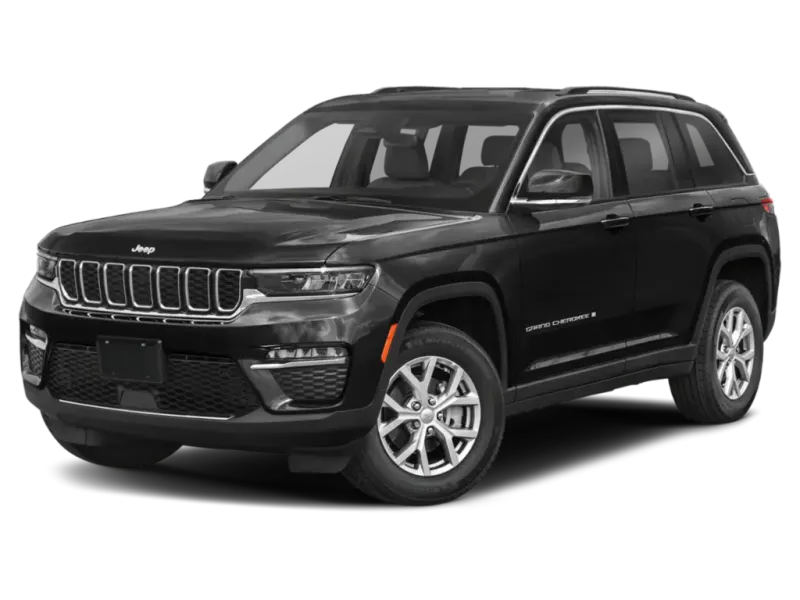
Jeep Grand Cherokee
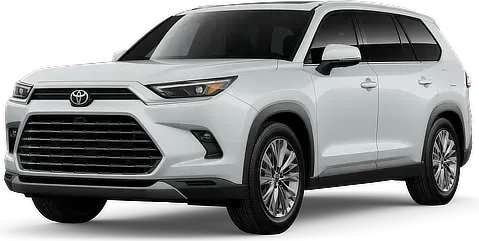
Toyota Grand Highlander
On reliability, the Toyota Grand Highlander comes out well ahead of the Jeep Grand Cherokee. Jeep owners report crash-linked brake and steering failures. The Toyota's complaints are milder, though it has only three model years of history to judge.
How Do the Jeep Grand Cherokee and Toyota Grand Highlander Generations Compare?
Verdict
The Toyota Grand Highlander is more reliable than the Jeep Grand Cherokee, scoring 79/100 vs 66/100.
Reliability favors the Toyota by a large gap. Its owner reports are mostly hesitation, a slow airbag recall fix, and a fuel gauge that reads low, with only one crash-linked report. The Jeep draws crash-linked complaints in brakes, steering, electrical and power train, plus transmission replacements and camshaft wear on the 3.6L V6. The Toyota's record is short, since it has only three model years on the road, and its complaint rate per vehicle sold runs a little higher. The severity of the Jeep's failures still decides it.
Key Differences
- 1Toyota Grand Highlander has 87 fewer total recalls
- 2Toyota Grand Highlander scores 13 points higher in reliability
- 3Jeep Grand Cherokee has 1.4 fewer complaints per 10k sold
Category Scoreboard
Jeep Grand Cherokee vs Toyota Grand Highlander: Which Is More Reliable?
| Metric | Jeep Grand Cherokee | Toyota Grand Highlander |
|---|---|---|
| Reliability Score | 66/100 | 79/100 |
| Years Tracked | 9 | 3 |
| Total Recalls | 97 | 10 |
| Complaints per 10k Sold | 6.8 | 8.2 |
| Safety RatingNHTSA overall | 2026 NHTSA | 2026 NHTSA |
| Frontal | ||
| Side | ||
| Rollover | ||
| Year Wins | 0 | 3 |
What Are the Common Problems With the Jeep Grand Cherokee and Toyota Grand Highlander?
Jeep owners describe failures that can hurt people. Sudden acceleration in parking spots, engine shutoffs while driving, electric power steering that cuts out, and a brake pedal that went to the floor all appear, and every major area carries crash-linked reports. Transmission replacements and Pentastar camshaft and rocker arm wear are the repeat mechanical faults. Toyota owners mostly report stuttering and power loss that dealers cannot duplicate, months of waiting for airbag recall parts, a fuel gauge that reads empty with gallons left, and hood flutter. Only one Toyota complaint area has a crash-linked report: side airbags in a T-bone collision.
| Component | Jeep Grand Cherokee | Toyota Grand Highlander |
|---|---|---|
| ELECTRICAL SYSTEM | 2.2Low | 0.6Very Low |
| UNKNOWN OR OTHER | 0.9Very Low | 1.7Low |
| POWER TRAIN | 0.7Very Low | 1.4Low |
| AIR BAGS | 0.2Very Low | 1.1Low |
| STEERING | 0.6Very Low | 0.2Very Low |
| SUSPENSION | 0.2Very Low | 0.4Very Low |
| FUEL/PROPULSION SYSTEM | —None | 0.6Very Low |
| SERVICE BRAKES | 0.5Very Low | —None |
| VEHICLE SPEED CONTROL | 0.1Very Low | 0.4Very Low |
| STRUCTURE | —None | 0.5Very Low |
| ENGINE | 0.4Very Low | —None |
| EXTERIOR LIGHTING | 0.1Very Low | —None |
| FORWARD COLLISION AVOIDANCE | 0.1Very Low | —None |
| SEATS | 0.1Very Low | —None |
| VISIBILITY/WIPER | —None | 0.1Very Low |
| ENGINE AND ENGINE COOLING | —None | —None |
| LANE DEPARTURE | —None | —None |
| BACK OVER PREVENTION | —None | —None |
Complaints per 10,000 units sold, aggregated across all tracked model years from NHTSA owner reports.
How Does Jeep Grand Cherokee vs Toyota Grand Highlander Reliability Compare by Year?
| Year | Jeep Grand Cherokee | Toyota Grand Highlander | Edge |
|---|---|---|---|
| 2026 | 70/1002R / 0C | 88/1000R / 0C | Toyota Grand Highlander |
| 2025 | 75/1003R / 59C | 80/1003R / 33C | Toyota Grand Highlander |
| 2024 | 66/10020R / 204C | 69/1007R / 171C | Toyota Grand Highlander |
Best years to cross-shop: The 2024 Jeep Grand Cherokee scored 66/100 and the 2024 Toyota Grand Highlander scored 69/100 — the strongest shared model years that have been on the road for at least two years, where available.
Who Should Buy the Jeep Grand Cherokee vs the Toyota Grand Highlander?
Jeep Grand Cherokee vs Toyota Grand Highlander: Common Questions
- Is the Jeep Grand Cherokee more reliable than the Toyota Grand Highlander?
- No. The Toyota Grand Highlander leads by a large gap. The Jeep has crash-linked complaints in brakes, steering, electrical and power train, along with transmission replacements and engine wear. The Toyota's main issues are hesitation, a slow airbag recall remedy and a misleading fuel gauge. It is newer, so its record is shorter.
- Which has more recalls, the Grand Cherokee or the Grand Highlander?
- The Jeep Grand Cherokee has far more, with 97 recalls across 9 model years. The Toyota Grand Highlander has 10 across 3 model years. The Jeep has been sold for longer, so some of the gap reflects time on the road. Check any car's VIN for open recalls before buying.
- What is the main problem with the Toyota Grand Highlander?
- Power train hesitation leads the reports. Drivers describe stuttering, lurching, and a few seconds with no acceleration when pulling away. Dealers often cannot duplicate it, and a firmware update has not always fixed it. Airbag complaints about the wait for recall 24V461000 parts come second.
- What goes wrong most on the Jeep Grand Cherokee?
- Electrical complaints are the most numerous, including sudden acceleration in parking spots and engine shutoffs while driving. Power train, steering, brakes and engine follow. Transmissions have needed full replacement in several reports, and the 3.6L V6 shows camshaft and rocker arm wear with ticking and misfires.
- Which Grand Cherokee model years should I avoid?
- Avoid 2018 and 2022, the weakest years in the data. Look at 2020 instead, which ranks among the strongest. Whatever year you choose, ask for service records on the transmission and steering, and check for open recalls.
Related Reliability Comparisons
More Jeep Grand Cherokee comparisons
More Toyota Grand Highlander comparisons
Decided between Jeep Grand Cherokee and Toyota Grand Highlander? Run a VIN check before you buy — uncover hidden accidents, title issues, and open recalls.
How we score the Jeep Grand Cherokee and Toyota Grand Highlander
Scores weight complaint severity at 35%, repair costs at 30%, recall impact at 20%, and the spread of complaints across systems at 15%, with complaint counts adjusted for US sales. Read the full methodology.
See incorrect data? Report an issue