Last updated: 2026-11-26
Brakes, steering & tires
Honda HR-V Brake Problems
Honda HR-V owners report brakes that sometimes fail to stop the vehicle, with some complaints describing unexpected acceleration or automatic braking.
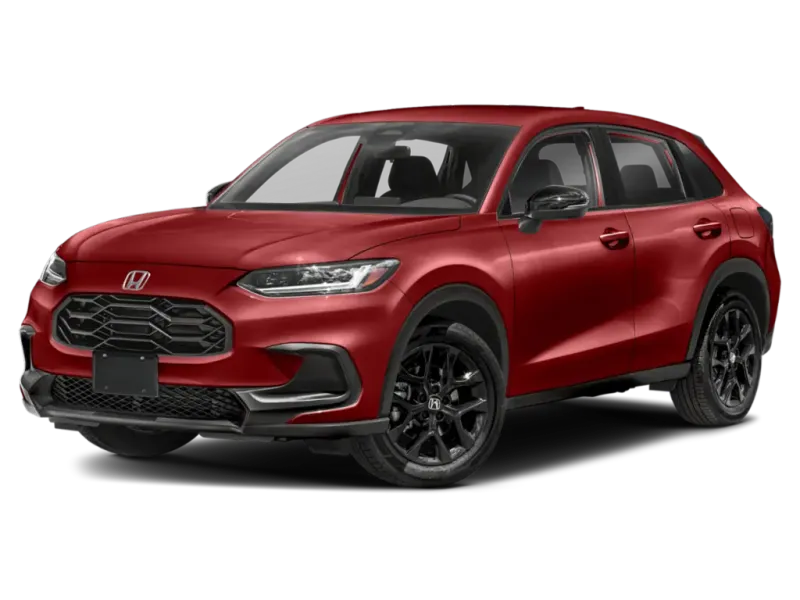
- Owner complaints
- 58
- Share of all complaints
- 4%
- Crash / fire / injury reports
- 12 / 1 / 1
- Related recalls
- 1
Honda HR-V brake complaints by model year
Brake complaints appear across every listed model year from 2018 through 2026. The largest raw totals are 2019 with 12 and 2018 with 11, followed by 2022 with 9. The 2020, 2023, and 2025 records each list four complaints; 2026 lists two. Newer vehicles have had less time to accumulate filings, so their lower counts do not show that they are safer choices. Federal recall records list a brake recall covering 2018 and 2019 HR-Vs.
| Model year | Complaints | Per 10,000 sold | Crash, fire, injury reports |
|---|---|---|---|
| 2018 | 11 | 1.3 | 3, 0, 0 |
| 2019 | 12 | 1.2 | 3, 0, 0 |
| 2020 | 4 | 0.5 | 2, 0, 0 |
| 2021 | 5 | 0.4 | 0, 0, 0 |
| 2022 | 9 | 0.8 | 3, 1, 1 |
| 2023 | 4 | 0.3 | 0, 0, 0 |
| 2024 | 7 | 0.5 | 0, 0, 0 |
| 2025 | 4 | 0.3 | 1, 0, 0 |
| 2026 | 2 | n/a | 0, 0, 0 |
Owner complaints filed with NHTSA under service brakes, parking brake. Newer model years have had less time to collect complaints.
What goes wrong
Some Honda HR-V reports describe a brake pedal that sinks toward the floor, brakes that do not stop the vehicle as expected, or a car that moves while the driver is pressing the brake. Other filings describe unexpected automatic braking, brake hold releasing, or warning lights tied to the brake and parking-brake systems. Dealers sometimes could not reproduce the reported behavior or find a cause, so complaint records do not establish a confirmed defect in each vehicle.
The risk is serious: complaints include crashes while parking, reversing, or slowing in traffic, including one 2022 report with an injury and a separate 2022 filing flagged as fire-related. Some owners describe cars that would not start, move, or shift normally after brake-system warnings. These are owner reports, not proof that every HR-V has the problem. If braking changes or warnings appear, avoid relying on the vehicle until a qualified shop assesses it; do not test a suspected failure in traffic.
Symptoms owners report
Brakes do not stop as expected
Reports describe the vehicle continuing to roll or taking too long to stop despite pedal pressure. Some occurred at low speed while parking or reversing; others describe slowing problems in traffic or on snow and ice. Complaints include crashes, but filings alone do not establish the cause in each case.
Unexpected movement while braking
Some owners say the HR-V accelerated or crept forward while they were trying to stop, including at parking speeds and at a traffic light. One complaint describes Brake Hold releasing and the vehicle rolling. These reports describe hazardous events, not a verified diagnosis.
Automatic braking without an obstacle
Owners report sudden automatic braking when they saw no vehicle or object ahead, including incidents at highway speed and near intersections. Some say the abrupt stop nearly led to a rear-end collision. A complaint is not confirmation that the system malfunctioned.
Parking-brake and system warnings
Filings mention flashing Park or brake-system warnings, brief brake-failure alerts with a chirp, and messages involving Brake Hold. Some reports also describe trouble starting, shifting, or moving. Multiple warnings appearing together do not by themselves identify the underlying fault.
Pedal, scraping, or lockup symptoms
Other reports describe a pedal sinking to the floor, kickback, grinding or scraping, or brakes that lock and cause a skid under moderate pressure. One 2026 filing pairs a pedal-to-floor report with the vehicle pulling right. These symptoms warrant prompt professional assessment.
When the problems start
The records do not show one consistent mileage when brake complaints begin. Specific examples include a 2020 report at about 11,000 miles, a 2019 warning complaint at 14,539 miles, and 2025 reports below 10,000 miles. One 2026 filing describes warnings at about 536 miles. These examples are isolated complaint details, not a predictable failure interval.
Repairs and recalls
For 2018 and 2019 HR-Vs, federal recall 18V777000 says rear brake caliper pistons may have an insufficient coating, allowing gas pockets to form and reducing brake performance. The listed remedy is for Honda or Acura dealers to bleed the brakes free of charge; the recall began December 11, 2018. Some owners say dealers could not reproduce symptoms or find trouble codes. One 2019 owner reported replacing rear caliper motors and electric parking-brake parts, with the warning returning later. The supplied records give no repair-cost estimate for this brake problem.
Checking a used HR-V for brake problems
- Check the VIN with Honda and federal recall records for open brake recalls, then ask for repair documentation.
- Review service records for brake-system warnings, pedal concerns, automatic braking events, or repeat visits.
- With a qualified mechanic, assess pedal feel and brake operation before purchase; do not road-test a suspected failure in traffic.
- Check whether parking-brake and Brake Hold warnings or repairs are documented in the service history.
- Ask the seller whether any brake or parking-brake complaints occurred and request invoices or dealer findings.
For the rest of the car, use a full Honda HR-V inspection checklist.
1 brake recall cover the Honda HR-V. A VIN check shows whether the car you're looking at had its recall work done, plus accident and title history.
Honda HR-V Brake Problems: common questions
- Which Honda HR-V years have brake complaints?
- The supplied records list brake complaints for every model year from 2018 through 2026. The largest totals are for 2019 and 2018, while later years have fewer filings so far. Newer model years have had less time on the road to collect complaints, so a lower count is not proof of lower risk.
- Is it safe to drive an HR-V with brake warnings or stopping problems?
- The complaint records include reports of cars that did not stop as expected, moved while the brake was pressed, or braked suddenly without an apparent obstacle. They also include crashes. If the vehicle's braking behavior changes or a brake warning appears, do not assume it is safe; arrange a professional assessment and follow the vehicle's manual or dealer guidance.
- Does a recall cover Honda HR-V brake problems?
- Federal recall 18V777000 covers certain 2018 and 2019 Honda HR-Vs, among other vehicles. The record says the rear brake caliper pistons may have insufficient coating, which can reduce brake performance, and lists dealer brake bleeding at no charge as the remedy. Check the vehicle identification number with Honda or federal recall records to confirm coverage and completion.
- What does it cost to fix HR-V brake problems?
- The supplied records do not provide a cost for diagnosing or repairing the reported brake symptoms. The listed remedy for recall 18V777000 is free dealer brake bleeding for covered vehicles. Other complaints mention dealer visits and replacement of electric parking-brake parts, but do not establish a typical repair or its price. Get a written inspection and estimate for the specific car.
- Do owner complaints prove the HR-V has a brake defect?
- No. These are owner-submitted reports, and they do not verify the cause of each event. Some owners say a dealer could not reproduce the issue or find a cause. The records do document reported symptoms and crashes, while the recall entry separately identifies a specific brake-caliper concern for certain vehicles.
Other Honda HR-V problems
Electrical & lighting
Brakes, steering & tires
Engine & powertrain
Airbags & seat belts
Body & interior
More on the Honda HR-V
See incorrect data? Report an issue