Last updated: 2026-11-19
Engine & powertrain
Honda CR-V Transmission Problems
Honda CR-V transmission complaints most often describe a sudden loss of drive power at speed, with some cars rolling in Park or shifting to reverse.
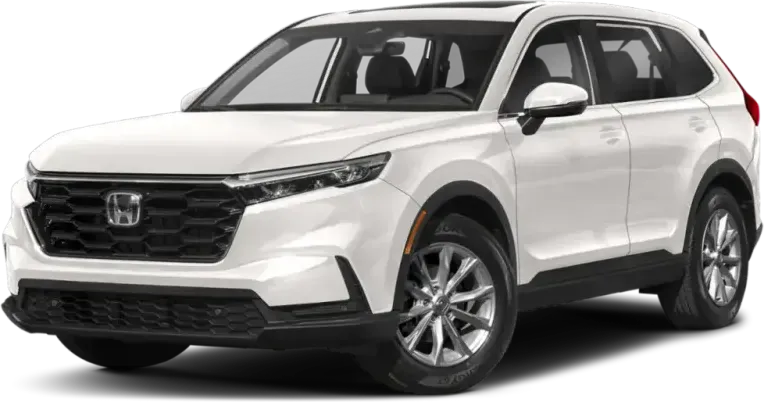
- Owner complaints
- 124
- Share of all complaints
- 2%
- Crash / fire / injury reports
- 8 / 0 / 1
- Related recalls
- 2
Honda CR-V transmission complaints by model year
Complaint counts are close across the model years, so no single year is clearly the problem one. The 2018 and 2026 model years lead with 19 each, followed by 2024 with 18. The 2019 year has the fewest among the older years, yet it carries the most crash reports, mostly rollaway cases. The 2025 and 2026 years have had little time on the road, so low counts there mean little. The 2026 reports describe nearly the same symptom, a brief slowdown while accelerating.
| Model year | Complaints | Per 10,000 sold | Crash, fire, injury reports |
|---|---|---|---|
| 2018 | 19 | 0.5 | 1, 0, 0 |
| 2019 | 9 | 0.2 | 3, 0, 0 |
| 2020 | 14 | 0.4 | 2, 0, 1 |
| 2021 | 13 | 0.4 | 0, 0, 0 |
| 2022 | 14 | 0.6 | 0, 0, 0 |
| 2023 | 14 | 0.4 | 0, 0, 0 |
| 2024 | 18 | 0.4 | 2, 0, 0 |
| 2025 | 4 | <0.1 | 0, 0, 0 |
| 2026 | 19 | 7 | 0, 0, 0 |
Owner complaints filed with NHTSA under power train. Newer model years have had less time to collect complaints.
What goes wrong
Sudden loss of drive power is the most common complaint in this area. The pedal stops responding, warning lights flash, and the car slows on a highway or on-ramp until a restart brings power back. Others get an All Wheel Drive System Problem warning that drops the car to front-wheel drive. A smaller group report the car rolling after being put in Park, or moving into reverse on its own.
The safety risk is real. Losing power while merging is the main danger, and a 2024 owner was hit by another car after power dropped. Crash reports also include cars that rolled in Park into a tree, a wall, and a parked vehicle, and one that shifted into reverse in a car wash and hit a pole. One injury is logged and no fires. Some cars ended up undrivable, including one that needed a new transmission at under 2,000 miles. Even so, these complaints are only about 2% of all complaints on this model.
Symptoms owners report
Sudden loss of drive power
The accelerator stops working on the highway or while merging. Warning lights flash and the car coasts. A restart usually restores power, and dealers often cannot duplicate it. This is the leading report on the 2021, 2022, and 2024 model years.
All Wheel Drive System warning
A dash warning appears and the car drops to front-wheel drive. Owners trace it to a rear differential pump motor, a damaged differential temperature sensor, or a cracked rear differential. Some also report jerking and slipping when reversing and turning.
Rolling in Park or unwanted reverse
Cars roll forward or backward after being shifted into Park, sometimes with the engine off. Other owners report the gear changing to reverse without warning, including in a car wash and while pressing the pedal in Drive. Several of these ended in crashes.
Brief hesitation on newest cars
On 2026 models, acceleration falters for 2 to 6 seconds before the car pulls normally again. Pressing harder does not help. It happens pulling away from stops, in slow turns, and on freeway on-ramps, in both normal and econ modes.
Transmission failure and leaks
Individual cars report a dead transmission at very low mileage, a bearing failure that required a new transmission, CVT failure, a loose transmission mount, and a fluid leak from a misrouted hose. Noise and a sluggish feel often come first.
When the problems start
Problems show up early and late. Rollaway and reverse reports came at about 1,000 and 4,700 miles. A dead transmission was reported at 1,971 miles, and a fluid leak at 10,000. AWD warnings appear around 33,188 and 40,000 miles. A CVT failure was reported at 24k miles, and a transmission bearing failure at 78K.
Repairs and recalls
Dealers often cannot find a cause for power loss, and owners say a restart is the only fix. For AWD warnings, owners cite a service bulletin calling for a new rear differential pump motor, with one repair costing $1,260. A dealer quoted $4000 for rear differential jerking. A transmission that died at 1,971 miles was replaced under warranty. Federal recall records list two related recalls. Recall 21V939000 covers 2022 CR-V Hybrids for front driveshafts that may have been improperly heat-treated. Recall 23V588000 covers 2023 CR-V Hybrids for an electronic transmission that may cause loss of drive power. Dealers replace the e-CVT free.
| Model years | Campaign | Problem |
|---|---|---|
| 2023 | 23V588000 | Honda (American Honda Motor Co.) is recalling certain 2023 CR-V Hybrid and Accord Hybrid vehicles. The electronic transmission may have been improperly manufactured, which can result in a loss of drive power. |
| 2022 | 21V939000 | Honda (American Honda Motor Co.) is recalling certain 2021 Acura RDX and 2022 CR-V Hybrid vehicles. A component in the right or left front driveshaft may have been improperly heat-treated, which could result in… |
Checking a used CR-V for transmission problems
- Enter the VIN in the federal recall lookup and confirm the Hybrid recalls were completed on any 2022 or 2023 CR-V Hybrid.
- Ask for service records showing any rear differential, AWD, or transmission repairs, and whether a pump motor was replaced.
- Shift through Park, Reverse, Neutral, and Drive on a gentle slope. Confirm the car holds in Park and engages each gear cleanly.
- On a test drive, include a freeway on-ramp. Watch for hesitation, flashing warnings, or a sudden drop in power.
- Turn tightly in both directions and reverse slowly. Listen for axle noise, and feel for jerking or slipping from the rear.
- Scan the dash for AWD, power, or transmission warnings at startup, and have a dealer check stored codes before buying.
For the rest of the car, use a full Honda CR-V inspection checklist.
2 transmission recalls cover the Honda CR-V. A VIN check shows whether the car you're looking at had its recall work done, plus accident and title history.
Honda CR-V Transmission Problems: common questions
- Which Honda CR-V years have the most transmission complaints?
- The 2018 and 2026 model years lead with 19 complaints each, and 2024 follows with 18. Counts are fairly even across 2018 to 2024, so no year is clearly worse. The 2025 and 2026 years are too new to judge, since complaints build up with time on the road.
- Is it safe to drive a CR-V with a transmission or AWD warning?
- Treat it with caution. Owners report sudden power loss on highways, and one was hit by another car afterward. Warnings often clear after a restart, but they can return. Have the car scanned by a dealer before relying on it for highway driving.
- Is there a recall for CR-V transmission problems?
- Federal recall records list two in this area, both for Hybrids. Recall 21V939000 covers 2022 models for front driveshafts. Recall 23V588000 covers 2023 models for an electronic transmission that may lose drive power. Check any VIN for open recalls.
- Why does a CR-V roll when parked?
- Owners on 2018, 2019, and 2020 models report cars rolling after being shifted into Park, sometimes with the engine off and no warning. Some ended in crashes. The data does not give a cause. Test a car on a slope before buying.
- How much does a CR-V transmission or AWD repair cost?
- Owner reports vary widely. One rear differential pump motor repair cost $1,260, and a dealer quoted $4000 for rear differential jerking. A transmission that failed at 1,971 miles was covered by warranty. Independent repair-cost data puts yearly repairs for the whole model at $407.
Other Honda CR-V problems
Brakes, steering & tires
Engine & powertrain
Driver-assist tech
Electrical & lighting
Body & interior
Airbags & seat belts
More on the Honda CR-V
See incorrect data? Report an issue