Last updated: 2026-11-19
Brakes, steering & tires
Honda CR-V Brake Problems
Honda CR-V brake complaints center on the car surging or failing to stop while parking, plus sudden false automatic braking on open roads.
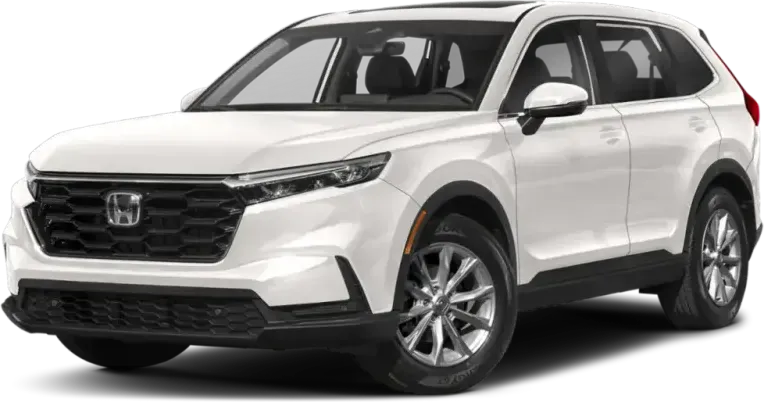
- Owner complaints
- 447
- Share of all complaints
- 7%
- Crash / fire / injury reports
- 63 / 0 / 37
- Related recalls
- 0
Honda CR-V brake complaints by model year
The 2018 model year has the most brake complaints by a wide margin, at 171, and the highest rate per vehicle sold among the established years. The 2019 year follows with 85, then 2020 with 47. Model years 2021 through 2025 each sit between 22 and 31 complaints, at lower rates, though the 2025 year has the most crash reports of any year at 15. The 2026 year has only 11 complaints because it is too new to judge, so its numbers say little either way.
| Model year | Complaints | Per 10,000 sold | Crash, fire, injury reports |
|---|---|---|---|
| 2018 | 171 | 4.5 | 13, 0, 10 |
| 2019 | 85 | 2.2 | 6, 0, 6 |
| 2020 | 47 | 1.5 | 4, 0, 4 |
| 2021 | 30 | 0.8 | 4, 0, 1 |
| 2022 | 22 | 0.9 | 5, 0, 0 |
| 2023 | 27 | 0.7 | 5, 0, 9 |
| 2024 | 23 | 0.6 | 8, 0, 1 |
| 2025 | 31 | 0.8 | 15, 0, 5 |
| 2026 | 11 | 4.1 | 3, 0, 1 |
Owner complaints filed with NHTSA under service brakes, parking brake. Newer model years have had less time to collect complaints.
What goes wrong
The most serious brake complaint is a car that does not stop when the driver presses the pedal. Owners describe it mostly at parking speeds. The pedal feels firm or sinks, the engine revs, and the car lurches into a wall, curb, or tree. The second common report runs the other way: automatic braking slams on with nothing ahead, sometimes at highway speed. Others report a soft pedal, brake warnings at start-up, and a parked car rolling away.
The risk is real. Crash reports show up in every model year, and many include injuries, from whiplash and bruising to a driver whose legs were run over by a rolling car. The data lists no fires. Some cars were towed or declared total losses. Warning lights often did not come on beforehand, and dealers sometimes could not reproduce the fault. Brakes make up a small share of this model's complaints, but the ones filed here tend to be severe. Federal recall records list no recall in this area.
Symptoms owners report
Surges forward while parking
Drivers press the pedal while pulling into a space or driveway, the engine revs, and the car jumps curbs and hits walls, poles, trees, or parked cars. Reports peak in 2024 and 2025, and some owners say it happened more than once.
Pedal sinks or does not respond
The pedal drops to the floor, feels soft, or locks hard, sometimes with several brake warnings at once. Some owners report a stop at 40 to 50 mph that never came. A few say a restart brought normal braking back.
False automatic braking
The collision braking system stops the car hard with nothing ahead, at speeds as high as 70 mph in some 2019 reports. Drivers describe being rear-ended afterward, with whiplash and seatbelt bruising among the injuries.
Brake warnings and parking brake faults
Brake System and Electric Parking Brake Problem messages appear at start-up, and some owners lose adaptive cruise and collision mitigation. In 2020 reports, a parked car rolled away after shutdown, injuring the driver.
Rotor wear, noise, and lockup
Owners report squealing, grinding, and a loud pumping noise under braking that dealers could not fix or would not cover under warranty. One 2024 owner found corroded rotors at 11000 miles. Another reports repeated wheel lockup with lost steering.
When the problems start
Many failures come early. Some 2026 owners report problems between about 1,500 and under 6,000 miles, and one 2019 owner reported a creeping car with under 100 miles. A 2022 crash happened near 9,379 miles. Power brake failures show up between 25,000 and 36,000 miles, and radar-related system loss around 35,000. A 2021 hybrid needed work at 27,002 miles, and a booster failed at 47,440 miles.
Repairs and recalls
Federal recall records list no recall for brakes on this model. Owners report mixed dealer results. Some had the electric brake booster or pedal simulator unit replaced. One bill was $3,206, and a hybrid brake module and booster repair was quoted at $2,500. One dealer replaced a wiring harness behind the rearview mirror. Others were told nothing could be reproduced, or saw a sensor fault return after repair. Independent repair-cost data puts yearly repair cost for the model overall at $407, which does not reflect these larger bills.
Checking a used CR-V for brake problems
- Ask the seller whether the brake booster, pedal simulator, or brake module was ever replaced, and request the dealer invoice.
- Start the car cold and watch the dash for Brake System or Electric Parking Brake messages before driving off.
- Press the pedal firmly at a stop and in a parking lot. It should feel consistent and hold the car without creeping.
- Check for lasting brake warnings, a pedal that sinks, or automatic braking events on a long drive that includes highway speed.
- Inspect the rotors for rust or heavy scoring, and listen for squeal, grinding, or pumping noises when braking.
- Run the VIN for open recalls and ask the seller about past brake complaints, repair orders, or accident history.
For the rest of the car, use a full Honda CR-V inspection checklist.
A VIN check shows whether the car you're looking at had its recall work done, plus accident and title history.
Honda CR-V Brake Problems: common questions
- Which Honda CR-V years have the most brake problems?
- The 2018 model year has the most brake complaints at 171, followed by 2019 at 85 and 2020 at 47. Later years have fewer complaints, but they have had less time on the road. The 2026 year is too new to judge. Crash reports appear in every year.
- Is a Honda CR-V safe to drive with brake problems?
- Not if the pedal feels soft, sinks, or the car surges or brakes on its own. Owners report crashes and injuries from these faults, often with no warning light first. Have a dealer inspect any symptom before driving the car further.
- Is there a recall for Honda CR-V brake problems?
- Federal recall records list no recall in this area for this model. Owners have asked for one, but that does not mean a recall exists. Check the VIN on the NHTSA recall lookup for open campaigns before you buy.
- How much does a CR-V brake repair cost?
- Routine brake work is not the concern in the data. Owners report much larger bills for power brake failures: $3,206 for a booster or pedal simulator repair, and $2,500 quoted for a hybrid brake module and booster. One owner said a booster failure cost thousands.
- Why does my CR-V brake hard on its own?
- Owners describe the collision braking system stopping the car with nothing ahead, on highways and in parking lots. Some suspect a bad radar unit, and one dealer blamed wiring behind the rearview mirror. Dealers sometimes could not reproduce the fault, so keep records and photos of each event.
Other Honda CR-V problems
Brakes, steering & tires
Engine & powertrain
Driver-assist tech
Electrical & lighting
Body & interior
Airbags & seat belts
More on the Honda CR-V
See incorrect data? Report an issue