Last updated: 2026-10-10
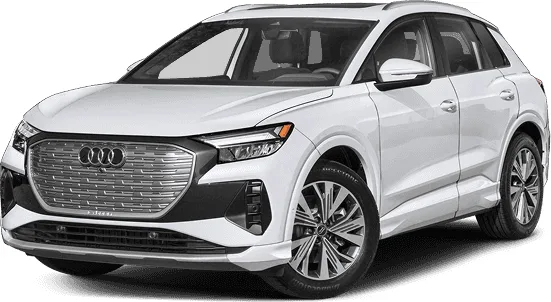
Audi Q4 e-tron Years to Avoid
3 scored model years (2024–2026) · model average 69/100
No model year of the Q4 E-Tron falls well below the model's own average, so none is one to skip. What differs is how much history each year has. The 2024 model has the most complaints and recalls, while 2025 and 2026 are too new to judge. Of the three, 2024 is the year to buy.
Verdict
- Avoid
- No outlier years
- Buy
- 2024 65/100
- Model average
- 69/100
What Are Common Audi Q4 e-tron Problems?
ELECTRICAL SYSTEM
13 complaintsMost reported in 2024, 2025
2024: Sudden shutdowns, no-starts and repeated warning messages dominate these reports.
STEERING
2 complaintsMost reported in 2024
2024: Loss of control and total electrical failure are the two problems reported here.
POWER TRAIN
2 complaintsMost reported in 2024
2024: Sudden shutdowns linked to the driver's seat sensor and recurring all-wheel-drive warnings make up these reports.
TIRES
2 complaintsMost reported in 2024
2024: Tread separation and a blowout are the two tire problems reported.
Best Audi Q4 e-tron Year to Buy Instead
2024 Audi Q4 e-tron
2024 is the only year on the road long enough to show its real problems, and those problems are well documented. The 2025 and 2026 years have far fewer complaints, but that mostly reflects less time to collect them. With 2024, you can check its three recalls and electrical history before you pay.
Found a Safe Year? Check the Specific Car
Even the 2024 Audi Q4 e-tron has 3 recalls on file. A VIN check confirms the recall work on the exact car and shows its accident, title, and service history.
- Accidents
- Open Recalls
- Title History
- Odometer Rollback
All Audi Q4 e-tron Years by Generation
Audi Q4 e-tron Reliability Scores by Year
First generation (F4) (2022–2024)
Frequently Asked Questions
Which Audi Q4 E-Tron years should I avoid?
Is the 2024 Audi Q4 E-Tron a good year to buy?
Is the 2025 Audi Q4 E-Tron more reliable than the 2024?
Should I buy a 2026 Audi Q4 E-Tron?
Which Audi Q4 E-Tron years have power train problems?
How we score every Audi Q4 e-tron model year
Scores weight complaint severity at 35%, repair costs at 30%, recall impact at 20%, and the spread of complaints across systems at 15%, with complaint counts adjusted for US sales. Read the full methodology.
See incorrect data? Report an issue