Last updated: 2026-10-10
Audi Q3 vs BMW X1: Reliability Compared
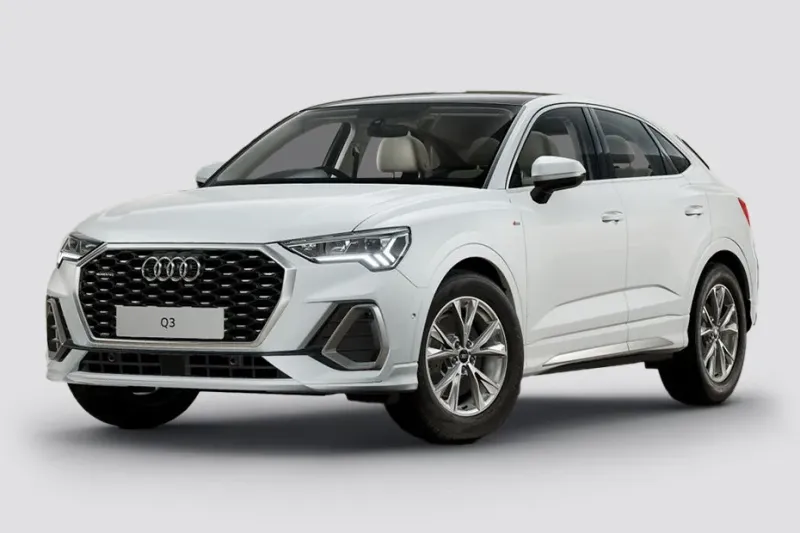
Audi Q3

BMW X1
Reliability favors the Audi Q3 by a slight margin over the BMW X1, mainly because owners file far fewer complaints per car sold. The X1 also has more recalls and costs a bit more to repair, and its crash-linked reports span more systems.
How Do the Audi Q3 and BMW X1 Generations Compare?
Verdict
The Audi Q3 is more reliable than the BMW X1, scoring 74/100 vs 71/100.
A slight edge goes to the Audi Q3. Both cars stand well, so the gap is small. The deciding factor is complaint volume: Q3 owners file well under half as many complaints per car sold as X1 owners. The Q3 also has fewer federal recalls, a lower yearly repair bill, and fewer unscheduled shop visits. The X1 is not a poor choice, but it trails on each of those measures. Neither car has a clean record, so check the specific year you are considering.
Key Differences
- 1Audi Q3 costs $56 less per year to repair
- 2Audi Q3 has 8.2 fewer complaints per 10k sold
- 3Audi Q3 has 6 fewer total recalls
Category Scoreboard
Audi Q3 vs BMW X1: Which Is More Reliable?
What Are the Common Problems With the Audi Q3 and BMW X1?
Electrical glitches and stalling define the Q3's complaints, while brakes and safety systems dominate the X1's. On the Q3, the touchscreen can go blank and take the reverse camera with it, a leaking sunroof let water in, and steering can go heavy when start/stop shuts the engine off. On the X1, owners report ABS warning lights, weak braking, a pedal that dropped to the floor, and long waits for recall parts. Crash-linked reports appear in four X1 areas: brakes, stability control, electrical, and power train. The Q3 has them only in its electrical category.
| Component | Audi Q3 | BMW X1 |
|---|---|---|
| SERVICE BRAKES | 0.4Very Low | 4Average |
| ELECTRICAL SYSTEM | 1.5Low | 1.1Low |
| UNKNOWN OR OTHER | 0.9Very Low | 1.2Low |
| STRUCTURE | —None | 1.7Low |
| POWER TRAIN | 0.2Very Low | 1.1Low |
| ELECTRONIC STABILITY CONTROL (ESC) | —None | 1.2Low |
| AIR BAGS | 0.2Very Low | 0.9Very Low |
| STEERING | 0.4Very Low | 0.4Very Low |
| ENGINE | 0.3Very Low | 0.4Very Low |
| FUEL/PROPULSION SYSTEM | 0.4Very Low | 0.2Very Low |
| BACK OVER PREVENTION | 0.1Very Low | 0.2Very Low |
| VEHICLE SPEED CONTROL | 0.1Very Low | —None |
| FORWARD COLLISION AVOIDANCE | 0.1Very Low | —None |
| EQUIPMENT | 0.1Very Low | —None |
| SEAT BELTS | 0.1Very Low | —None |
| EXTERIOR LIGHTING | 0.1Very Low | —None |
| TIRES | 0.1Very Low | —None |
Complaints per 10,000 units sold, aggregated across all tracked model years from NHTSA owner reports.
Which Is Cheaper to Maintain: Audi Q3 or BMW X1?
How Does Audi Q3 vs BMW X1 Reliability Compare by Year?
| Year | Audi Q3 | BMW X1 | Edge |
|---|---|---|---|
| 2026 | 82/1000R / 0C | 74/1002R / 0C | Audi Q3 |
| 2025 | 75/1001R / 3C | 73/1003R / 9C | Audi Q3 |
| 2024 | 75/1002R / 16C | 68/1002R / 26C | Audi Q3 |
| 2023 | 74/1001R / 1C | 64/1005R / 68C | Audi Q3 |
| 2022 | 70/1005R / 28C | 72/1002R / 1C | BMW X1 |
| 2021 | 74/1002R / 13C | 75/1001R / 6C | BMW X1 |
| 2020 | 69/1002R / 62C | 74/1001R / 12C | BMW X1 |
| 2019 | 72/1003R / 10C | 72/1003R / 10C | Tie |
| 2018 | 74/1001R / 25C | 69/1004R / 56C | Audi Q3 |
Best years to cross-shop: The 2024 Audi Q3 scored 75/100 and the 2021 BMW X1 scored 75/100 — the strongest shared model years that have been on the road for at least two years, where available.
Who Should Buy the Audi Q3 vs the BMW X1?
Audi Q3 vs BMW X1: Common Questions
- Is the Audi Q3 more reliable than the BMW X1?
- Yes, but only slightly. Both models rate well. The Q3 pulls ahead because it draws 6.4 owner complaints per 10,000 sold against 14.6 for the X1. It also has fewer recalls, lower yearly repair costs, and fewer unscheduled shop visits.
- Which has more recalls, the Q3 or the X1?
- The X1 has more. Federal recall records show 23 recalls across nine model years for the X1, against 17 for the Q3. Recall counts grow with time on the road, so check the exact year you want for open recalls before you buy.
- Which costs less to repair, the Audi Q3 or the BMW X1?
- The Q3 costs less. Independent repair-cost data estimates $859 a year for the Q3 and $915 for the X1. That is $56 a year, or roughly $280 over five years. The Q3 also needs fewer unscheduled shop visits each year.
- What are the most common problems with the BMW X1?
- Brakes lead the X1 complaints. Owners report ABS and brake warning lights, weak braking, and a pedal that went to the floor. Many others describe waiting months for recall parts. Stability control, the SOS emergency call system, and sudden power loss with a drivetrain warning also appear.
- Do Audi Q3 owners report stalling?
- Yes. Stalling shows up in both engine and fuel system complaints. The engine can lose power at speed or at an intersection and may not restart. Some check engine lights come on first. Dealers have sometimes said the car performed as designed, so diagnosis can drag on.
Related Reliability Comparisons
Decided between Audi Q3 and BMW X1? Run a VIN check before you buy — uncover hidden accidents, title issues, and open recalls.
How we score the Audi Q3 and BMW X1
Scores weight complaint severity at 35%, repair costs at 30%, recall impact at 20%, and the spread of complaints across systems at 15%, with complaint counts adjusted for US sales. Read the full methodology.
See incorrect data? Report an issue