Last updated: 2026-10-10
Jeep Wrangler vs Toyota 4Runner: Reliability Compared
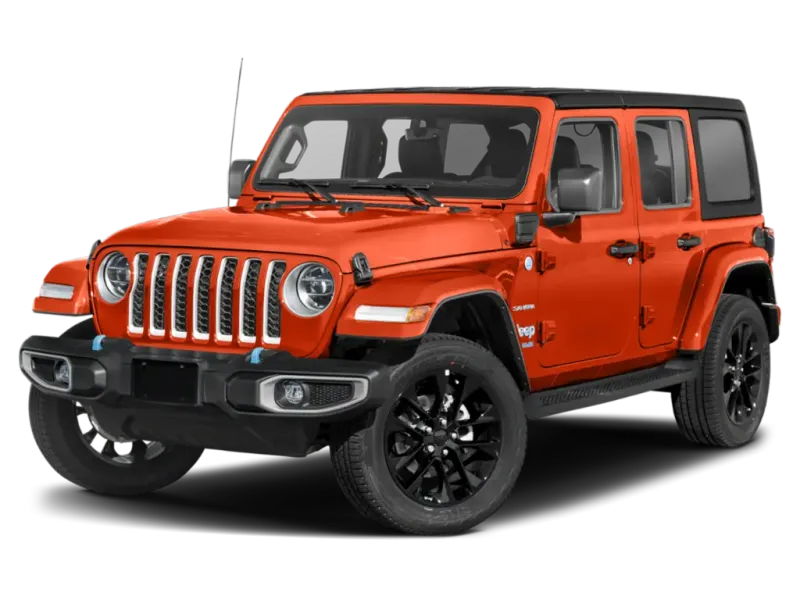
Jeep Wrangler

Toyota 4Runner
Between the Jeep Wrangler and the Toyota 4RUNNER, the Toyota comes out well ahead on reliability. Owners filed 286 complaints on the 4RUNNER and 5160 on the Wrangler. The Jeep also has far more recalls and many more serious steering and fire reports.
How Do the Jeep Wrangler and Toyota 4Runner Generations Compare?
Verdict
The Toyota 4Runner is more reliable than the Jeep Wrangler, scoring 80/100 vs 63/100.
The Toyota is the more reliable choice, and the gap is large. Owners filed 286 complaints on the 4RUNNER against 5160 on the Wrangler, and federal recall records show 17 recalls against 94. The Wrangler's failures also tend to be more dangerous: steering that goes heavy or locks, clutches that catch fire, and wiring that smokes. The 4RUNNER's complaints lean toward highway shakes, brake noise, and rust. Its one serious weak spot is airbags that did not deploy in crashes, but the total volume of complaints stays small.
Key Differences
- 1Toyota 4Runner costs $180 less per year to repair
- 2Toyota 4Runner has 77 fewer total recalls
- 3Toyota 4Runner scores 17 points higher in reliability
Category Scoreboard
Jeep Wrangler vs Toyota 4Runner: Which Is More Reliable?
| Metric | Jeep Wrangler | Toyota 4Runner |
|---|---|---|
| Reliability Score | 63/100 | 80/100 |
| Years Tracked | 9 | 9 |
| Total Recalls | 94 | 17 |
| Complaints per 10k Sold | 15.8 | 1.5 |
| Annual Repair Cost | $694/yr | $514/yr |
| Repair Frequency | 0.3/yr | 0.4/yr |
| Major Repair Risk | 16% | 13% |
| Year Wins | 0 | 9 |
What Are the Common Problems With the Jeep Wrangler and Toyota 4Runner?
Steering is the clearest split. Wrangler owners report the wheel going heavy, locking mid-turn, or seizing at highway speed, with 22 crash-linked complaints. The 4RUNNER's steering complaints are mostly a wobble between 50 and 70 mph, with 1 crash-linked. The Wrangler also has fire reports: 12 tied to power train failures such as broken clutches, and 4 from burning wiring. Its 3.6L V6 can wear camshafts and lifters. The 4RUNNER's fire case is a single stall report, plus rodent-chewed wiring harnesses. Its odd one out is airbags, with 20 crash-linked complaints, including front bags that did not deploy.
| Component | Jeep Wrangler | Toyota 4Runner |
|---|---|---|
| STEERING | 6.6Average | 0.2Very Low |
| ELECTRICAL SYSTEM | 3.5Average | 0.1Very Low |
| POWER TRAIN | 1.7Low | —None |
| UNKNOWN OR OTHER | 1Very Low | 0.2Very Low |
| ENGINE | 0.7Very Low | —None |
| SUSPENSION | 0.5Very Low | 0.1Very Low |
| STRUCTURE | 0.3Very Low | 0.1Very Low |
| SERVICE BRAKES | 0.2Very Low | 0.2Very Low |
| VISIBILITY/WIPER | 0.2Very Low | —None |
| FUEL/PROPULSION SYSTEM | 0.2Very Low | —None |
| AIR BAGS | 0.1Very Low | 0.1Very Low |
| FUEL SYSTEM | 0.1Very Low | 0.1Very Low |
| VEHICLE SPEED CONTROL | 0.1Very Low | —None |
| TIRES | —None | —None |
| SEAT BELTS | —None | —None |
| BACK OVER PREVENTION | —None | —None |
| EXTERIOR LIGHTING | —None | —None |
| VISIBILITY | —None | —None |
Complaints per 10,000 units sold, aggregated across all tracked model years from NHTSA owner reports.
Which Is Cheaper to Maintain: Jeep Wrangler or Toyota 4Runner?
How Does Jeep Wrangler vs Toyota 4Runner Reliability Compare by Year?
| Year | Jeep Wrangler | Toyota 4Runner | Edge |
|---|---|---|---|
| 2026 | 82/1000R / 0C | 84/1000R / 0C | Toyota 4Runner |
| 2025 | 74/1004R / 49C | 81/1001R / 36C | Toyota 4Runner |
| 2024 | 56/10012R / 702C | 79/1001R / 8C | Toyota 4Runner |
| 2023 | 62/10013R / 283C | 82/1001R / 28C | Toyota 4Runner |
| 2022 | 62/10014R / 313C | 79/1003R / 36C | Toyota 4Runner |
| 2021 | 56/10016R / 826C | 82/1001R / 31C | Toyota 4Runner |
| 2020 | 61/10012R / 546C | 82/1001R / 30C | Toyota 4Runner |
| 2019 | 62/1009R / 691C | 77/1004R / 61C | Toyota 4Runner |
| 2018 | 54/10014R / 1750C | 77/1005R / 56C | Toyota 4Runner |
Best years to cross-shop: The 2023 Jeep Wrangler scored 62/100 and the 2023 Toyota 4Runner scored 82/100 — the strongest shared model years that have been on the road for at least two years, where available.
Who Should Buy the Jeep Wrangler vs the Toyota 4Runner?
Jeep Wrangler vs Toyota 4Runner: Common Questions
- Is the Jeep Wrangler more reliable than the Toyota 4RUNNER?
- No. The 4RUNNER leads by a large gap. It has 286 owner complaints, or 1.5 per 10,000 sold, while the Wrangler has 5160, or 15.8 per 10,000 sold. The Wrangler's complaints also include more serious steering, electrical, and fire problems.
- Which has more recalls, the Wrangler or the 4RUNNER?
- The Wrangler has far more. Federal recall records show 94 recalls across nine model years for the Wrangler and 17 for the 4RUNNER. Check any specific vehicle's VIN for open recalls before buying, since owners say some Wrangler problems returned after recall work.
- Which costs less to repair, the 4RUNNER or the Wrangler?
- The 4RUNNER. Independent repair-cost data estimates $514 a year for it and $694 for the Wrangler, about $900 less over five years. Only 13% of 4RUNNER repairs are major, against 16% for the Wrangler, though the 4RUNNER makes slightly more unscheduled shop visits.
- What is death wobble on the Wrangler?
- It is a violent front-end shake after hitting a bump or pothole at roughly 50 to 70 mph. The wheel and whole vehicle oscillate until you slow down sharply. Owners report it on unmodified Jeeps and say it often came back after the steering damper recall or a stabilizer replacement.
- What are the biggest 4RUNNER problems?
- Steering shake at highway speed is the most common, with 39 complaints, followed by brake noise and airbag issues. The airbag category has 20 crash-linked complaints, including front airbags that did not deploy. Rust on the frame, shocks, and springs also shows up in owner reports.
Related Reliability Comparisons
More Jeep Wrangler comparisons
Decided between Jeep Wrangler and Toyota 4Runner? Run a VIN check before you buy — uncover hidden accidents, title issues, and open recalls.
How we score the Jeep Wrangler and Toyota 4Runner
Scores weight complaint severity at 35%, repair costs at 30%, recall impact at 20%, and the spread of complaints across systems at 15%, with complaint counts adjusted for US sales. Read the full methodology.
See incorrect data? Report an issue