Last updated: 2026-08-24
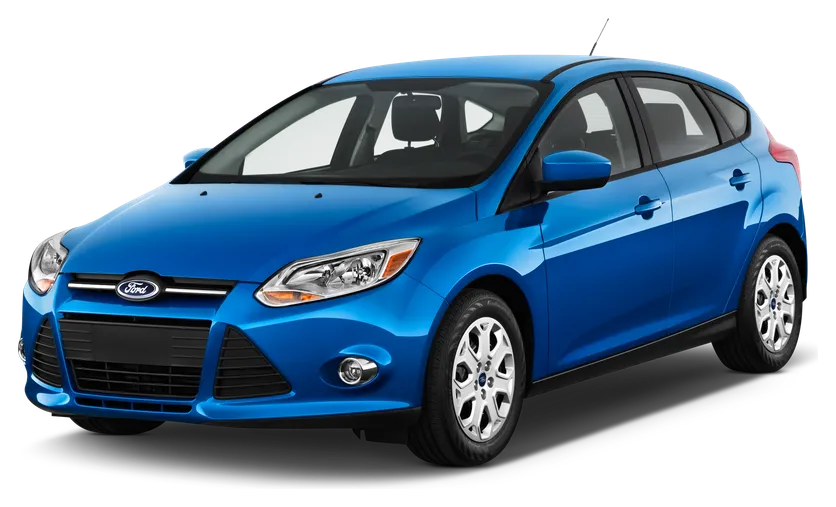
2017 Ford Focus Reliability Report
The 2017 Ford Focus scores 58/100 ("Mixed"). With 10 recalls and 897 owner complaints, buyers should proceed with caution.
Recalls
10
Complaints
897
Complaint Rate
56.6per 10,000 sold
Est. Repair Cost
$569
Annual Fuel Cost
$1,800–$3,450
Detailed Score Breakdown
Component-weighted complaints normalized by sales volume
Independent repair cost ratings
Recall count weighted by severity
Breadth of reported problem categories
The Verdict
Mixed reliability — proceed with caution and budget for repairs.
Top Issues to Watch
- POWER TRAIN (433)
- ENGINE (116)
- ENGINE AND ENGINE COOLING (78)
Generation & Refresh (US)
2017 is 3 years after the third generation facelift refresh.
- Year 7 in the Third generation (C346) (2011–2018).
- Well-established in its generation — most early issues should be resolved.
- 3rd generation Focus (US).
What this means for buyers
Post-refresh years tend to be among the most refined — updates have been applied and early kinks worked out.
2011: Third generation (C346) Launch
Generation start — new platform.
2014: Mid-Cycle Refresh
Updated features and styling tweaks.
2017: This Model Year
2017 is 3 years after the third generation facelift refresh.
Should You Buy the 2017 Ford Focus?
A 58/100 score puts the 2017 Ford Focus in the "Mixed" tier. Buyers should approach with eyes open. 2017 is 3 years after the third generation facelift refresh.
Complaint volume sits above average at 897 owner complaints alongside 10 recalls. Issues in power train (433) tend to be the costly ones.
Treat an extended warranty as non-negotiable and put power train (433) at the top of the inspection checklist.
Compared to the 2018 Ford Focus, which scored 1 points higher. See also the 2016 Ford Focus for an earlier comparison.
Pros
- +Infrequent unscheduled repairs
- +Low major repair risk (13%)
- +Complaint rate in line with Sedan segment average (early data)
Cons
- −Below-average reliability score
- −Above-average recall count
- −POWER TRAIN: Dual-clutch transmission system (433 complaints)
- −ENGINE: Several recurring engine issues with the 2017 Ford Focus (116 complaints)
Common Problem Categories
Safety
LOW RISK- 10 manufacturer recalls issued
Other
HIGH RISK- POWER TRAIN (433)
- ENGINE (116)
Recall Overview
10
recalls on record
The 2017 Ford Focus has 10 recalls on record, which is above average. A high count can flag multiple component concerns, though it also shows the manufacturer is actively addressing known issues.
NHTSA.gov →Complaint Breakdown
56.6
per 10,000 soldSegment avg: 56.6
Safety Incidents
18
Crashes
2
Fires
16
Injuries
0
Deaths
NHTSA 5/5 Stars
Data sourced from NHTSA complaint filings and manufacturer recall notices. Complaint narratives are owner-reported.
2017 Ford Focus Recall Details
10 recalls have been issued for the 2017 Ford Focus. All recall repairs are performed free of charge at authorized dealerships.
POWER TRAIN
Ford Motor Company (Ford) is recalling certain 2015-2018 Focus and 2013-2016 Fusion vehicles previously repaired incorrectly under recall numbers 18V169 and 18V845. The clutch may fracture, resulting in damage to the transmission assembly and possibly a transmission fluid leak.
Consequence
A transmission fluid leak in the presence of an ignition source such as hot engine or exhaust components can increase the risk of a fire.
Remedy
Dealers will update the software, free of charge. Additionally, dealers will inspect Focus vehicles and replace the clutch assembly as necessary, free of charge. Interim letters, notifying owners of the safety risk, were mailed August 5, 2026. Additional letters will be sent once the remedy is available. Owners may contact Ford customer service at 1-866-436-7332. Ford's number for this recall is 26S43. Vehicle Identification Numbers (VINs) involved in this recall will become searchable on NHTSA.gov on July 6,2026.
FUEL SYSTEM, GASOLINE
Ford Motor Company (Ford) is recalling certain 2012-2018 Focus vehicles previously repaired incorrectly under recall number 18V735. The Canister Purge Valve (CPV) may malfunction, causing the engine to stall unexpectedly while driving.
Consequence
An engine that stalls while driving increases the risk of a crash.
Remedy
Dealers will update the powertrain control module (PCM) software, free of charge. Owner notification letters were mailed July 29, 2026. Owners may contact Ford customer service at 1-866-436-7332. Ford's number for this recall is 26S40. Vehicle Identification Numbers (VINs) involved in this recall will become searchable on NHTSA.gov on July 6,2026.
EQUIPMENT
Ford Motor Company (Ford) is recalling certain 2016-2018 Focus, 2019 Explorer, and 2024 Explorer vehicles. The engine block heater may crack and develop a coolant leak, causing it to short circuit when the block heater is plugged in.
Consequence
An electrical short circuit can increase the risk of a fire.
Remedy
Owners are advised not to plug in their block heater until the vehicle is remedied. Dealers will replace the block heater, free of charge. Owners will also have a alternative option to replace engine block heater element with a threaded blanking plug, and remove the block heater electrical cord. Interim letters, notifying owners of the safety risk, were mailed February 13, 2026. Additional letters will be sent once the final remedy is available, anticipated in October 2026. Owners may contact Ford customer service at 1-866-436-7332. Ford's number for this recall is 25SA4. Vehicle Identification Numbers (VINs) involved in this recall became searchable on NHTSA.gov on January 16, 2026. This recall expands previous recall number 25V685.
Buying a used 2017 Ford Focus? Check its history first
Every 2017 Ford Focus has a different past. A VIN check reveals hidden accidents, title problems, odometer rollbacks, and open recalls that reliability scores can't show you.
- Accidents
- Open Recalls
- Title History
- Odometer Rollback
2017 Ford Focus NHTSA Safety Ratings
Overall Safety Rating
Crash Test Results by Configuration (expand)
Gas Powertrain
Rollover risk: 11.6%
Safety Technologies
Ford FocusRepair Costs & Maintenance
Maintenance Rating
4Maintenance rating: 4 out of 5Based on NHTSA complaint patterns, recall severity, and publicly available cost benchmarks.
Est. Annual Maintenance
$569
vs $526 avg for compact cars
vs $652 avg for all vehicles
Repair Frequency
0.3
unscheduled repair visits per year
Severe Repair Probability
13%
chance of a major repair
Annual Cost Comparison
Category-level averages derived from publicly available industry reports (AAA, CarMD). Model-level estimates produced by Auto Reliability Index.
Ford Focus Resale Value
The Ford Focus is estimated to retain about 48.1% of its original value after 5 years, based on observed used-car listings.
This benchmark covers the Ford Focus model overall and is not specific to the 2017 model year.
- Value Retained
- 48.1%
- Depreciation
- 51.9%
- Listings Analyzed
- 329
after 5 years
over the same period
U.S. used-car listings
Listings observed in . This is a historical market benchmark, not a current price quote.
Explore Ford Focus depreciation and resale value on CarResaleValue.comMPG & Annual Running Costs
Gas
22–34 MPG
Running cost: $2,350–$4,000/yr
Fuel + repair
19–30 city / 25–40 hwy MPG
Electric
115 mi range
Fuel cost: $700/yr
Fuel only
31 kWh/100mi · 5.5 hrs @ 240V
Running cost includes EPA fuel-cost estimate and independent repair-cost data (repair cost estimated at model level). Excludes routine maintenance, depreciation, and insurance. Data as of 2017 EPA label cycle.
Gas trims
| Trim | Drive | Trans. | City | Hwy | Comb | Fuel Cost |
|---|---|---|---|---|---|---|
| Focus FWD 1.0L 3-cyl | Front-Wheel Drive | Manual 6-spd | 30 | 40 | 34 | $1,800 |
| Focus FWD 2.0L 4-cyl | Front-Wheel Drive | Automatic (AM6) | 26 | 38 | 31 | $2,000 |
| Focus FWD 1.0L 3-cyl | Front-Wheel Drive | Automatic (S6) | 27 | 38 | 31 | $2,000 |
| Focus FWD FFV 2.0L 4-cyl | Front-Wheel Drive | Automatic (AM6) | 26 | 38 | 31 | $2,000 |
| Focus FWD 2.0L 4-cyl | Front-Wheel Drive | Automatic (AM-S6) | 26 | 36 | 29 | $2,100 |
| Focus FWD FFV 2.0L 4-cyl | Front-Wheel Drive | Automatic (AM-S6) | 26 | 36 | 29 | $2,100 |
| Focus FWD 2.0L 4-cyl | Front-Wheel Drive | Manual 5-spd | 25 | 34 | 28 | $2,200 |
| Focus FWD FFV 2.0L 4-cyl | Front-Wheel Drive | Manual 5-spd | 25 | 34 | 28 | $2,200 |
| Focus ST FWD 2.0L 4-cyl | Front-Wheel Drive | Manual 6-spd | 22 | 30 | 25 | $2,450 |
| Focus RS AWD 2.3L 4-cyl | All-Wheel Drive | Manual 6-spd | 19 | 25 | 22 | $3,450 |
Electric trims
| Trim | Drive | Trans. | Range | kWh/100mi | Fuel Cost |
|---|---|---|---|---|---|
| Focus Electric | Front-Wheel Drive | Automatic (A1) | 115 mi | 31.0 | $700 |
Used Buying Checklist
Key things to inspect or verify before purchasing a 2017 Ford Focus.
Test transmission for shuddering or hesitation during gear shifts
Inspect timing belt for wear, especially if near 60,000 miles
Check for engine oil leaks or unusual noises
Verify if the canister purge valve recall has been completed
Test for any unusual vibrations or noises from the power steering
Check for any warning lights on the dashboard, especially related to transmission or engine
2017 Ford Focus Common Problems by Component
897 owner complaints grouped by vehicle system.
POWER TRAIN
433 complaintsSafety-relatedOwners of the 2017 Ford Focus frequently report issues with the vehicle's power train, particularly involving the dual-clutch transmission system. Common symptoms include shuddering, hesitation, and failure to shift properly, often accompanied by warning messages like "Transmission Fault Service Now." Many complaints involve the vehicle unexpectedly losing power or entering limp mode, posing significant safety risks, especially at highway speeds. Some owners report these issues occurring as early as 17,000 miles, with transmission failures leading to costly repairs. Additionally, there are reports of crashes and injuries related to these power train failures, highlighting serious safety implications for potential buyers.
ENGINE
116 complaintsSafety-relatedOwners report several recurring engine issues with the 2017 Ford Focus. Complaints frequently mention engine seizure due to oil pump drive belt degradation, leading to oil starvation and subsequent engine failure, often occurring around 40,000 to 70,000 miles. Another common issue involves coolant intrusion into engine cylinders, particularly cylinder #2, causing internal engine damage and stalling. Safety implications include loss of power while driving, with at least two incidents resulting in crashes or near-misses. Buyers should be aware of these patterns, especially concerning the engine's reliability and potential repair costs.
ENGINE AND ENGINE COOLING
78 complaintsOwners report frequent issues with the 2017 Ford Focus related to engine and cooling failures, with common symptoms including overheating, loss of power, and engine stalling. Many complaints describe the vehicle struggling to accelerate or the engine failing completely, often accompanied by warning lights such as the check engine or low oil pressure indicators. These problems typically emerge around 50,000 to 115,000 miles. Some reports indicate safety implications, such as the vehicle stalling at highway speeds or entering limp mode, which could pose a risk in traffic. Buyers should be aware of these recurring issues and the potential need for significant repairs, such as engine replacement or oil pump failures.
FUEL SYSTEM (59 complaints)
FUEL SYSTEM
59 complaintsSafety-relatedOwners report that the 2017 Ford Focus frequently experiences issues with the fuel system, particularly involving the canister purge valve and fuel tank. Common symptoms include stalling, loss of power, and difficulty accelerating, often accompanied by the check engine warning light. These issues are typically noted around 50,000 to 100,000 miles. Some complaints also mention problems with refueling and rough idling. One complaint involves a fire, indicating potential safety implications, though crashes or injuries are not widely reported. Buyers considering this model should be aware of these recurring fuel system problems.
FUEL/PROPULSION SYSTEM (52 complaints)
FUEL/PROPULSION SYSTEM
52 complaintsOwners report frequent issues with the fuel/propulsion system in the 2017 Ford Focus, with the canister purge valve being a common point of failure. Complaints frequently mention symptoms such as engine stalling, difficulty starting after refueling, and excessive vacuum in the fuel vapor management system, often leading to error codes like P1450. Many owners experience these issues around 50,000 to 95,000 miles. Safety implications include potential engine stalls while driving, which could lead to loss of control, especially at highway speeds. Buyers considering this model should be aware of these recurring issues and potential repair costs, as some vehicles are not covered under existing recalls.
ELECTRICAL SYSTEM (26 complaints)
ELECTRICAL SYSTEM
26 complaintsSafety-relatedOwners of the 2017 Ford Focus frequently report issues related to the electrical system, including the vehicle stalling, loss of power, and unresponsive controls. Symptoms often described include the car stalling while driving, the engine shutting off abruptly, and the inability to unlock doors due to electrical failure. These issues are reported at various mileages, with some occurring around 60,000 to 123,000 miles. Safety implications are noted, with at least one incident involving a fire and another resulting in an injury due to a sudden stop. Buyers should be aware of these potential electrical system problems when considering a used 2017 Ford Focus.
STEERING (20 complaints)
STEERING
20 complaintsOwners report frequent power steering failures in the 2017 Ford Focus, often without warning and accompanied by a "Power Steering Assist Failure" message on the dashboard. The typical symptoms include the steering becoming difficult to maneuver or locking up entirely, which can occur at various speeds, including while parked or driving. Many complaints occur around the 30,000 to 89,000-mile range. These issues carry significant safety implications, as several reports describe near-accidents due to the sudden loss of steering control. Used car buyers should be aware of these potential steering problems, especially since some owners mention repeated failures and costly repairs.
VEHICLE SPEED CONTROL (12 complaints)
VEHICLE SPEED CONTROL
12 complaintsOwners of the 2017 Ford Focus frequently report issues with vehicle speed control, including sudden acceleration and failure to decelerate when the gas pedal is released. Typical symptoms include the car maintaining speed or accelerating on its own, engine revving abnormally high, and the vehicle failing to shift properly, often accompanied by shuttering or jerking motions. These issues are noted at various mileage points, with some reports as early as 23,054 miles and others occurring around 107,000 miles. Safety implications are evident, as some owners describe scenarios where the car's unexpected behavior could lead to potential collisions or loss of control. Buyers considering this model should be aware of these reported issues, particularly regarding the vehicle's unpredictable acceleration and potential for stalling.
AIR BAGS (11 complaints)
AIR BAGS
11 complaintsSafety-relatedOwners of the 2017 Ford Focus frequently report issues with airbag deployment during crashes, with nine out of eleven complaints involving accidents where airbags did not deploy as expected. Common symptoms include airbags failing to deploy in frontal and side collisions, even at significant impact speeds, and instances where the airbag lights blink or remain illuminated. Complaints often arise around the 25,000 to 60,000-mile range. Safety implications are significant, with multiple reports of injuries, including whiplash, bruises, and spinal issues, highlighting potential risks for buyers considering this model.
SERVICE BRAKES (6 complaints)
SERVICE BRAKES
6 complaintsSafety-relatedOwners of the 2017 Ford Focus report several issues related to the vehicle's braking system. A recurring problem involves the brake pedal losing resistance and going to the floor, leading to one reported crash with an injury. Another issue described is the regenerative brake system causing the vehicle to slide on uneven or slippery pavement, as brakes appear to lock up or "skip." Complaints also mention problems with oil pump tensioner belts, though these are not directly linked to braking performance. These issues are reported at varying mileages, with one specific incident occurring at 9,026 miles. Safety implications include potential loss of braking ability and associated accidents, which prospective buyers should consider.
When Do 2017 Ford Focus Problems Start?
Based on owner complaint patterns, here's when common issues tend to appear.
Best & Worst Ford Focus Years
Comprehensive reliability analysis based on NHTSA data, owner complaints, and historical performance.
Best Ford Focus Years to Buy
Based on reliability index scoreThe best Ford Focus year is 2018 with a reliability score of 59/100, rated mixed. Other strong picks include 2015 (59/100) and 2017 (58/100).
2018
2015
2017
(Current Model)
Ford Focus Years to Avoid
No Ford Focus years are statistical outliers in our data.
All model years score consistently well. The Ford Focus maintains one of the highest industry standards for long-term durability across its entire production span.
Ford Focus Reliability Score Trend
Ford Focus reliability has remained consistent across model years, averaging 56/100.
Scores 0–100. Higher is better. Current year highlighted.
| Year | Score | Rating |
|---|---|---|
| 2013 | 54/100 | Mixed |
| 2014 | 52/100 | Mixed |
| 2015 | 59/100 | Mixed |
| 2016 | 56/100 | Mixed |
| 2017 | 58/100 | Mixed |
| 2018 | 59/100 | Mixed |
Ford Focus Reliability Compared to Other Years
Frequently Asked Questions
Is the 2017 Ford Focus reliable?
What are the most common problems with the 2017 Ford Focus?
How many recalls does the 2017 Ford Focus have?
Is the 2017 Ford Focus expensive to maintain?
Don’t buy a 2017 Ford Focus without checking its VIN first — hidden accidents, title issues, and open recalls could cost you thousands.
How we score the 2017 Ford Focus
Of the four inputs behind this score, the 2017 Ford Focus does best on repair costs (80/100) and worst on complaint severity (34/100). Scores weight complaint severity at 35%, repair costs at 30%, recall impact at 20%, and the spread of complaints across systems at 15%, with complaint counts adjusted for US sales. Read the full methodology.
Get notified when new recalls or reliability data is added for the Ford Focus.
No spam. Only data updates for this model.
Browse More Ford Models

Ford Bronco
Score: 59/100

Ford Bronco-Sport
Score: 77/100

Ford Ecosport
Score: 74/100

Ford Edge
Score: 76/100

Ford Escape
Score: 77/100

Ford Expedition
Score: 71/100
See incorrect data? Report an issue