Last updated: 2026-10-10
Audi Q4 e-tron vs Nissan Ariya: Reliability Compared
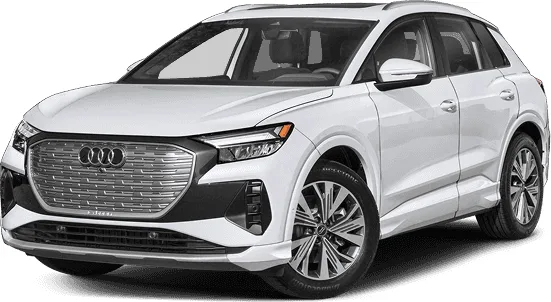
Audi Q4 e-tron
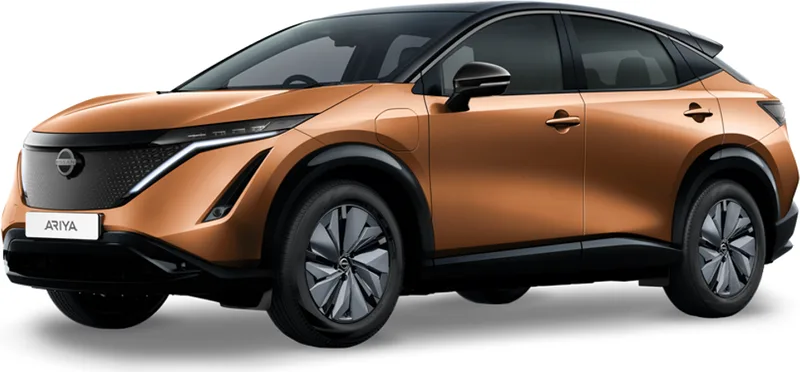
Nissan Ariya
On reliability, the Nissan Ariya beats the Audi Q4 E-Tron by a large gap, with fewer recalls and fewer crash-linked problem areas. The Ariya's weak spot is sudden loss of drive power from electrical faults. The Audi has fewer complaints per vehicle sold, but its reports include loss of control.
How Do the Audi Q4 e-tron and Nissan Ariya Generations Compare?
Verdict
The Nissan Ariya is more reliable than the Audi Q4 e-tron, scoring 85/100 vs 69/100.
Reliability favors the Nissan Ariya by a large gap. Its standing is excellent, against good for the Audi Q4 E-Tron. The Audi has more recalls, five across three model years against four across four. Two of its problem areas, electrical and steering, include crash-linked reports, while the Ariya has one, in power train. One caution: owners file more complaints per vehicle sold on the Ariya, mostly about electrical faults that cut drive power.
Key Differences
- 1Audi Q4 e-tron has 74.9 fewer complaints per 10k sold
- 2Nissan Ariya scores 16 points higher in reliability
- 3Nissan Ariya has 1 fewer total recalls
Category Scoreboard
Audi Q4 e-tron vs Nissan Ariya: Which Is More Reliable?
| Metric | Audi Q4 e-tron | Nissan Ariya |
|---|---|---|
| Reliability Score | 69/100 | 85/100 |
| Years Tracked | 3 | 4 |
| Total Recalls | 5 | 4 |
| Complaints per 10k Sold | 37.9 | 112.8 |
| Year Wins | 0 | 3 |
What Are the Common Problems With the Audi Q4 e-tron and Nissan Ariya?
Sudden loss of drive power defines the Nissan's complaints. A 12v battery that will not hold a charge can stop the EV system from starting, and limp mode with a "Service EV System" warning can follow a charge reading that drops to 0%. Restarting often clears it. The one crash involved sudden acceleration while parking. The Audi's reports are fewer but harsher. One describes a surge instead of braking at about 50 mph. A second describes a car that accelerated on its own, ignored the brake and steering, and hit an embankment. Others cover a "Risk of Fire" alert and shutdowns tied to the driver's seat sensor. Most Audi problem types rest on only a couple of reports.
| Component | Audi Q4 e-tron | Nissan Ariya |
|---|---|---|
| ELECTRICAL SYSTEM | 21.4High | 56.4High |
| POWER TRAIN | 3.3Average | 19.5High |
| STEERING | 3.3Average | 4.3Average |
| SERVICE BRAKES | —None | 4.3Average |
| ENGINE | —None | 4.3Average |
| UNKNOWN OR OTHER | —None | 4.3Average |
| TIRES | 3.3Average | —None |
Complaints per 10,000 units sold, aggregated across all tracked model years from NHTSA owner reports.
How Does Audi Q4 e-tron vs Nissan Ariya Reliability Compare by Year?
| Year | Audi Q4 e-tron | Nissan Ariya | Edge |
|---|---|---|---|
| 2026 | 71/1001R / 0C | 88/1000R / 0C | Nissan Ariya |
| 2025 | 70/1001R / 3C | 88/1000R / 7C | Nissan Ariya |
| 2024 | 65/1003R / 20C | 88/1000R / 6C | Nissan Ariya |
Best years to cross-shop: The 2024 Audi Q4 e-tron scored 65/100 and the 2024 Nissan Ariya scored 88/100 — the strongest shared model years that have been on the road for at least two years, where available.
Who Should Buy the Audi Q4 e-tron vs the Nissan Ariya?
Audi Q4 e-tron vs Nissan Ariya: Common Questions
- Is the Nissan Ariya more reliable than the Audi Q4 E-Tron?
- Yes, by a large gap. The Ariya has an excellent standing and the Q4 E-Tron a good one. The Audi has more recalls and two crash-linked problem areas, electrical and steering. The Ariya has one, in power train. Its main weakness is electrical faults that cut drive power.
- Which has more recalls, the Ariya or the Q4 E-Tron?
- The Q4 E-Tron has more. Federal recall records show five recalls across its three model years. The Ariya has four across four model years. The Audi's recalls are packed into fewer years, so check that each one was completed on any car you consider.
- What goes wrong most often on the Nissan Ariya?
- Electrical faults lead, with 26 of 52 owner complaints. The car may fail to start or lose drive power. One cause is a 12v battery that will not hold a charge. Power train reports add limp mode, a charge reading of 0%, and a shifter that refuses reverse.
- What serious problems have Audi Q4 E-Tron owners reported?
- Reports include a surge instead of braking at about 50 mph, and a car that accelerated on its own and crashed into an embankment. Others describe shutdowns tied to the driver's seat sensor and tread separation on tires. Most types rest on only a couple of complaints.
- Which model year of the Ariya should I buy?
- Target the 2024 or 2025, which are the strongest years. The 2023 and 2026 are the weakest. Whatever the year, have the 12v battery tested and confirm all recalls were completed before you buy.
Related Reliability Comparisons
More Audi Q4 e-tron comparisons
Decided between Audi Q4 e-tron and Nissan Ariya? Run a VIN check before you buy — uncover hidden accidents, title issues, and open recalls.
How we score the Audi Q4 e-tron and Nissan Ariya
Scores weight complaint severity at 35%, repair costs at 30%, recall impact at 20%, and the spread of complaints across systems at 15%, with complaint counts adjusted for US sales. Read the full methodology.
See incorrect data? Report an issue