Last updated: 2026-11-19
Engine & powertrain
Toyota Camry Engine Problems
Toyota Camry engine complaints: low-speed hesitation and surging in 2018-2019 cars, plus water pump and coolant bypass valve failures.
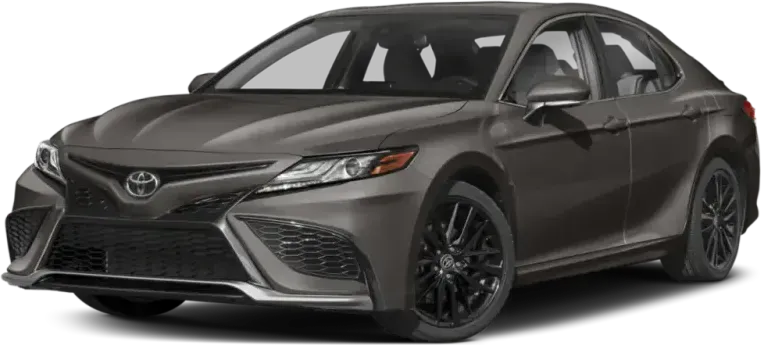
- Owner complaints
- 233
- Share of all complaints
- 11%
- Crash / fire / injury reports
- 5 / 2 / 0
- Related recalls
- 2
Toyota Camry engine complaints by model year
The 2018 model year has the most engine complaints by a wide margin, at 111, followed by 2019 with 59 and 2020 with 37. From 2021 on, each year has single-digit counts. That drop partly reflects time on the road, since newer cars have had less chance to collect complaints. It is not proof that those years are free of problems. The 2026 model year has just 3 complaints and no sales figure to compare against.
| Model year | Complaints | Per 10,000 sold | Crash, fire, injury reports |
|---|---|---|---|
| 2018 | 111 | 3.2 | 1, 0, 0 |
| 2019 | 59 | 1.8 | 2, 0, 0 |
| 2020 | 37 | 1.3 | 0, 1, 0 |
| 2021 | 7 | 0.2 | 0, 0, 0 |
| 2022 | 3 | 0.1 | 0, 0, 0 |
| 2023 | 4 | 0.1 | 0, 0, 0 |
| 2024 | 3 | <0.1 | 0, 0, 0 |
| 2025 | 6 | 0.2 | 1, 1, 0 |
| 2026 | 3 | n/a | 1, 0, 0 |
Owner complaints filed with NHTSA under engine, engine and engine cooling. Newer model years have had less time to collect complaints.
What goes wrong
Hesitation is what owners describe most. They press the gas from a low speed, hear loud revving with little forward movement, then feel a sudden jump. The second pattern is the cooling system: failed electric water pumps, faulty coolant bypass valves, and coolant that vanishes with no visible leak. Oil leaks, knocking, and ticking appear less often. Some filings sorted into this category blame the transmission rather than the engine.
How serious it is depends on the symptom. Most cooling faults bring a warning light or overheating and put the car in the shop. Some owners report a sudden stall or shutdown in traffic. Several crash reports describe the car surging forward at low speed, into a house, a drive-through, and traffic at an exit ramp. Two fires appear in this area, one under a 2020 car at 65 mph and one under the hood of a 2025 car. No injuries are reported.
Symptoms owners report
Hesitation then sudden surge
Owners describe a delay when pulling away from a stop or rolling at low speed, with loud revving and little movement, then a jump forward. Dealers often could not reproduce it on a test drive. Surging crashes are reported in 2018 and 2019 cars.
Water pump failure and overheating
The electric water pump or coolant pump fails, the temperature gauge spikes, and the check engine light comes on. Reports include 2018 and 2019 cars, and one 2019 case ended in a blown head gasket. One 2018 owner says the car stopped in the middle of a road.
Coolant bypass valve warnings
A maintenance or check engine light appears, in some 2021 cars when the air conditioning is switched on. Owners trace it to a failed coolant bypass valve. One 2020 owner reports it at about 30,000 miles, and one replacement valve is reported leaking.
Coolant loss with no visible leak
Cars smell of hot coolant after driving, and the overflow reservoir empties with no puddle, often on nearly new 2020 cars. In some reports the engine loses coolant suddenly with a pop and white smoke. One report describes a hole in the engine block.
Oil leaks, knocking, and ticking
Owners report knocking or ticking from the engine, sudden oil loss, and leaks at the oil pan gaskets and valve cover gasket. One mechanic warned that oil dripping onto the muffler could start a fire. One 2018 dealer pulled an engine over a knock.
Power loss and fire
Reports include a sudden shutdown with multiple warnings, a no-start in limp mode with every dashboard light on, and fires. A 2025 owner reports fire under the hood at about 25,000 miles with no warning.
When the problems start
Many problems show up early. One 2018 owner reported a knocking engine at 10,250 miles, and a 2020 owner reported a hole in the engine block at about 12,269 miles. Coolant bypass valve failures are reported at about 30,000 miles and again at 89,500. Water and coolant pump failures appear between 29,090 and 55,000 miles, and one 2018 pump failed at 32,465 miles. The 2025 fire was reported at about 25,000 miles.
Repairs and recalls
Cooling repairs are the ones owners describe most. Typical fixes are a new water pump or coolant pump, often with the thermostat, and a replacement coolant bypass valve. Dealers often could not reproduce the hesitation, so owners left without a fix. Federal recall records list two engine recalls. Recall 18V200000 covers certain 2018 Camrys with the 2.5L four-cylinder, where oversized pistons may cause stalling. Dealers check piston production date codes and replace the engine assembly if needed. Recall 20V064000 covers certain 2020 Camrys with the 2.5L four-cylinder, where casting porosity may cause cracks and coolant leaks. Dealers inspect and replace the engine, including the block as necessary, free of charge. Independent repair-cost data puts the model's overall annual repair cost at $388, not specific to engines.
| Model years | Campaign | Problem |
|---|---|---|
| 2020 | 20V064000 | Toyota Motor Engineering & Manufacturing (Toyota) is recalling certain 2020 Toyota Avalon Hybrid, Camry, Camry Hybrid and Lexus ES300h and 2019-2020 RAV4 and RAV4 Hybrid vehicles equipped with 2.5L 4-Cylinder engines.… |
| 2018 | 18V200000 | Toyota Motor Engineering & Manufacturing (Toyota) is recalling certain 2018 Toyota Camry vehicles equipped with a 2.5L, four-cylinder engine. The pistons on these vehicles may be larger than specified, possibly causing… |
Checking a used Camry for engine problems
- Run the VIN through Toyota's recall lookup and confirm the 2018 piston recall or 2020 engine casting recall was completed if it applies.
- Ask for records of any water pump, coolant pump, thermostat, or coolant bypass valve replacement, and note the mileage.
- Check the coolant reservoir level cold, then again after a test drive. Walk away from a car that is low with no visible leak.
- Accelerate gently from a rolling stop several times. Watch for delayed response, loud revving, shaking, or a sudden jump forward.
- Scan for stored codes and look for warning lights, especially a maintenance or check engine light that appears when the air conditioning starts.
- Look under the car and around the oil pan and valve cover for oil seepage, and listen for knocking or ticking at idle.
For the rest of the car, use a full Toyota Camry inspection checklist.
2 engine recalls cover the Toyota Camry. A VIN check shows whether the car you're looking at had its recall work done, plus accident and title history.
Toyota Camry Engine Problems: common questions
- Which Toyota Camry years have the most engine problems?
- The 2018 model year has the most engine complaints, at 111. The 2019 model year has 59 and 2020 has 37. Later years have far fewer, but newer cars have had less time to collect complaints, so low counts are not a guarantee.
- Is it safe to drive a Camry with engine problems?
- It depends on the symptom. An overheating warning or empty coolant reservoir means you should stop and get it checked. Surging, stalling, and fire are reported by some owners, and crashes appear in the data. Do not keep driving a car that surges or stalls.
- Has Toyota recalled the Camry for engine trouble?
- Federal recall records list two. Recall 18V200000 covers certain 2018 Camrys with the 2.5L engine, for pistons that may be oversized and cause stalling. Recall 20V064000 covers certain 2020 Camrys with the 2.5L engine, for casting porosity that may cause coolant leaks. Check the VIN to see if a car is included.
- What does a Camry engine repair cost?
- The data has no engine-specific price. Owners describe replacing water pumps, coolant pumps, thermostats, and coolant bypass valves. Independent repair-cost data puts the model's overall annual repair cost at $388. Recall repairs are free at the dealer.
- Are Camry engine hesitation problems an engine or transmission issue?
- The data does not settle it. Hesitation and jerking at low speed are the most common engine complaints, and dealers often could not reproduce them. Some filings in this category blame the transmission instead, so ask a Toyota dealer to test drive any car you consider.
Other Toyota Camry problems
Engine & powertrain
Brakes, steering & tires
Airbags & seat belts
Electrical & lighting
More on the Toyota Camry
See incorrect data? Report an issue