
Last updated: 2026-11-19

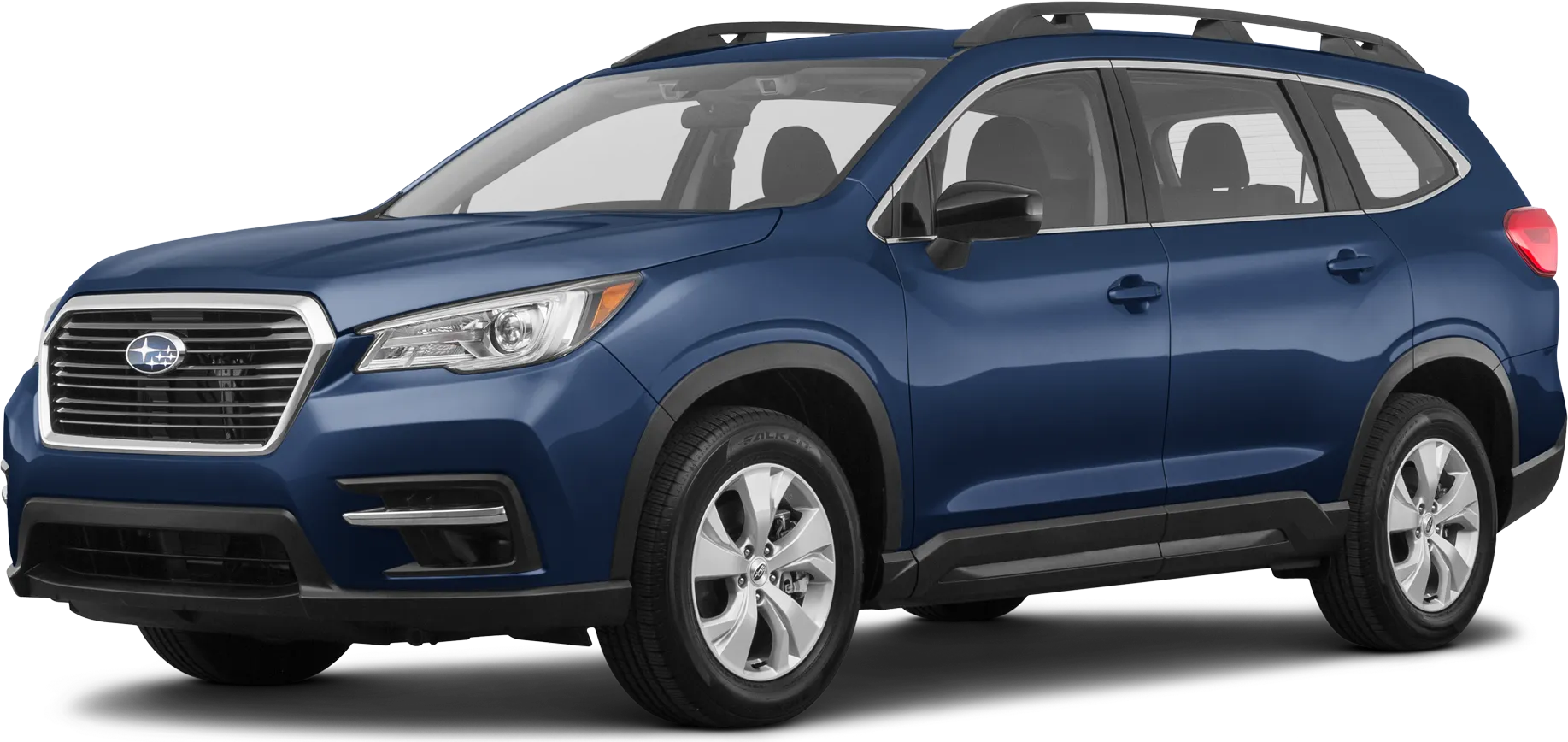
2019 Subaru Ascent
55
MixedReliability score: 55 out of 100, rated Mixed

Reliability score

Mixed · lowest of 7 scored Ascent years

2019 Subaru Ascent Reliability Report

The 2019 Subaru Ascent is the weakest Ascent year, hit by early battery failures and CVT trouble, and it rates well below other 2019 SUVs.

Recalls

8

Complaints

444

Complaint Rate

54.2per 10,000 sold

Est. Repair Cost

N/A

Annual Fuel Cost

$2,600–2,700

Detailed Score Breakdown

Complaint Severity35% of score42/100

Component-weighted complaints normalized by sales volume

Repair Costs30% of score60/100

Independent repair cost ratings

Recall Impact20% of score57/100

Recall count weighted by severity

Issue Diversity15% of score71/100

Breadth of reported problem categories

The verdict

Caution

The weakest of the seven scored years, with the most complaints and recalls, led by dead batteries, CVT trouble, and cracking windshields.

Looking at a used 2019 Subaru Ascent? Check that exact car

8 recalls cover this year. A VIN check shows whether the car you found had the work done, plus accidents, title and odometer history.

Generation & Refresh (US)

Redesign Year

2019 is the first model year of the First generation (WM).

  • First-year models may have unresolved issues from the new design.
  • Redesigned for the 2019 model year.
  • Refreshed in 2023.
  • 1st generation Ascent (US).

What this means for buyers

First-year models carry more risk — early production issues are common. Consider waiting for the second year if reliability is a priority.

Compare 2019 pricing and recall counts against 2020+ before deciding.

2019: First generation (WM) Launch

Generation start — new platform.

2023: Mid-Cycle Refresh

Updated features and styling tweaks.

Should You Buy the 2019 Subaru Ascent?

Weakest of the Ascent's seven scored years, and well below average among 2019 SUVs. Reliability is mixed at best. Owners filed 444 complaints, and the 2020 model has fewer complaints, fewer recalls, and rates better. This is the first year of the first generation, and it shows.

Dead batteries lead the list, often in the first two or three years and at low mileage. A dead battery can leave the SUV locked up, unable to shift or steer. The CVT is the other big worry. Owners report slipping, shuddering, and sudden loss of drive when pulling into traffic, with a second wave of failures past 47,000 miles. Windshields also crack with no visible impact, and each replacement needs EyeSight recalibration. Federal records show 8 recalls, including one that says to park outside because of fire risk.

Shoppers should look at the 2020 first. If buying a 2019, ask for proof that every recall was completed, including the park-outside recall. Also ask for battery, transmission, and windshield repair records. The crash-test rating is 5 of 5 stars.

Compared to the 2020 Subaru Ascent, which scored 3 points higher.

Pros

  • 5-star NHTSA crash rating

Cons

  • Below-average reliability score
  • Above-average recall count
  • Above-average complaint rate for SUV
  • ElectricalBatteries go dead early and without warning, often in the first two or three...153 complaints
  • 6 fire incidents reported in owner complaints
  • Safety recall: park-outside advisory issued

Compare 2019 Subaru Ascent With

Recall Overview

8

recalls on record

Park Outside

The 2019 Subaru Ascent has 8 recalls on record, which is above average. A high count can flag multiple component concerns, though it also shows the manufacturer is actively addressing known issues.

NHTSA.gov →

Complaint Breakdown

54.2

per 10,000 sold

Segment avg: 26.7

LowAvgHigh
High

Safety Incidents

10

Crashes

6

Fires

8

Injuries

0

Deaths

★★★★★

NHTSA 5/5 Stars

Data sourced from NHTSA complaint filings and manufacturer recall notices. Complaint narratives are owner-reported.

2019 Subaru Ascent Recall Details

8 recalls have been issued for the 2019 Subaru Ascent. Recall repairs are free at authorized dealers, so check that each one below was done on the car you are looking at.

ElectricalRecall 22V907000Dec 8, 2022Park outside

The ground bolt that secures the ground terminal of the Positive Temperature Coefficient (PTC) heater may have been improperly fastened, which could result in melting of the ground terminal and surrounding components.

Risk
A melting ground terminal increases the risk of a fire.
Fix
Owners are advised to park their vehicle away from structures and to avoid leaving the vehicle unattended while the engine is running.
Which vehicles are covered

Subaru of America, Inc. (Subaru) is recalling certain 2019-2022 Ascent vehicles.

More about the fix

An owner who notices or smells smoke coming from the dash or driver's footwell area should immediately stop operating the vehicle and turn the ignition switch to the "Off" position. Dealers will replace the PTC heater ground bolts and if necessary, replace the ground wire and the connector holder, free of charge. Owner notification letters are expected to be mailed February 6, 2023. Owners may contact Subaru's customer service at 1-844-373-6614. Subaru's number for this recall is WRL-22.
TransmissionRecall 21V955000Dec 9, 2021

A programming error in the Transmission Control Unit (TCU) may allow the clutch to engage before the drive chain is completely clamped.

Risk
An improperly secured drive chain may slip and break, causing a loss of drive power and increasing the risk of a crash.
Fix
Dealers will reprogram the TCU, inspect TCU data for chain slip, and visually inspect the chain guide.
Which vehicles are covered

Subaru of America, Inc. (Subaru) is recalling certain 2019-2020 Ascent, 2020 Legacy and Outback vehicles.

More about the fix

If evidence of chain slippage or damage is found, the transmission will be replaced. Repairs will be performed free of charge. Owner notification letters were mailed August 19, 2022. This recall includes all vehicles previously recalled under 19V-855. Vehicles previously recalled under 19V-855 will need to have the new remedy performed for this recall once available. Owners may contact Subaru customer service at 1-844-373-6614. Subaru's number for this recall is WRK-21.

Fuel systemRecall 21V587000Jul 29, 2021

The low-pressure fuel pump inside the fuel tank may fail.

Risk
Fuel pump failure can cause an engine stall while driving, increasing the risk of a crash.
Fix
Dealers will replace the low-pressure fuel pump, free of charge.
Which vehicles are covered

Subaru of America, Inc. (Subaru) is recalling certain 2019-2020 Ascent, 2018 Forester, 2018-2020 Impreza, Legacy, Outback, 2018-2019 BRZ, WRX, and Toyota 86 vehicles.

More about the fix

Owner notification letters were mailed September 24, 2021. Subaru and Toyota owners may call customer service at 1-844-373-6614. Subaru's number for this recall is WRG-21.

VIN History Report

Buying a used 2019 Subaru Ascent? Check its history first

Electrical system problems lead owner complaints about the 2019 Subaru Ascent, and 8 recalls were issued for it. A VIN check shows whether this car's recall work was done, plus accident, title, and odometer history.

No VIN? Just hit “Check VIN” to look one up.

  • Accidents
  • Open Recalls
  • Title History
  • Odometer Rollback

2019 Subaru Ascent NHTSA Safety Ratings

Overall Safety Rating

Overall safety rating: 5 out of 5
Crash Test Results by Configuration (expand)

Gas Powertrain

Driver: 5/5Passenger: 5/5

Rollover risk: 17.0%

Safety Technologies

Dynamic Head Restraints (Not Available)Head Restraint (Driver, Front Passenger, Rear Seat)Advanced Belt Feature (Standard)Adjustable Upper Belt Anchorage (Driver, Front Passenger)Seat Belt Reminder System (Driver, Front Passenger)Frontal Air Bag (Driver, Front Passenger)Curtain (Driver, Front Passenger, Rear Seat)Torso/Pelvis (Driver, Front Passenger)Knee (Driver)Additional Air Bags (Not Available)Meets Side Air Bag Out-of-Position Requirements (Yes)LATCH Locations (Rear Seat)Safety Power Windows (Anti-Pinch) (Not Available)Safety Power Windows (Anti-Pinch) locations (Not Available)
View full safety data on NHTSA.gov →

Subaru Ascent Repair Costs & Maintenance

Maintenance Rating

3Maintenance rating: 3 out of 5

Based on NHTSA complaint patterns, recall severity, and publicly available cost benchmarks.

Category-level averages derived from publicly available industry reports (AAA, CarMD). Model-level estimates produced by Auto Reliability Index.

Subaru Ascent Resale Value

The Subaru Ascent is estimated to retain about 99.1% of its original value after 1 year, based on observed used-car listings.

This benchmark covers the Subaru Ascent model overall and is not specific to the 2019 model year.

Value Retained
99.1%

after 1 year

Depreciation
0.9%

over the same period

Listings Analyzed
18

U.S. used-car listings

Listings observed in . This is a historical market benchmark, not a current price quote.

Explore Subaru Ascent depreciation and resale value on CarResaleValue.com

2019 Subaru Ascent Example Repair Prices

National average price ranges for common repairs. These are not model-year-specific failure predictions.

Common repair costs and price estimates
RepairEstimated Cost
Engine Oil Light Diagnosis$122 – $179
No Start Diagnosis$122 – $179
Pre-Purchase Car Inspection$183 – $269
Tire Pressure Monitoring System Relearn$49 – $72
Battery Test$49 – $72
Battery Cable Battery Terminal End Service$37 – $54
Brake System Inspect$122 – $179
Emission Control System Inspect$61 – $90
Electrical System Diagnosis$122 – $179
Powertrain Control System Diagnosis & Testing$61 – $90

Estimates based on national average repair costs. Actual costs may vary by location and shop.

MPG & Annual Running Costs

Gas

22–23 MPG

Fuel cost: $2,600–$2,700/yr

Fuel only

20–21 city / 26–27 hwy MPG

Based on EPA fuel-cost estimates. Excludes routine maintenance, depreciation, and insurance. Data as of 2019 EPA label cycle.

Gas trims
TrimDriveTrans.CityHwyCombFuel Cost
Ascent 2.4L 4-cylAll-Wheel DriveAutomatic (AV-S8)212723$2,600
Ascent Limited/Touring 2.4L 4-cylAll-Wheel DriveAutomatic (AV-S8)202622$2,700

Used Buying Checklist

Key things to inspect or verify before purchasing a 2019 Subaru Ascent.

  • Have the battery load-tested and ask for battery replacement records, then cycle the power liftgate several times.

  • Accelerate gently from 30 to 70 mph and up a hill, feeling for slipping, shudder, squeal, or RPM flare.

  • Ask for service records showing transmission replacement or reprogramming and any repeat visits for the same symptoms.

  • Inspect the windshield edges and lower corners for chips or cracks, and ask how often the glass was replaced.

  • Start the engine cold and watch the exhaust for blue or white smoke.

  • Brake firmly from highway speed and feel for pulsing in the pedal or steering wheel.

  • Press on the carpet near the rear pillars and sniff for mold to rule out a sunroof leak.

  • Seat an adult in the front passenger seat and confirm the passenger air bag indicator reads ON.

Going to see one? Take the printable 2019 Subaru Ascent inspection checklist with you.

2019 Subaru Ascent Common Problems by Component

444 owner complaints grouped by vehicle system.

153
73
64
ELECTRICAL SYSTEM (153)POWER TRAIN (73)VISIBILITY/WIPER (64)UNKNOWN OR OTHER (35)ENGINE (32)SERVICE BRAKES (22)VISIBILITY (13)STRUCTURE (11)Other (41)

ELECTRICAL SYSTEM

153 complaintsSafety-related

Ascent electrical problems across all model years

Batteries go dead early and without warning, often in the first two or three years and at low mileage. Some owners link the drain to the power liftgate or to a few days of sitting. A dead battery can leave the SUV locked up, unable to shift or steer, and some need a tow. Other reports describe every dash warning light coming on at once while driving, with EyeSight and cruise control cutting out. Four complaints involve fire or smoke from the engine bay, including while the engine idles after a remote start.

153 complaints total4 fires

POWER TRAIN

73 complaintsSafety-related

Ascent transmission problems across all model years

The CVT slips, shudders, hesitates, and squeals, often between 5,000 and 14,000 miles, with a second wave of failures past 47,000 miles. Drivers describe RPM flares without acceleration, hard shifts, and sudden loss of drive when pulling out in front of traffic. Two crashes involve the SUV lurching forward unexpectedly. Dealers often reprogram the transmission or report they cannot reproduce the problem, and several replacement transmissions show the same symptoms. Long waits for parts and repairs are a common theme.

73 complaints total2 crashes

VISIBILITY/WIPER

64 complaints

Ascent wiper and visibility problems across all model years

Windshields crack with no visible impact, sometimes while the car sits parked, and small rock chips spread across the glass within minutes or days. Several owners have replaced the windshield more than once, and each replacement requires EyeSight recalibration. One owner cites a cost near $1,000. Cracks that reach the driver's view or the camera area can disable EyeSight. A smaller group reports sunroof glass shattering, rear glass cracking, and a sunroof leak that soaks the floor foam and leaves a lasting mold smell.

64 complaints total
UNKNOWN OR OTHER (35 complaints)

UNKNOWN OR OTHER

35 complaints

These filings are a mix of problems logged elsewhere on this page. Dead batteries with no warning and windshields cracking from small chips come up most often. Others describe lurching and hesitation that continues after a transmission replacement, and blue smoke at startup. Single reports cover a rear liftgate that does not reverse when it hits a person, a dead infotainment screen and backup camera, and a leaking A/C evaporator. One filing objects to a long wait for a dealer repair.

35 complaints total
ENGINE (32 complaints)

ENGINE

32 complaints

Heavy smoke from the exhaust at startup is the most common engine complaint. Owners describe it as blue, white, or oily, sometimes with a chemical smell, and dealers often cannot duplicate it. Other reports describe sudden power loss on the highway with warning lights, and engine revving on hills without any gain in speed. Repeat oil pan leaks and cracked exhaust Y-pipe welds that let fumes into the cabin also appear. Several complaints filed under engine actually end in a transmission diagnosis.

32 complaints total
SERVICE BRAKES (22 complaints)

SERVICE BRAKES

22 complaintsSafety-related

Front brakes pulse and shake when stopping from highway speed or descending hills, often by 6,700 to 21,000 miles. Rotors get resurfaced or replaced, and the vibration returns. Squealing, grinding noise, and rapid pad wear also appear, along with a pedal that needs more pressure. One crash involves a brake pedal that would not press down while backing up. Other reports describe the brakes applying on their own during a dash electrical failure, and a charging cable catching the parking brake lever at highway speed.

22 complaints total1 crash
VISIBILITY (13 complaints)

VISIBILITY

13 complaints

Ascent wiper and visibility problems across all model years

Windshields crack on their own, most often while parked, with no impact the owner can find. Cracks start at the bottom edge or near the mirror and keep growing each time the SUV is driven, sometimes reaching several feet. Reports range from about 6,000 to 60,000 miles, and some owners see the crack return after a replacement. A sunroof that cracks with a popping sound while driving and a driver's door window that breaks without impact also appear.

13 complaints total
STRUCTURE (11 complaints)

STRUCTURE

11 complaintsSafety-related

The hood vibrates or lifts an inch or two at highway speed in crosswinds or headwinds, and one report traces this to fractured hinges. One crash with a deer at highway speed ends with the vehicle catching fire and burning. Other reports describe an exhaust smell inside the cabin at idle, rear doors that will not open from inside with the parking brake set, and an interior driver door handle cable that snaps. Uneven door gaps and cracked windshields also show up.

11 complaints total1 crash1 fire1 injury
AIR BAGS (7 complaints)

AIR BAGS

7 complaintsSafety-related

Serious crashes end with no deployment, including a rear-end collision, a head-on crash at 35 mph, and a deer strike that ends in fire. These crashes account for injuries to 7 people. Separately, the front passenger seat sensor intermittently fails to detect an adult, so the passenger air bag stays off. A dealer recalibration does not always fix it. One report describes a side air bag deploying while the car is parked.

7 complaints total3 crashes1 fire7 injuries
FORWARD COLLISION AVOIDANCE (3 complaints)

FORWARD COLLISION AVOIDANCE

3 complaintsSafety-related

EyeSight pre-collision braking fails to stop the SUV before it hits a pole in parking lots at low speed. In both crash reports there is no audible or visual warning. One happens at night in snow and low visibility. A third report describes violent jerking at 45 mph followed by the vehicle accelerating when the brake pedal is pressed. The filings are few, but two involve collisions.

3 complaints total2 crashes

When Do 2019 Subaru Ascent Problems Start?

Based on owner complaint patterns, here’s when common issues tend to appear.

680–25,000 milesPremature battery failure
47,000–70,000 milesLater transmission failure
6,700–21,000 milesFront brake vibration
6,000–60,000 milesWindshield cracking without impact

Best & Worst Subaru Ascent Years

Best Subaru Ascent years to buy

Top pick: the highest score among years with at least two years on the road; the newest wins a tie.

Subaru Ascent years to avoid

  • 55
    MixedReliability score: 55 out of 100, rated Mixed
    2019Weakest of 7 yearsThis year8 recalls · 444 complaints
Full Subaru Ascent years-to-avoid analysis →

Subaru Ascent reliability score trend

Scores 0–100, higher is better. Best and worst years are ringed. This year is highlighted.

Subaru Ascent reliability scores by year
YearScoreRating
201955/100Mixed
202058/100Mixed
202269/100Good
202371/100Good
202475/100Good
202576/100Good
202676/100Good

Subaru Ascent Reliability Compared to Other Years

Reliability scores compared across model years
YearScorevs Prior YearRatingRecallsComplaints
202676/1000Good07
202576/100+1Good015
202475/100+4Good051
202371/100+2Good348
202269/100+11Good157
202058/100+3Mixed4327
2019(selected)55/100—Mixed8444

Frequently Asked Questions

Is the 2019 Subaru Ascent reliable?
Not very. Its reliability is mixed, and it is the weakest of the Ascent's seven scored years. Against other 2019 SUVs it rates well below average. Owners filed 444 complaints and federal records list 8 recalls. The 2020 Ascent rates better.
What are the most common problems with the 2019 Subaru Ascent?
Electrical complaints lead, mainly batteries that die early and without warning. Next come CVT slipping and shuddering, windshields that crack with no visible impact, and heavy exhaust smoke at startup. Some owners also report sunroof glass shattering or a sunroof leak that leaves a mold smell.
Does the 2019 Subaru Ascent have transmission problems?
Yes. Owners describe the CVT slipping, shuddering, hesitating, and squealing, often between 5,000 and 14,000 miles. A second wave of failures appears past 47,000 miles. Some drivers lose drive when pulling out in front of traffic. Dealers often reprogram the transmission or cannot reproduce the problem.
How many recalls does the 2019 Subaru Ascent have?
Federal records list 8 recalls. They cover the electrical system, the power train (3), the gasoline fuel system (2), engine and engine cooling, and structure. One is a park-outside recall for fire risk. Ask the seller for proof that each one was completed.
Is the 2020 Subaru Ascent better than the 2019?
Yes, by the data. The 2020 is also mixed but rates better than the 2019. It has 327 complaints and 4 recalls, against 444 complaints and 8 recalls for the 2019. A shopper who wants an Ascent should look at the 2020 first.

Don’t buy a 2019 Subaru Ascent without checking its VIN first — hidden accidents, title issues, and open recalls could cost you thousands.

Look Up a VIN →

How we score the 2019 Subaru Ascent

Of the four inputs behind this score, the 2019 Subaru Ascent does best on how many systems draw complaints (71/100) and worst on complaint severity (42/100). Scores weight complaint severity at 35%, repair costs at 30%, recall impact at 20%, and the spread of complaints across systems at 15%, with complaint counts adjusted for US sales. Read the full methodology.

Get notified when new recalls or reliability data is added for the Subaru Ascent.

No spam. Only data updates for this model.

See incorrect data? Report an issue