Last updated: 2026-11-19
Engine & powertrain
Nissan Rogue Transmission Problems
Nissan Rogue transmission complaints center on the CVT: jerking, revving without speed, sudden limp mode, and in some cars complete failure.
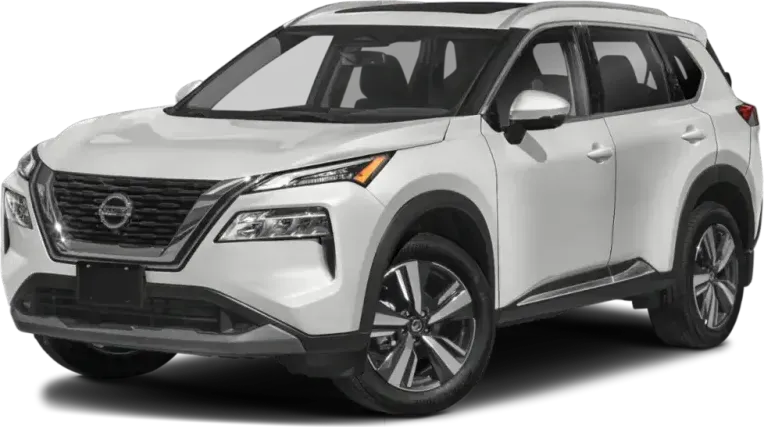
- Owner complaints
- 149
- Share of all complaints
- 5%
- Crash / fire / injury reports
- 10 / 0 / 5
- Related recalls
- 1
Nissan Rogue transmission complaints by model year
The 2023 model year has the most transmission complaints, 50, and the highest rate per vehicle sold. The 2018 year comes next with 34. The 2024 year has 19, followed by 2019, 2021, and 2022 with 11 to 15 each. The 2020 year has just one complaint. The 2025 and 2026 years also have very few, but they have had little time on the road to collect reports, so low counts there do not make them safer picks.
| Model year | Complaints | Per 10,000 sold | Crash, fire, injury reports |
|---|---|---|---|
| 2018 | 34 | 0.8 | 1, 0, 1 |
| 2019 | 15 | 0.4 | 2, 0, 0 |
| 2020 | 1 | <0.1 | 0, 0, 0 |
| 2021 | 13 | 0.5 | 2, 0, 2 |
| 2022 | 11 | 0.6 | 1, 0, 0 |
| 2023 | 50 | 1.8 | 3, 0, 0 |
| 2024 | 19 | 0.8 | 0, 0, 2 |
| 2025 | 1 | <0.1 | 1, 0, 0 |
| 2026 | 5 | n/a | 0, 0, 0 |
Owner complaints filed with NHTSA under power train. Newer model years have had less time to collect complaints.
What goes wrong
Most Rogue transmission complaints describe the CVT. Owners feel it jerk, hesitate, or shudder when pulling away. Some say the engine revs hard while the car barely speeds up. Newer cars add a different pattern: power drops suddenly at highway speed, several warnings light up together, and the car limps along at a fraction of normal speed. Mechanics often find no codes, so owners can go through several dealer visits without a clear answer.
The risk is real. Sudden power loss in fast traffic is the most worrying report, and some cars end up stranded or towed. Crash reports mostly involve the shifter. Owners describe cars rolling away while in Park, slipping from reverse into drive, or refusing to go into Park. A few of these crashes injured people. No fire reports appear in this area for any model year. Complete transmission failures leave the car undrivable, and owners often say there was little or no warning light beforehand.
Symptoms owners report
Jerking and shuddering
The CVT jerks, judders, or hesitates when pulling away or at low speed. Reports are common on 2018 and 2019 cars. Some owners say it gets worse over days or weeks, and one 2019 owner reported the transmission overheating quickly.
Revving without acceleration
The engine climbs to 4,000 or 5,000 RPM while the car barely speeds up. On 2021 cars it often happens at low speed with no warning light. Shifting back into drive or restarting brings power back.
Sudden limp mode at speed
Power drops on the highway, and warnings such as AWD error, AEB off, and Engine Malfunction Power reduced appear together. Speed can be stuck anywhere from 10 to 50 mph. Dealers often find nothing and clear the codes. This is the main pattern on 2022 through 2025 cars.
Complete transmission failure
The car will not go into gear or loses drive entirely, often with no earlier warning. Owners of 2018 and 2019 cars describe being stranded and told the transmission needs replacing. One 2019 owner found metal filings in the fluid.
Rollaway and shifter faults
Cars roll backward in Park, slip from reverse into drive, jump from drive to park, or refuse to shift into Park with a CVT warning. These reports account for most of the crashes in this area.
Trouble in brand-new cars
On 2026 cars, owners report stalling after shifting into drive, getting stuck in reverse, and a hard clunk from reverse to drive. A CVT malfunction warning and trouble holding 45 mph also appear.
When the problems start
On 2018 and 2019 cars, owners report failures from about 45,000 miles, with others at 46,000, 55,871, 67,993, 92,000, and 110,000. A 2022 owner hit code P187E at 73,500 miles. Reports on 2024 cars cluster between 18,000 and 30,000 miles. The 2026 reports are far earlier, between 377 and 2,300 miles.
Repairs and recalls
Owners most often say the dealer found no codes, cleared the warnings, and sent the car home. When a cause is named, the fix is usually a full CVT replacement. Quotes in complaints include $6,500 on a 2019, $9,800 on a 2022, about $10,000 on a 2023, and $12,500 for a hybrid transaxle. One 2019 owner had the transmission control box replaced and still had the problem after six dealer visits. The only recall listed here, 26V419000, covers 2026 Rogues whose instrument panel may not show the gear selection indicator. Dealers inspect and replace the transmission control valve assembly as necessary, free of charge.
Checking a used Rogue for transmission problems
- Test drive from a cold start. Feel for jerking, shuddering, or a delay when pulling away, and try reverse as well as drive.
- Accelerate gently and firmly. Walk away if the engine revs high without the car speeding up.
- Ask for service records showing any CVT work, repeated dealer visits, or power-reduced warnings, and be wary of a car with several unresolved visits.
- Park on a hill, shift into Park, and confirm the car holds and the shifter stays put.
- Pay for an independent inspection that scans for stored codes, such as P187E, and checks the transmission fluid.
- On a 2026 Rogue, ask the dealer whether recall 26V419000 has been completed.
For the rest of the car, use a full Nissan Rogue inspection checklist.
1 transmission recall cover the Nissan Rogue. A VIN check shows whether the car you're looking at had its recall work done, plus accident and title history.
Nissan Rogue Transmission Problems: common questions
- Which Nissan Rogue years have the most transmission complaints?
- The 2023 model year has the most, with 50 complaints and the highest rate per vehicle sold. The 2018 year follows with 34. The 2024, 2019, 2021, and 2022 years each have between 11 and 19. The 2025 and 2026 years have few, but they are recent and have had little time to collect complaints.
- Is it safe to drive a Rogue with transmission problems?
- Not for long. Owners describe sudden power loss on highways, cars stuck at low speed in traffic, and failures that leave them stranded. Some crash reports involve cars rolling away in Park or slipping out of gear. If you see a warning or jerking, have it inspected promptly.
- Is there a recall for Nissan Rogue transmission problems?
- One recall is listed, 26V419000, and it covers only 2026 Rogues. The instrument panel may not display the gear selection indicator. Dealers inspect and replace the transmission control valve assembly as necessary, free of charge. It does not cover the CVT jerking and failure reports on earlier years.
- How much does a Rogue transmission repair cost?
- Owners quote $6,500 on a 2019, $9,800 on a 2022, and about $10,000 on a 2023 for CVT replacement. A hybrid owner was quoted about $12,500 for a transaxle. One owner on a 2023 was also charged over $200 just to read the codes.
- What are the first signs of a failing Rogue CVT?
- Owners report jerking or hesitation when pulling away, a shudder at low speed, and the engine revving without the car speeding up. Some get power-reduced or CVT warnings. Others say the failure came with no warning light, so a rough or delayed pull-away deserves attention.
Other Nissan Rogue problems
Engine & powertrain
Brakes, steering & tires
Body & interior
Electrical & lighting
Driver-assist tech
More on the Nissan Rogue
See incorrect data? Report an issue