Last updated: 2026-11-19
Engine & powertrain
Jeep Wrangler Fuel System Problems
Jeep Wrangler fuel system complaints most often describe sudden power loss from diesel fuel pump failures and 4xe faults, plus fuel leaks.
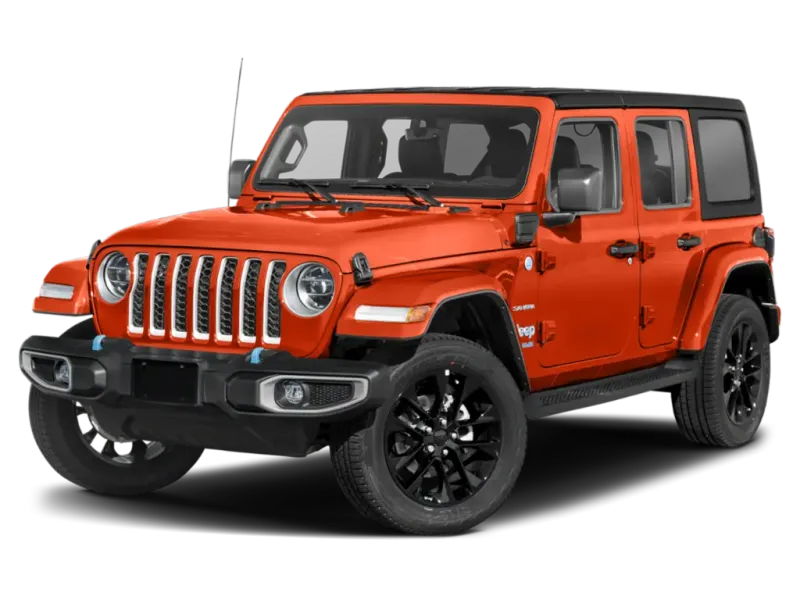
- Owner complaints
- 297
- Share of all complaints
- 5%
- Crash / fire / injury reports
- 3 / 6 / 2
- Related recalls
- 3
Jeep Wrangler fuel system complaints by model year
The 2021 model year has the most complaints in this area, and 2024 is close behind. The 2024 year has the highest rate per vehicle sold, with 2021 next. The 2022, 2020, and 2023 years sit in the middle. The 2019 year has very few, and 2018 has a handful. Years 2025 and 2026 show low counts, but they have had little time on the road to collect complaints, so those low counts do not show they are better.
| Model year | Complaints | Per 10,000 sold | Crash, fire, injury reports |
|---|---|---|---|
| 2018 | 13 | 0.5 | 1, 2, 0 |
| 2019 | 4 | 0.2 | 0, 0, 0 |
| 2020 | 34 | 1.7 | 0, 1, 2 |
| 2021 | 82 | 4 | 0, 3, 0 |
| 2022 | 42 | 2.3 | 0, 0, 0 |
| 2023 | 29 | 1.9 | 0, 0, 0 |
| 2024 | 80 | 5.3 | 2, 0, 0 |
| 2025 | 11 | 0.7 | 0, 0, 0 |
| 2026 | 2 | n/a | 0, 0, 0 |
Owner complaints filed with NHTSA under fuel system, fuel/propulsion system, hybrid propulsion system. Newer model years have had less time to collect complaints.
What goes wrong
Complaints filed under the fuel system heading cover three different problems. On 2020 models with the 2.0L engine, owners smell gasoline inside the cabin, often with no warning light. Mechanics find cracked supply lines or connectors, and some cars drip fuel onto the engine or driveway. On 3.0L diesels, the high-pressure fuel pump can fail and cut power, and many owners wait on recall parts. On 4xe plug-in hybrids, owners report lost electric mode, delayed acceleration, and a gas engine that starts abruptly, often after recall software work.
The risk is real. A failed pump can stall the engine while driving, and one owner lost power steering and brakes at an intersection. Fuel leaks have left cars undrivable, and fumes caused headaches and nausea in one fire-flagged 2020 case. Fire reports appear for 2018, 2020, and 2021 models, and crash reports for 2018 and 2024. Some fires happened while parked.
Symptoms owners report
Gasoline smell in the cabin
Mostly 2020 models with the 2.0L engine. Owners notice a strong fuel odor, often pushed through the vents, with no warning light. Mechanics find cracked supply lines or quick connectors, and some cars drip fuel. One owner reported headaches and nausea from the fumes.
Diesel fuel pump failure
On 3.0L diesels, the high-pressure fuel pump can fail while driving. Owners describe lost power, stalling when pulling away from a stop, and a stall at an intersection that knocked out power steering and brakes. One 2019 owner lost power merging onto an interstate.
4xe loses electric mode and power
Plug-in hybrid owners report an Electric Mode Temporarily Unavailable message, a delayed pedal, and the gas engine starting abruptly. Power can drop while merging or climbing hills. Many say it began after recall software work, and some dealers say no repair is available yet.
Leaks after pump replacement
On EcoDiesel models, owners describe repeated diesel fuel leaks after the pump replacement. One 2021 owner had a leaking injector supply line replaced, then heavy leaking within about a mile. The dealer then found injector O-rings as the source.
Fuel gauge reads wrong
Some drivers see range left on the gauge when the tank is empty, and one 2021 Jeep shut down on the freeway with an eighth of a tank shown. A 2026 owner had a gauge stuck at 7/8 after fill-ups, even after a new tank, pumps, and sensor.
When the problems start
No single mileage marks the start. Reports on 2020 models span roughly 22,000 to 120,000 miles. A 2019 high-pressure pump failed under 50,000 miles, and a 2018 fire happened at about 38,000. One 2021 diesel leaked after pump work at approximately 98,000 miles. Some 2024 4xe problems start almost at once, with one at 316 miles.
Repairs and recalls
Federal recall records list three fuel system recalls. One covers 2020 models with the 2.0L engine, where dealers inspect and replace the fuel supply line as needed. Two cover 3.0L diesels from 2020 to 2023, where dealers replace the high-pressure fuel pump and other parts as needed. All are free of charge. Owners report waits of 3 to 12 months for pump parts. Some 2020 owners were told a leak repair was not covered and skipped it over cost. One diesel owner paid under protest for a line replacement that then leaked again. For the 2026 gauge fault, dealer repairs did not fix it.
| Model years | Campaign | Problem |
|---|---|---|
| 2021, 2022, 2023 | 23V263000 | Chrysler (FCA US, LLC) is recalling certain 2021-2023 Jeep Wrangler, Gladiator, and 2022-2023 Ram 1500 vehicles equipped with a 3.0L diesel engine. The high pressure fuel pump (HPFP) may fail. |
| 2020, 2021, 2022 | 22V767000 | Chrysler (FCA US, LLC) is recalling certain 2020-2022 Jeep Wrangler, Ram 1500, and 2021-2022 Jeep Gladiator vehicles equipped with 3.0L diesel engines. The high pressure fuel pump (HPFP) may fail, causing an engine… |
| 2020 | 21V665000 | Chrysler (FCA US, LLC) is recalling certain 2020 Jeep Wrangler vehicles equipped with the 2.0 Liter engine. A cracked fuel supply line connector may leak fuel into the engine compartment. |
Checking a used Wrangler for fuel system problems
- Run the VIN through federal recall records and ask the dealer for proof that any fuel line or fuel pump recall work was completed.
- On a 2020 with the 2.0L, sit with windows shut and the heat on. Walk away if you smell gasoline.
- Look under the engine and rear of the vehicle for fuel drips, wet connectors, or stains before and after a drive.
- On a diesel, ask for service records of the high-pressure pump replacement and any leak repairs that followed it.
- On a 4xe, test drive in electric mode until warm, then merge and climb a hill. Watch for delay, warnings, or sudden engine starts.
- After a full fill-up, confirm the fuel gauge reads full and tracks down at a believable pace.
For the rest of the car, use a full Jeep Wrangler inspection checklist.
3 fuel system recalls cover the Jeep Wrangler. A VIN check shows whether the car you're looking at had its recall work done, plus accident and title history.
Jeep Wrangler Fuel System Problems: common questions
- Which Jeep Wrangler years have the most fuel system problems?
- The 2021 model year has the most complaints in this area, and 2024 is close behind with the highest rate per vehicle sold. The 2020, 2022, and 2023 years follow. The 2025 and 2026 years show few complaints, but they are too new to judge.
- Is it safe to drive a Wrangler that smells like gas?
- Not for long. Owners tied gasoline odor to cracked fuel lines and connectors, and some cars leaked fuel onto the engine or ground. One owner had headaches and nausea from fumes. Have a dealer or mechanic inspect it before driving it again.
- Is there a recall for Wrangler fuel system problems?
- Yes, three. One covers 2020 models with the 2.0L engine and a cracked fuel supply line connector. Two cover 2020 to 2023 models with the 3.0L diesel and the high-pressure fuel pump. Repairs are free. Check the VIN to see if yours is covered.
- Does the fuel recall cover the 4xe power loss problem?
- The recall lines we have cover the 2.0L fuel line and the diesel fuel pump. They do not mention 4xe electric mode problems. Many 4xe owners say symptoms started after a recall software update, so check your VIN for open recalls.
- How much does it cost to fix Wrangler fuel system problems?
- The data lists no fuel system repair price. Recall remedies are free of charge. Outside recalls, some owners were told repairs were not covered, and one diesel owner paid under protest for a line replacement. Estimated repair cost for the whole model is $694 a year.
Other Jeep Wrangler problems
Brakes, steering & tires
Electrical & lighting
Engine & powertrain
Body & interior
More on the Jeep Wrangler
See incorrect data? Report an issue