Last updated: 2026-10-10
Hyundai Ioniq 6 vs Mercedes-Benz C-Class: Reliability Compared
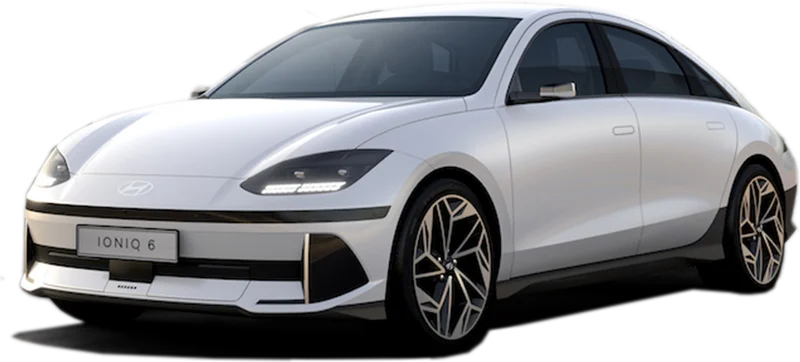
Hyundai Ioniq 6
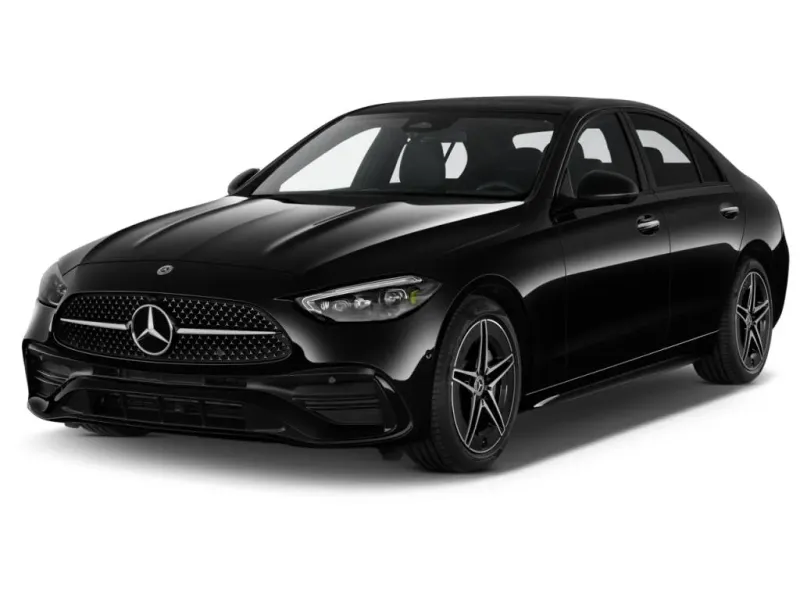
Mercedes-Benz C-Class
Reliability favors the Hyundai Ioniq 6 by a wide margin over the Mercedes-Benz C-Class. Owners filed far fewer complaints per car sold, and the C-Class carries many more recalls plus crash-linked problems in steering, electrical, and power train.
How Do the Hyundai Ioniq 6 and Mercedes-Benz C-Class Generations Compare?
Verdict
The Hyundai Ioniq 6 is more reliable than the Mercedes-Benz C-Class, scoring 77/100 vs 55/100.
Reliability favors the Ioniq 6 by a large margin. Owners filed far fewer complaints per car sold, and federal recall records show 13 recalls across its model years against 767 for the C-Class. The C-Class spreads trouble across electrical, engine, power train, steering, and structure, with several of those areas linked to crashes. The Ioniq 6 has one dominant fault, ICCU failure, which is serious but narrow. Its short track record means the picture could still shift as the cars age.
Key Differences
- 1Hyundai Ioniq 6 has 754 fewer total recalls
- 2Hyundai Ioniq 6 scores 22 points higher in reliability
- 3Hyundai Ioniq 6 has 17.4 fewer complaints per 10k sold
Category Scoreboard
Hyundai Ioniq 6 vs Mercedes-Benz C-Class: Which Is More Reliable?
| Metric | Hyundai Ioniq 6 | Mercedes-Benz C-Class |
|---|---|---|
| Reliability Score | 77/100 | 55/100 |
| Years Tracked | 4 | 8 |
| Total Recalls | 13 | 767 |
| Complaints per 10k Sold | 0.9 | 18.3 |
| Year Wins | 2 (1 tied) | 0 (1 tied) |
What Are the Common Problems With the Hyundai Ioniq 6 and Mercedes-Benz C-Class?
Sudden power loss shows up in both cars, but for different reasons. On the C-Class, a 48-volt battery warning can be followed by a coolant alert and a coast to a stop, and engine misfires and worn valve seats lead to bills over $10,000. Roof panels beside the panoramic sunroof can also come loose. On the Ioniq 6, ICCU failure drops the car into a limp mode near 22 mph. The C-Class has crash-linked complaints in steering (13), electrical (12), and power train (10). The Ioniq 6 has just one crash-linked complaint, in electrical.
| Component | Hyundai Ioniq 6 | Mercedes-Benz C-Class |
|---|---|---|
| ELECTRICAL SYSTEM | 0.5Very Low | 2.7Low |
| UNKNOWN OR OTHER | 0.1Very Low | 1.8Low |
| ENGINE | —None | 1.9Low |
| POWER TRAIN | 0.1Very Low | 1.2Low |
| STEERING | —None | 0.8Very Low |
| STRUCTURE | —None | 0.7Very Low |
| SERVICE BRAKES | —None | 0.5Very Low |
| AIR BAGS | —None | 0.4Very Low |
| FORWARD COLLISION AVOIDANCE | —None | 0.3Very Low |
| VEHICLE SPEED CONTROL | —None | 0.3Very Low |
| TIRES | —None | 0.2Very Low |
| FUEL SYSTEM | —None | 0.2Very Low |
| WHEELS | —None | 0.2Very Low |
| BACK OVER PREVENTION | —None | 0.1Very Low |
| VISIBILITY | —None | 0.1Very Low |
| SUSPENSION | —None | 0.1Very Low |
| FUEL/PROPULSION SYSTEM | —None | —None |
| VISIBILITY/WIPER | —None | —None |
| SEAT BELTS | —None | —None |
| SEATS | —None | —None |
Complaints per 10,000 units sold, aggregated across all tracked model years from NHTSA owner reports.
How Does Hyundai Ioniq 6 vs Mercedes-Benz C-Class Reliability Compare by Year?
| Year | Hyundai Ioniq 6 | Mercedes-Benz C-Class | Edge |
|---|---|---|---|
| 2026 | 82/1000R / 0C | 82/1000R / 0C | Tie |
| 2024 | 77/1005R / 33C | 69/1007R / 20C | Hyundai Ioniq 6 |
| 2023 | 69/1005R / 54C | 53/10083R / 209C | Hyundai Ioniq 6 |
Best years to cross-shop: The 2024 Hyundai Ioniq 6 scored 77/100 and the 2024 Mercedes-Benz C-Class scored 69/100 — the strongest shared model years that have been on the road for at least two years, where available.
Who Should Buy the Hyundai Ioniq 6 vs the Mercedes-Benz C-Class?
Hyundai Ioniq 6 vs Mercedes-Benz C-Class: Common Questions
- Is the Mercedes-Benz C-Class more reliable than the Hyundai Ioniq 6?
- No. The Ioniq 6 comes out well ahead, by a large gap. It drew 0.9 complaints per 10,000 sold, against 18.3 for the C-Class. The C-Class also has problems in five major areas, while the Ioniq 6 is mostly hit by one fault, ICCU failure.
- Which has more recalls, the C-Class or the Ioniq 6?
- The C-Class, by a wide margin. Federal recall records show 767 recalls across its 8 model years, while the Ioniq 6 has 13 across 4 model years. The Ioniq 6 is newer and has fewer model years, but the C-Class total is still far higher.
- What is the biggest problem with the Hyundai Ioniq 6?
- ICCU failure. Owners describe a power supply warning, then limp mode near 22 mph, and sometimes a shutdown in traffic or on the highway. The 12-volt battery often dies too, so the car needs a tow. Some failures came back after a replacement, and parts can take weeks.
- What goes wrong with the Mercedes-Benz C-Class?
- Electrical faults lead, with 323 complaints. Owners report a 48-volt battery warning, sudden loss of drive power, a draining 12-volt battery, and blank center screens. Engine misfires, steering wheel shake at 45 to 65 mph, and loose roof panels near the panoramic sunroof also appear.
- Which model years of the C-Class and Ioniq 6 should I avoid?
- Avoid the 2020 and 2021 C-Class, its weakest years. For the Ioniq 6, 2023 and 2024 are the weakest. Newer years of both have fewer complaints partly because they have had less time on the road, so a short record is not proof of a better car.
Related Reliability Comparisons
More Hyundai Ioniq 6 comparisons
More Mercedes-Benz C-Class comparisons
Decided between Hyundai Ioniq 6 and Mercedes-Benz C-Class? Run a VIN check before you buy — uncover hidden accidents, title issues, and open recalls.
How we score the Hyundai Ioniq 6 and Mercedes-Benz C-Class
Scores weight complaint severity at 35%, repair costs at 30%, recall impact at 20%, and the spread of complaints across systems at 15%, with complaint counts adjusted for US sales. Read the full methodology.
See incorrect data? Report an issue