Last updated: 2026-11-19
Engine & powertrain
Chevrolet Malibu Engine Problems
Chevrolet Malibu engine trouble is mostly sudden power loss: reduced-power limp mode in 2018 cars and turbo failures in 2022 and 2023 cars.
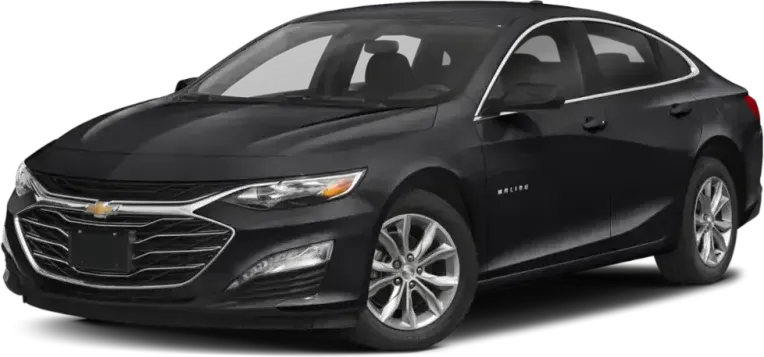
- Owner complaints
- 316
- Share of all complaints
- 22%
- Crash / fire / injury reports
- 5 / 1 / 4
- Related recalls
- 0
Chevrolet Malibu engine complaints by model year
The 2018 model year stands far apart, with 188 engine complaints and the highest rate per vehicle sold. The 2019 and 2020 years follow with 45 and 36. The 2022 and 2023 years have fewer filings, but those reports center on turbocharger failure. The 2021 year has only 9, and several of those describe transmission trouble. The 2024 and 2025 years have almost no complaints, but they are too new to judge. Newer cars have simply had less time on the road to collect reports.
| Model year | Complaints | Per 10,000 sold | Crash, fire, injury reports |
|---|---|---|---|
| 2018 | 188 | 13 | 3, 1, 1 |
| 2019 | 45 | 3.7 | 2, 0, 3 |
| 2020 | 36 | 3.5 | 0, 0, 0 |
| 2021 | 9 | 2.3 | 0, 0, 0 |
| 2022 | 26 | 2.3 | 0, 0, 0 |
| 2023 | 11 | 0.8 | 0, 0, 0 |
| 2024 | 1 | <0.1 | 0, 0, 0 |
| 2025 | 0 | 0 | 0, 0, 0 |
Owner complaints filed with NHTSA under engine, engine and engine cooling. Newer model years have had less time to collect complaints.
What goes wrong
The main engine complaint is sudden loss of power. The check engine light comes on, an "Engine Power Reduced" message appears, and the car limits itself to a crawl, often somewhere between 20 and 40 mph. Some cars stall and will not restart. Early cars also hesitate from a stop: the pedal goes down and the car barely moves for several seconds. In 2022 and 2023 cars, owners point to a failed turbocharger, often with code P0299 for turbo underboost.
This is a real safety problem because it can happen on the freeway or while pulling into traffic. Owners describe being rear-ended or nearly hit after the car slowed. Federal complaint records tie crashes and injuries to stalls and power loss in 2018 and 2019 cars, and one 2018 report describes smoke from the car. Several cars were towed. Others sit unrepaired because of cost. Dealers often cannot reproduce the fault, so it can return after a repair.
Symptoms owners report
Engine Power Reduced limp mode
The check engine light comes on and the car drops to a low top speed, about 20 to 40 mph in many reports. It can strike on the freeway while merging, passing or climbing. The light sometimes clears, then returns on later drives.
Hesitation from a stop
The pedal goes to the floor and the car crawls for several seconds before it pulls. Owners describe near misses pulling into cross traffic. It is most common in 2018 cars, often shows up on cold starts, and dealers often cannot duplicate it.
Stalling and failure to restart
Some cars shut off at lights, in traffic or while moving. That takes away power steering and brake assist. Some will not restart right away, and some stalls leave no stored codes. Auto stop/start also fails to restart the engine in some reports.
Turbocharger failure
In 2022 and 2023 cars, owners report a failed turbo, code P0299 and limp mode. Power can fall away suddenly at highway speed. One owner says the turbo repair did not clear the fault and a failed charge air cooler was found next.
Misfires and rough running
Some 2020 owners report misfires, rough running and stalls shortly after a cold start, with flashing check engine and Service ESC lights. Throttle body cleaning or replacement did not always fix it. One 2018 owner reports a vacuum pump failure that damaged the exhaust camshaft.
When the problems start
Early cars fail young. Reports on 2018 cars place power loss and hesitation between about 3,000 and 23,000 miles, and one 2019 car lost power at 42,000. Several 2020 reports sit near 18,000 to 19,500 miles. Turbo failures on 2022 cars cluster from about 62,000 to 67,506 miles, with others past 100,000. On 2023 cars, they run from about 85,000 to 128,000.
Repairs and recalls
Federal recall records list no recalls in this area. Owners mention throttle body replacement, sensor replacement, an exhaust camshaft position actuator and turbo replacement. Fixes do not always hold, and dealers often find nothing to repair. Several 2022 and 2023 owners say they were told the turbo was not covered, some after citing a special coverage notice that the dealer said did not apply to their VIN. Others left the car unrepaired because of cost or because a shop would not take the job.
Checking a used Malibu for engine problems
- Ask for service records showing any turbo, throttle body, sensor or camshaft actuator work, and whether the same fault came back afterward.
- Scan for stored codes, including P0299, and ask whether the check engine light has recently been cleared.
- Test drive from a cold start, pulling away from a stop several times. Watch for a delay before the car accelerates.
- Drive on the highway and press hard to merge. Watch for an Engine Power Reduced message or a sudden drop in power.
- Check the mileage on 2022 and 2023 cars against warranty limits, since owners report turbo failures denied coverage just past them.
- Have an independent shop inspect the car and check for any open warranty or coverage work that applies to the VIN.
For the rest of the car, use a full Chevrolet Malibu inspection checklist.
A VIN check shows whether the car you're looking at had its recall work done, plus accident and title history.
Chevrolet Malibu Engine Problems: common questions
- Which Chevrolet Malibu years have the most engine problems?
- The 2018 model year has by far the most engine complaints, with 188 filings. The 2019 and 2020 years come next. The 2022 and 2023 years have fewer, mostly about turbo failure. The 2024 and 2025 years have almost none, but they are too new to call safer.
- Is it safe to drive a Malibu with Engine Power Reduced?
- Owners describe the car slowing to 20 to 40 mph, sometimes on the freeway, and several were rear-ended or nearly hit. Pull over when it is safe and get the car checked. Repeated warnings can mean the fault will return, so avoid highways until it is diagnosed.
- Is there a recall for Malibu engine problems?
- Federal recall records list no recalls in this area. Some owners mention a special coverage notice for turbo replacement, and some say a dealer told them it did not cover their VIN. Check with a Chevrolet dealer using the VIN to see what applies.
- What causes the Malibu to lose power?
- Owners and shops name several causes: a failed turbocharger with code P0299, throttle body faults, sensors, and a camshaft actuator. Some cars never get a clear answer because dealers cannot duplicate the fault. A diagnosis from a shop that scans the car is the best first step.
- How much does it cost to fix a Malibu engine problem?
- The data gives no repair price for these faults. Independent repair-cost data puts the model's overall annual repair cost at $532. Several owners say turbo repairs were too costly and left their cars unrepaired, so get a written quote before you buy.
Other Chevrolet Malibu problems
Electrical & lighting
Engine & powertrain
Brakes, steering & tires
More on the Chevrolet Malibu
See incorrect data? Report an issue