Last updated: 2026-11-20
Brakes, steering & tires
Chevrolet Malibu Brake Problems
Chevrolet Malibu brake problems mostly mean a failed brake vacuum pump that leaves the pedal rock hard, often with no warning light first.
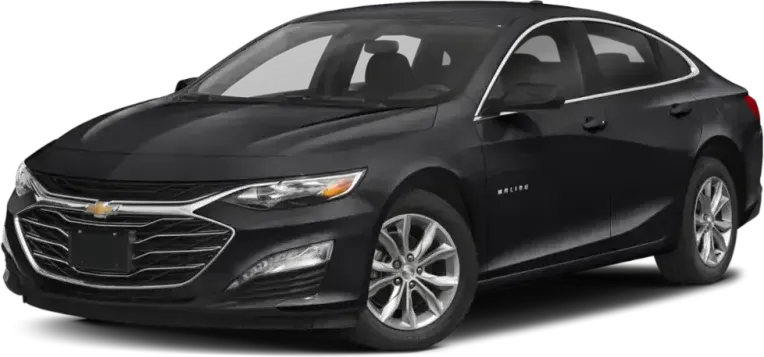
- Owner complaints
- 120
- Share of all complaints
- 8%
- Crash / fire / injury reports
- 13 / 0 / 6
- Related recalls
- 1
Chevrolet Malibu brake complaints by model year
The 2018 model year has the most brake complaints by a wide margin, followed by 2020 and then 2019. Those three years also carry nearly all the crash and injury reports. Model years 2021 through 2025 have only a handful of complaints each, but they have had less time on the road to collect them, so low counts there are not proof of a fix. The 2022 and 2024 reports are few, yet they describe the same loss of braking.
| Model year | Complaints | Per 10,000 sold | Crash, fire, injury reports |
|---|---|---|---|
| 2018 | 57 | 3.9 | 6, 0, 3 |
| 2019 | 16 | 1.3 | 2, 0, 0 |
| 2020 | 38 | 3.7 | 4, 0, 3 |
| 2021 | 1 | 0.3 | 0, 0, 0 |
| 2022 | 3 | 0.3 | 0, 0, 0 |
| 2023 | 1 | <0.1 | 0, 0, 0 |
| 2024 | 4 | 0.3 | 1, 0, 0 |
| 2025 | 0 | 0 | 0, 0, 0 |
Owner complaints filed with NHTSA under service brakes, parking brake. Newer model years have had less time to collect complaints.
What goes wrong
The most common brake complaint on the Malibu is a sudden hard pedal. Owners and mechanics usually trace it to a failed brake vacuum pump. Many say no warning light came first. Others report a check engine light, code P0556, or grinding before the failure. Steering can stiffen at the same moment, and some cars drop into reduced power mode.
This is a real safety risk. Crashes are filed for 2018, 2019, 2020 and 2024, with injuries in 2018 and 2020. No fires are reported. In some cars the broken pump sent debris into the engine, and owners describe camshaft damage or a replacement engine. Some drivers stopped only by using the parking brake or steering into grass or a ditch, and a few cars ended up undrivable.
Symptoms owners report
Sudden rock-hard brake pedal
The pedal turns stiff and the car will not slow as expected. Owners describe pressing it to the floor with little result. Several say no warning light appeared beforehand. Mechanics usually diagnose a failed brake vacuum pump or booster problem.
Engine damage after pump failure
Some shops report that broken pump pieces damaged the camshaft, and 2019 owners mention timing chain damage. A few cars needed a replacement engine. One owner had an engine replaced under warranty, then had a second pump failure later.
Warning lights and reduced power
A check engine light, code P0556, or an engine power reduced message often comes with the failure. Owners also report stalling, a dash full of lights, and speed capped below 60 mph. Grinding during braking sometimes comes first.
Brakes lock or car keeps moving
Some 2018 owners say the brakes locked up in stop-and-go traffic. Others report the car moving forward with the pedal pressed, or failing to stop at low speed. One owner used the parking brake to stop.
Caliper and pedal hardware faults
A few reports describe rear calipers hanging up and a steering wheel that shakes under braking. One 2024 owner reported a loose, wobbly brake pedal assembly, and the dealer refused warranty repair.
When the problems start
Failures show up across a wide range. Owners give about 40,000 miles on 2020 cars, including one at 40,016 and one at 45,000. A 2018 owner reports failure at about 57,000 miles, another at 78,012. A 2020 car failed at 85,193 miles. The loose pedal assembly on a 2024 car appeared at 36,300 miles. Low mileage does not rule the pump failure out.
Repairs and recalls
Owners most often report a vacuum pump replacement, sometimes after a tow to a dealer or independent shop. Some say the new pump failed again within months. Costs quoted in complaints run from about $3,000 to $4,000 at a dealer and $5,200 on one bill, mostly where engine damage was involved. Federal recall records list one brake recall, 18V576000, for 2018 Malibus. It covers rear brake caliper pistons, and the fix is a free brake system bleed at the dealer. The recall line does not mention the vacuum pump.
Checking a used Malibu for brake problems
- Ask for service records showing any brake vacuum pump replacement, and whether engine work followed. A repeat repair is a warning sign.
- Scan for stored codes, including P0556, and confirm no check engine or reduced power message appears.
- Test drive with the engine running and press the pedal firmly several times. It should stay soft and consistent, never turn stiff.
- Run the VIN through the federal recall lookup and confirm recall 18V576000 work was done on any 2018.
- Listen for grinding while braking and feel for steering wheel shake. Have rear calipers inspected for sticking.
- Be cautious with 2018 to 2020 cars, and price in a possible pump or engine repair.
For the rest of the car, use a full Chevrolet Malibu inspection checklist.
1 brake recall cover the Chevrolet Malibu. A VIN check shows whether the car you're looking at had its recall work done, plus accident and title history.
Chevrolet Malibu Brake Problems: common questions
- Which Chevrolet Malibu years have the most brake problems?
- The 2018 model year has the most brake complaints, then 2020 and 2019. Those years also hold most of the crash and injury reports. Newer years have far fewer complaints, but they have had less time to collect them, so that is not a clear sign of improvement.
- What is the most common Malibu brake failure?
- A failed brake vacuum pump. The pedal goes hard and the car does not stop as expected, often with no warning light first. Some owners also see code P0556, stiff steering, or reduced engine power. In some cars, pump debris damaged the engine.
- Is it safe to drive a Malibu with a hard brake pedal?
- No. A hard pedal means braking power is reduced, and owners report crashes and injuries from this failure. Stop driving as soon as it is safe and have the car towed for diagnosis. Some drivers stopped only with the parking brake or by steering off the road.
- Does a recall cover Malibu brake problems?
- Federal recall records list one brake recall, 18V576000, for 2018 Malibus. It concerns rear brake caliper pistons, and dealers bleed the brake system free of charge. The recall line does not mention the vacuum pump, so check your VIN for open recalls.
- How much does a Malibu brake vacuum pump repair cost?
- Owner complaints cite about $3,000 and $5,200 on some bills, and one dealer quoted about $4,000. Those cases often involved engine damage. Independent repair-cost data puts the model's overall yearly repair cost at $532, which does not reflect these failures.
Other Chevrolet Malibu problems
More on the Chevrolet Malibu
See incorrect data? Report an issue