Last updated: 2026-11-20
BMW i3 vs Kia Niro EV: Reliability Compared
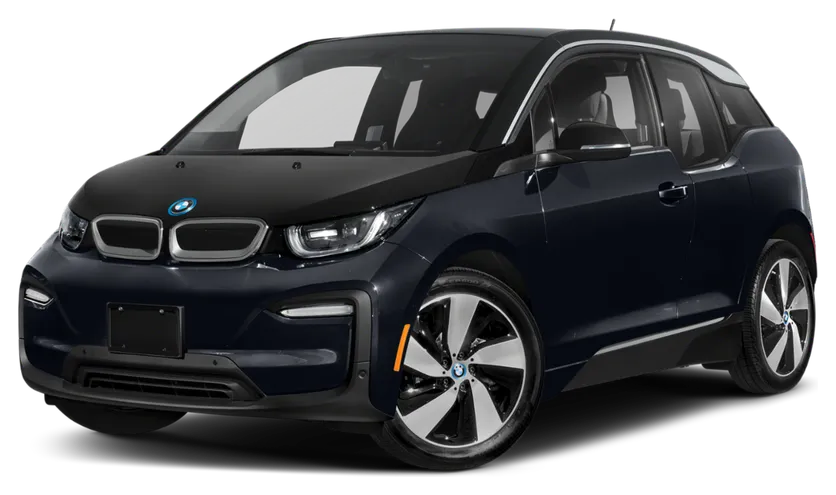 BMW i3
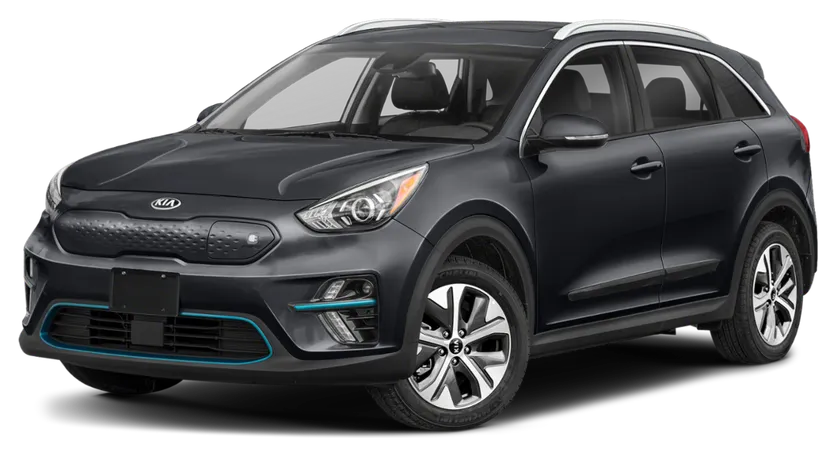 Kia Niro EV
The Niro EV takes 2 of 3 rounds
Reliability is effectively tied between the Kia Niro EV and BMW i3, because owners file complaints at nearly the same rate per car sold. The Niro EV has more total complaints and recalls, plus three crash-linked brake reports. The i3 has fewer filings but a recurring steering assist failure.
How Do the BMW i3 and Kia Niro EV Generations Compare?
Verdict
The Kia Niro EV is more reliable than the BMW i3, scoring 68/100 vs 67/100.
Reliability is effectively tied. Both cars stand in good territory, and owners file complaints at nearly the same rate per car sold. The Kia has more total complaints and more recalls, but it also covers more model years. What separates them is the kind of failure. Both can lose power on the highway, so the choice comes down to which specific problems you are willing to check for before buying.
Biggest gaps
- BMW i3 has 7 fewer total recalls
- Kia Niro EV has 0.9 fewer complaints per 10k sold
- Kia Niro EV scores 1 points higher in reliability
Round by round
- Reliability ScoreNiro EV
- Total Recallsi3
- Complaint RateNiro EV
Leaning BMW i3 or Kia Niro EV? Check the exact car before you buy
Whichever wins on paper, the car in front of you has its own past. A VIN check shows its accidents, title history and any open recalls.
BMW i3 vs Kia Niro EV: Which Is More Reliable?
| Metric | BMW i3 | Kia Niro EV |
|---|---|---|
| Reliability ScoreOut of 100, higher is better | 67/100 | 68/100 |
| Years Tracked | 3 | 7 |
| Total RecallsLower is better | 4 | 11 |
| Complaints per 10k SoldLower is better | 20.1 | 19.2 |
| Year WinsModel years with the higher score | 0 | 2 |
What Are the Common Problems With the BMW i3 and Kia Niro EV?
Sudden power loss shows up on both cars. The Niro EV adds a "limited power" warning, a dying 12-volt battery, random "turtle mode," and a car that rolls after being shifted into Park. Its brake complaints are the sharpest difference: a "check regenerative brakes" warning with poor stopping, and three of six brake complaints are crash-linked. The i3 has no crash-linked area in this data. Its worst reports are steering assist that fades and a heavy wheel, limp mode with no warning, a melted charge port, and a carbon fiber roof coating that cracks and lifts.
| BMW i3 | Problem area | Kia Niro EV |
|---|---|---|
2.1 | Electrical | 5.9 |
4.3 | Steering | 0 |
1.4 | Transmission | 2.5 |
1.4 | Fuel system | 0.8 |
2.1 | Body and structure | 0 |
1.4 | Acceleration and cruise control | 0 |
0 | Brakes | 1.2 |
0 | Wipers and visibility | 0.4 |
0 | Engine | 0.4 |
0 | Other or unspecified | 3.9 |
Complaints per 10,000 units sold, aggregated across all tracked model years from NHTSA owner reports. Shorter bars mean fewer complaints.
How Does BMW i3 vs Kia Niro EV Reliability Compare by Year?
| Year | BMW i3 | Kia Niro EV | Edge |
|---|---|---|---|
| 2021 | 70/1000 recalls · 1 complaint | 71/1001 recall · 2 complaints | Niro EV+1 |
| 2019 | 66/1001 recall · 13 complaints | 67/1000 recalls · 19 complaints | Niro EV+1 |
Best years to cross-shop: The 2021 BMW i3 scored 70/100 and the 2021 Kia Niro EV scored 71/100, the strongest shared model years that have been on the road for at least two years, where available.
Who Should Buy the BMW i3 vs the Kia Niro EV?
Team Niro EVPick the Niro EV if you want a compact SUV and can confirm the high-voltage battery safety plug recall work was finished. Owners describe long dealer delays on that repair. Target 2021, which is among its strongest years, and be careful with 2020 and 2022, its weakest. Test the brakes and watch for any power-limit warning on the drive. The 2025 year looks strong, but a recent year has had less time to collect complaints, so do not treat it as proof.
Pick the i3 if you want a small sedan with fewer recalls: 4 across 3 model years, against 11 across 7 for the Niro EV. Target 2021, its strongest year, and avoid 2018, its weakest. The year 2019 appears on both its strongest and weakest lists, so inspect any 2019 car closely. Check the roof panel for cracking or yellowing, test the steering at low speed, and ask about the air conditioning compressor. Out-of-warranty quotes for a new one ran from just under $4,000 to over $9,000.
BMW i3 vs Kia Niro EV: Common Questions
- Is the Kia Niro EV more reliable than the BMW i3?
- No. They are effectively tied. Both stand in good territory, and complaint rates per car sold are close, at 19.2 per 10,000 for the Niro EV and 20.1 for the i3. The Niro EV has more total complaints, but the difference lies in the failures each car shows, not in a clear overall winner.
- Which has more recalls, the Niro EV or the i3?
- The Niro EV has more. Federal recall records show 11 recalls across 7 model years for the Niro EV and 4 across 3 model years for the i3. The Niro EV also covers more model years in this data, so part of the gap reflects a longer time on the road.
- Which costs less to repair?
- Only the i3 has a repair-cost estimate in this data: $968 a year, or about $4,840 over five years. No comparable figure is available for the Niro EV, so a direct comparison is not possible. For either car, get a pre-purchase inspection and ask about any out-of-warranty quotes.
- Are the Niro EV's brake problems dangerous?
- They can be. Three of the six service brake complaints are crash-linked. Owners report a "Stop vehicle and check regenerative brakes" warning, then poor stopping at any speed. One crash involved the pedal giving way at a light and bumping a stopped vehicle, with no injuries. Dealers often cannot repeat the fault.
- What goes wrong with the BMW i3's roof?
- The clear epoxy layer on the carbon fiber roof panel can crack, yellow, bubble, and pull away. Owners point to sun exposure as a trigger. Reports warn that pieces can break loose at highway speed and hit other vehicles. Inspect the roof closely before buying any i3.
Related Reliability Comparisons
More BMW i3 comparisons
Decided between BMW i3 and Kia Niro EV? Run a VIN check before you buy — uncover hidden accidents, title issues, and open recalls.
How we score the BMW i3 and Kia Niro EV
Scores weight complaint severity at 35%, repair costs at 30%, recall impact at 20%, and the spread of complaints across systems at 15%, with complaint counts adjusted for US sales. Read the full methodology.
See incorrect data? Report an issue