Last updated: 2026-10-10
Audi e-tron vs Volvo XC60: Reliability Compared
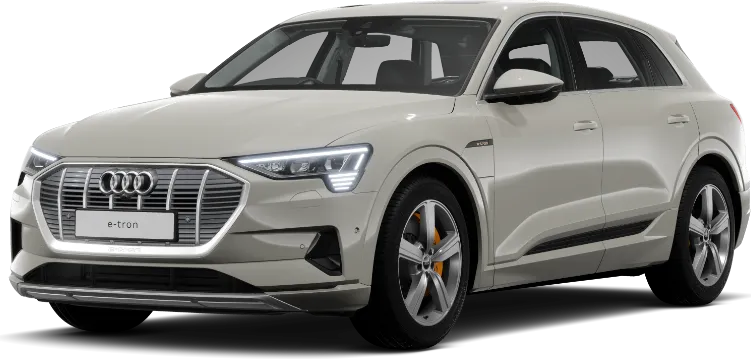
Audi e-tron
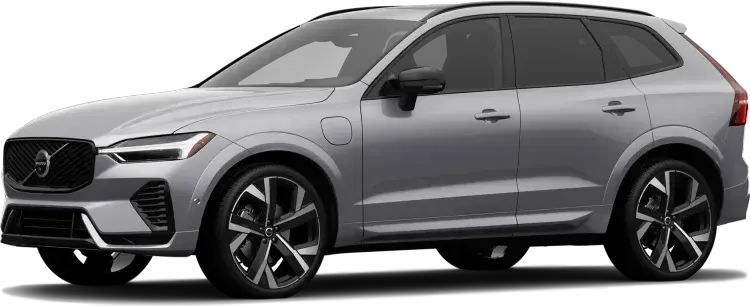
Volvo XC60
The Volvo XC60 comes out well ahead of the Audi E-Tron on reliability, mainly because E-Tron owners report sudden power loss far more often per car sold. The XC60 also has fewer recalls, and its main problems are leaks and brake wear.
How Do the Audi e-tron and Volvo XC60 Generations Compare?
Verdict
The Volvo XC60 is more reliable than the Audi e-tron, scoring 74/100 vs 51/100.
Reliability favors the Volvo XC60 by a large margin. Raw complaint counts are nearly equal, but the E-Tron sold far fewer cars, so its complaint rate per 10,000 sold is many times higher. Federal recall records also show far more recalls for the E-Tron. Severity decides it. E-Tron owners report sudden power loss, cars that will not move from a stop, and a brake pedal that sinks to the floor. The XC60's worst patterns are sunroof water leaks and fast brake wear, which are costly and annoying but less likely to strand you.
Key Differences
- 1Volvo XC60 has 75.0 fewer complaints per 10k sold
- 2Volvo XC60 has 64 fewer total recalls
- 3Volvo XC60 scores 23 points higher in reliability
Category Scoreboard
Audi e-tron vs Volvo XC60: Which Is More Reliable?
| Metric | Audi e-tron | Volvo XC60 |
|---|---|---|
| Reliability Score | 51/100 | 74/100 |
| Years Tracked | 8 | 8 |
| Total Recalls | 106 | 42 |
| Complaints per 10k Sold | 80.3 | 5.3 |
| Safety RatingNHTSA overall | 2025 NHTSA | 2026 NHTSA |
| Frontal | ||
| Side | ||
| Rollover | ||
| Year Wins | 0 | 7 |
What Are the Common Problems With the Audi e-tron and Volvo XC60?
Power loss defines the E-Tron's complaints. Cars shut down at a light or on the highway, refuse to accelerate from a stop, or drop into a reduced-power mode, and some owners waited up to 15 months for recall parts. Brake pedals that sink to the floor and a fire report with cabin smoke add to the concern. The XC60's electrical trouble starts with water from the sunroof reaching electronics under the front passenger seat, plus screens going black. Both models have crash-linked electrical and brake complaints. Only the E-Tron has a crash-linked power train area, and only the XC60 has a crash-linked steering area.
| Component | Audi e-tron | Volvo XC60 |
|---|---|---|
| ELECTRICAL SYSTEM | 38.2High | 1.8Low |
| POWER TRAIN | 12.4Above Avg | 0.1Very Low |
| UNKNOWN OR OTHER | 5.7Average | 0.5Very Low |
| SERVICE BRAKES | 4Average | 0.4Very Low |
| FUEL/PROPULSION SYSTEM | 2.7Low | —None |
| FORWARD COLLISION AVOIDANCE | 2.3Low | 0.1Very Low |
| AIR BAGS | 2.3Low | —None |
| STEERING | 2Low | 0.3Very Low |
| VEHICLE SPEED CONTROL | 2Low | —None |
| ENGINE | 1.7Low | —None |
| BACK OVER PREVENTION | 0.7Very Low | 0.2Very Low |
| TIRES | 0.7Very Low | 0.2Very Low |
| VISIBILITY/WIPER | 0.7Very Low | 0.2Very Low |
| SUSPENSION | 0.7Very Low | —None |
| VISIBILITY | 0.7Very Low | —None |
| STRUCTURE | —None | 0.2Very Low |
| LANE DEPARTURE | —None | 0.1Very Low |
| WHEELS | —None | —None |
| SEAT BELTS | —None | —None |
Complaints per 10,000 units sold, aggregated across all tracked model years from NHTSA owner reports.
How Does Audi e-tron vs Volvo XC60 Reliability Compare by Year?
| Year | Audi e-tron | Volvo XC60 | Edge |
|---|---|---|---|
| 2025 | 50/10012R / 19C | 76/1004R / 22C | Volvo XC60 |
| 2023 | 46/10022R / 30C | 74/1005R / 40C | Volvo XC60 |
| 2022 | 49/10032R / 52C | 72/1006R / 60C | Volvo XC60 |
| 2021 | 55/1009R / 32C | 75/1005R / 31C | Volvo XC60 |
| 2020 | 62/1004R / 1C | 75/1006R / 17C | Volvo XC60 |
| 2019 | 48/1005R / 71C | 72/1008R / 33C | Volvo XC60 |
| 2018 | 50/1006R / 12C | 74/1005R / 35C | Volvo XC60 |
Best years to cross-shop: The 2020 Audi e-tron scored 62/100 and the 2021 Volvo XC60 scored 75/100 — the strongest shared model years that have been on the road for at least two years, where available.
Who Should Buy the Audi e-tron vs the Volvo XC60?
Audi e-tron vs Volvo XC60: Common Questions
- Is the Audi E-Tron more reliable than the Volvo XC60?
- No. The XC60 rates good and leads by a large gap, while the E-Tron rates mixed. E-Tron complaints describe sudden shutdowns, failure to accelerate from a stop, and brake pedals that sink to the floor. XC60 complaints center on sunroof leaks, brake wear, and steering vibration.
- Which has more recalls, the E-Tron or the XC60?
- The E-Tron has far more. Federal recall records show 106 recalls across 8 model years for the E-Tron, against 42 for the XC60. Some E-Tron owners also reported waiting up to 15 months for recall repairs because dealers said parts were unavailable.
- Which E-Tron years should I avoid?
- Avoid 2023 and 2019, the weakest years in the data. The strongest are 2020 and 2021. Even in those years, ask for proof that recall work was finished, and watch for power loss warnings, odd brake pedal feel, and range that falls short of advertised figures.
- What is the biggest problem with the Volvo XC60?
- Electrical trouble from water leaks leads the list. Sunroof and roof drain water can collect under the carpet and reach electronics beneath the front passenger seat. Afterward, cars may refuse to leave park or show many error messages. Check for damp carpet before buying.
- Is the E-Tron range a problem in cold weather?
- Owners say so. Two fuel and propulsion complaints report roughly 170 to 199 miles on a full charge, and cold, wet weather made it worse. One dealer battery check found nothing wrong. If you take long winter trips, plan extra charging stops.
Related Reliability Comparisons
More Audi e-tron comparisons
Decided between Audi e-tron and Volvo XC60? Run a VIN check before you buy — uncover hidden accidents, title issues, and open recalls.
How we score the Audi e-tron and Volvo XC60
Scores weight complaint severity at 35%, repair costs at 30%, recall impact at 20%, and the spread of complaints across systems at 15%, with complaint counts adjusted for US sales. Read the full methodology.
See incorrect data? Report an issue