Last updated: 2026-10-10
Mazda CX-30 vs Volkswagen Taos: Reliability Compared

Mazda CX-30
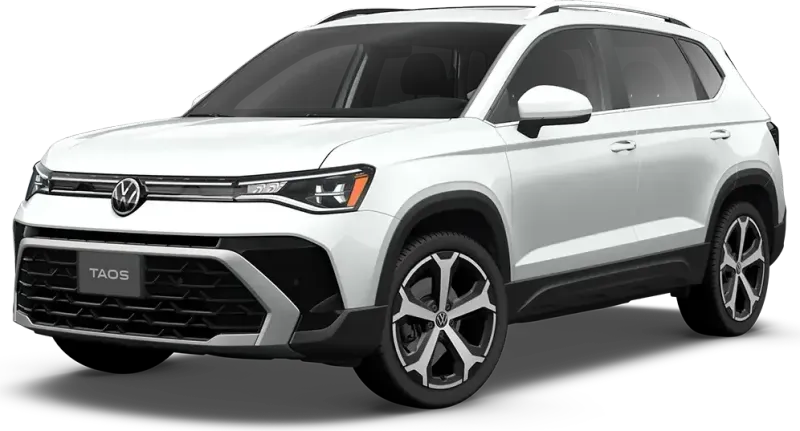
Volkswagen Taos
The Mazda CX-30 and Volkswagen Taos are effectively tied on reliability, and both hold a good standing. What separates them is the type of fault. The CX-30 has more serious safety reports, while the Taos has more total complaints and costly engine and brake wear.
How Do the Mazda CX-30 and Volkswagen Taos Generations Compare?
Verdict
The Volkswagen Taos is more reliable than the Mazda CX-30, scoring 68/100 vs 67/100.
Reliability is effectively tied. Both cars hold a good standing, and neither pulls clearly ahead. The difference is in what goes wrong. The Mazda draws fewer total complaints, but more per car sold, and its worst reports involve airbags, sudden braking and total power loss. The Volkswagen draws more total complaints, many about head gasket coolant loss and early rear brake wear, which cost money but are more predictable. Pick based on which risk you can live with, not on a winner.
Key Differences
- 1Volkswagen Taos has 5.1 fewer complaints per 10k sold
- 2Volkswagen Taos has 4 fewer total recalls
- 3Volkswagen Taos scores 1 points higher in reliability
Category Scoreboard
Mazda CX-30 vs Volkswagen Taos: Which Is More Reliable?
| Metric | Mazda CX-30 | Volkswagen Taos |
|---|---|---|
| Reliability Score | 67/100 | 68/100 |
| Years Tracked | 7 | 5 |
| Total Recalls | 10 | 6 |
| Complaints per 10k Sold | 5.7 | 0.6 |
| Safety RatingNHTSA overall | 2026 NHTSA | 2026 NHTSA |
| Frontal | ||
| Side | ||
| Rollover | ||
| Year Wins | 2 | 3 |
What Are the Common Problems With the Mazda CX-30 and Volkswagen Taos?
Oil loss with a low oil warning leads the Mazda's list, followed by sudden electrical power loss. Its safety reports stand out: automatic emergency braking stops the car with nothing ahead, and airbags deploy with no crash. Brakes (6) and airbags (4) carry the most crash-linked complaints, and the Volkswagen has no crash-linked airbag area. The Volkswagen leads with coolant loss from leaking head gaskets, plus rear brake pads worn to bare metal early. Its speed control reports describe a delay from a stop, then a lunge, with 2 crash-linked complaints. Stalling and power loss also appear.
| Component | Mazda CX-30 | Volkswagen Taos |
|---|---|---|
| ENGINE | 1.2Low | 0.1Very Low |
| ELECTRICAL SYSTEM | 0.8Very Low | 0.1Very Low |
| UNKNOWN OR OTHER | 0.7Very Low | 0.1Very Low |
| SERVICE BRAKES | 0.4Very Low | 0.1Very Low |
| POWER TRAIN | 0.3Very Low | 0.1Very Low |
| AIR BAGS | 0.3Very Low | —None |
| VISIBILITY/WIPER | 0.3Very Low | —None |
| FORWARD COLLISION AVOIDANCE | 0.2Very Low | —None |
| VEHICLE SPEED CONTROL | 0.2Very Low | —None |
| SUSPENSION | 0.1Very Low | —None |
| STEERING | 0.1Very Low | —None |
| LANE DEPARTURE | 0.1Very Low | —None |
| STRUCTURE | 0.1Very Low | —None |
| WHEELS | 0.1Very Low | —None |
| SEATS | 0.1Very Low | —None |
| FUEL/PROPULSION SYSTEM | —None | —None |
| ENGINE AND ENGINE COOLING | —None | —None |
| FUEL SYSTEM | —None | —None |
| VISIBILITY | —None | —None |
Complaints per 10,000 units sold, aggregated across all tracked model years from NHTSA owner reports.
How Does Mazda CX-30 vs Volkswagen Taos Reliability Compare by Year?
| Year | Mazda CX-30 | Volkswagen Taos | Edge |
|---|---|---|---|
| 2026 | 72/1000R / 0C | 64/1000R / 0C | Mazda CX-30 |
| 2025 | 68/1001R / 22C | 69/1000R / 3C | Volkswagen Taos |
| 2024 | 68/1002R / 23C | 74/1000R / 41C | Volkswagen Taos |
| 2023 | 68/1001R / 20C | 73/1000R / 87C | Volkswagen Taos |
| 2022 | 67/1001R / 28C | 59/1006R / 277C | Mazda CX-30 |
Best years to cross-shop: The 2024 Mazda CX-30 scored 68/100 and the 2024 Volkswagen Taos scored 74/100 — the strongest shared model years that have been on the road for at least two years, where available.
Who Should Buy the Mazda CX-30 vs the Volkswagen Taos?
Mazda CX-30 vs Volkswagen Taos: Common Questions
- Is the Mazda CX-30 more reliable than the Volkswagen Taos?
- No, the two are effectively tied, and both have a good reliability standing. The Taos has more total complaints, but the CX-30 has more per car sold. CX-30 reports lean toward oil loss, power loss and safety systems. Taos reports center on coolant loss and early rear brake wear.
- Which has more recalls, the CX-30 or the Taos?
- The CX-30 has more. Federal recall records show 10 recalls across its 7 model years, against 6 across 5 model years for the Taos. The CX-30 has also been on sale for more years, so it has had longer to collect them.
- What is the most common Volkswagen Taos problem?
- Engine coolant loss is the biggest. Owners report coolant vanishing with no visible leak, and many cars were later found with a leaking cylinder head gasket. Reports ran from about 13,000 to 68,000 miles. Some owners were quoted about $4,000 for repairs after warranty ended.
- Does the Mazda CX-30 have airbag or braking problems?
- Yes, owners filed complaints in both areas. Some report automatic emergency braking stopping the car with nothing ahead. Others report airbags deploying with no crash. Brakes have 6 crash-linked complaints and airbags have 4. Check for open recalls and test the braking before buying.
- Which model years of the CX-30 and Taos should I avoid?
- Avoid the 2020 and 2021 CX-30, which are the weakest years. For the Taos, 2022 is the weakest, and 2026 also ranks low. The strongest CX-30 years are 2026 and 2024, and the strongest Taos years are 2024 and 2023.
Related Reliability Comparisons
More Mazda CX-30 comparisons
Decided between Mazda CX-30 and Volkswagen Taos? Run a VIN check before you buy — uncover hidden accidents, title issues, and open recalls.
How we score the Mazda CX-30 and Volkswagen Taos
Scores weight complaint severity at 35%, repair costs at 30%, recall impact at 20%, and the spread of complaints across systems at 15%, with complaint counts adjusted for US sales. Read the full methodology.
See incorrect data? Report an issue