
Last updated: 2026-11-19

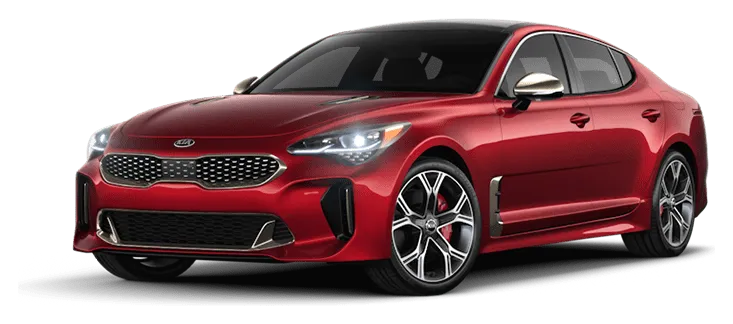
2018 Kia Stinger
65
GoodReliability score: 65 out of 100, rated Good

Reliability score

Good · lowest of 6 scored Stinger years

2018 Kia Stinger Reliability Report

The 2018 Kia Stinger holds a good rating but is the weakest Stinger year, with fuel pump power loss and a park-outside fire recall.

Recalls

4

Complaints

72

Complaint Rate

42.8per 10,000 sold

Est. Repair Cost

$474

Annual Fuel Cost

$3,000–3,750

Detailed Score Breakdown

Complaint Severity35% of score44/100

Component-weighted complaints normalized by sales volume

Repair Costs30% of score80/100

Independent repair cost ratings

Recall Impact20% of score65/100

Recall count weighted by severity

Issue Diversity15% of score81/100

Breadth of reported problem categories

The verdict

Consider

The first-generation debut and the weakest scored year, marked by fuel pump power loss, early brake shaking and a park-outside fire recall.

Looking at a used 2018 Kia Stinger? Check that exact car

4 recalls cover this year. A VIN check shows whether the car you found had the work done, plus accidents, title and odometer history.

Generation & Refresh (US)

Redesign Year

2018 is the first model year of the First generation (CK).

  • First-year models may have unresolved issues from the new design.
  • Redesigned for the 2018 model year.
  • Refreshed in 2021, 2020.
  • 1st generation Stinger (US).

What this means for buyers

First-year models carry more risk — early production issues are common. Consider waiting for the second year if reliability is a priority.

Compare 2018 pricing and recall counts against 2019+ before deciding.

2018: First generation (CK) Launch

Generation start — new platform.

2020: Mid-Cycle Refresh

Updated features and styling tweaks.

2021: Mid-Cycle Refresh

Updated features and styling tweaks.

Should You Buy the 2018 Kia Stinger?

Standing is good, but this is the weakest of the six scored Stinger years, and it falls below average among 2018 sedans. As the first model year of the first generation, it has more trouble on record than the 2019, which rates better with 45 complaints and 3 recalls against 72 and 4 here.

The biggest worry is sudden power loss when pulling away from a stop, sometimes in the middle of an intersection. Dealers often trace it to the fuel pump, and owners report it between 62,000 and 115,000 miles. Some say the recall fix was only a software update and the problem returned. Engine failures also appear, including cylinder 3 misfires that ended in a full replacement. Brake shaking above 35 to 40 mph can start as early as 4K miles. Owners report engine-compartment fires with the car parked and switched off, and one recall tells owners to park outside.

If you can stretch to a 2019, it is the safer pick. For a 2018, ask for proof that every recall was completed, especially the fuel, wiring harness and brake work. Ask for fuel pump and engine service records, plus oil change history.

Compared to the 2019 Kia Stinger, which scored 4 points higher.

Pros

  • Acceptable reliability score

Cons

  • Moderate recall count
  • Above-average complaint rate for Sedan
  • ENGINE issues reported16 complaints
  • 1 fatality report in owner complaints
  • 5 fire incidents reported in owner complaints
  • Safety recall: park-outside advisory issued

Compare 2018 Kia Stinger With

Recall Overview

4

recalls on record

Park Outside

A moderate 4 recalls are on file for the 2018 Kia Stinger. Each one points to a specific safety or compliance issue identified by the manufacturer or NHTSA — check the list below before buying.

NHTSA.gov →

Complaint Breakdown

42.8

per 10,000 sold

Segment avg: 26.4

LowAvgHigh
High

Safety Incidents

2

Crashes

5

Fires

2

Injuries

1

Deaths

Data sourced from NHTSA complaint filings and manufacturer recall notices. Complaint narratives are owner-reported.

2018 Kia Stinger Recall Details

4 recalls have been issued for the 2018 Kia Stinger. Recall repairs are free at authorized dealers, so check that each one below was done on the car you are looking at.

EngineRecall 24V169000Mar 1, 2024

The left turbocharger oil feed pipe and hose assembly may deteriorate and leak oil.

Risk
An oil leak in the presence of hot engine components can increase the risk of an engine compartment fire while driving.
Fix
Dealers will replace the left turbocharger oil feed pipe and hose assembly, free of charge.
Which vehicles are covered

Kia America, Inc. (Kia) is recalling certain 2019-2020 K900, and 2018-2023 Stinger vehicles equipped with a 3.3-liter turbo gasoline direct injection engine.

More about the fix

Owner notification letters were mailed April 26, 2024. Owners may contact Kia customer service at 1-800-333-4542. Kia's number for this recall is SC300.
Fuel systemRecall 23V634000Sep 13, 2023

The fuel control valve plunger may stick inside the high pressure fuel pump, causing over-pressurization and loss of drive power.

Risk
A loss of drive power can increase the risk of a crash.
Fix
Dealers will update the engine control unit software, inspect, and replace the fuel pump as necessary, free of charge.
Which vehicles are covered

Kia America, Inc. (Kia) is recalling certain 2018-2021 Stinger vehicles.

More about the fix

Owner notification letters were mailed December 18, 2023. Owners may contact Kia customer service at 1-800-333-4542. Kia's number for this recall is SC281.

BrakesRecall 20V518000Aug 27, 2020Park outside

Kia Motors America (Kia) recalled certain 2019 Stinger vehicles equipped with 3.3L T-GDI engines on August 27, 2020.

On December 30, 2020, Kia expanded the recall population and added certain 2018-2021 Stinger vehicles. While driving, an engine compartment fire may occur in the area where the Anti-lock Brake Hydraulic Electronic Control Unit (HECU) is located.

Risk
An engine compartment fire can increase the risk of injury or crash.
Fix
Kia will notify owners, and dealers will install a new fuse kit in the electrical junction box, free of charge.
More about the fix

Owners are advised to park outside and away from structures as a precaution until the recall repair is complete. The recall began November 30, 2020. Owners may contact Kia customer service at 1-800-333-4542. Kia's number for this recall is SC196.

VIN History Report

Buying a used 2018 Kia Stinger? Check its history first

Engine problems lead owner complaints about the 2018 Kia Stinger, and 4 recalls were issued for it. A VIN check shows whether this car's recall work was done, plus accident, title, and odometer history.

No VIN? Just hit “Check VIN” to look one up.

  • Accidents
  • Open Recalls
  • Title History
  • Odometer Rollback

2018 Kia Stinger NHTSA Safety Ratings

Crash Test Results by Configuration (expand)

Gas Powertrain

Rollover risk: 0.0%

Safety Technologies

Dynamic Head Restraints (Not Available)Head Restraint (Driver, Front Passenger, Rear Seat)Advanced Belt Feature (Standard)Adjustable Upper Belt Anchorage (Driver, Front Passenger)Seat Belt Reminder System (Driver, Front Passenger)Frontal Air Bag (Driver, Front Passenger)Curtain (Driver, Front Passenger, Rear Seat)Torso/Pelvis (Driver, Front Passenger)Knee (Driver)Additional Air Bags (Not Available)Meets Side Air Bag Out-of-Position Requirements (Not Tested)LATCH Locations (Rear Seat)Safety Power Windows (Anti-Pinch) (Standard)Safety Power Windows (Anti-Pinch) locations (Driver, Front Passenger)
View full safety data on NHTSA.gov →

Kia Stinger Repair Costs & Maintenance

Maintenance Rating

4Maintenance rating: 4 out of 5

Based on NHTSA complaint patterns, recall severity, and publicly available cost benchmarks.

Est. Annual Maintenance

$474

Category-level averages derived from publicly available industry reports (AAA, CarMD). Model-level estimates produced by Auto Reliability Index.

MPG & Annual Running Costs

Gas

20–25 MPG

Running cost: $3,400–$4,150/yr

Fuel + repair

17–22 city / 25–29 hwy MPG

Running cost includes EPA fuel-cost estimate and independent repair-cost data (repair cost estimated at model level). Excludes routine maintenance, depreciation, and insurance. Data as of 2018 EPA label cycle.

Gas trims
TrimDriveTrans.CityHwyCombFuel Cost
Stinger RWD 2.0L 4-cylRear-Wheel DriveAutomatic (S8)222925$3,000
Stinger AWD 2.0L 4-cylAll-Wheel DriveAutomatic (S8)212924$3,150
Stinger AWD 3.3L 6-cylAll-Wheel DriveAutomatic (S8)172520$3,750
Stinger RWD 3.3L 6-cylRear-Wheel DriveAutomatic (S8)172520$3,750

Used Buying Checklist

Key things to inspect or verify before purchasing a 2018 Kia Stinger.

  • Run a federal recall check on the VIN and ask for dealer records showing every open campaign was completed.

  • Accelerate hard from a full stop several times and note any hesitation, sputtering, or loss of power.

  • Brake firmly from 40 to 50 mph and feel for shaking in the pedal or steering wheel.

  • Start the car cold and press the brake pedal right away; a pedal too hard to push needs diagnosis.

  • Let the warm engine idle for several minutes and watch for an oil pressure light that clears when you accelerate.

  • After the test drive, open the hood and check for oil leaks, smoke, or burning smells near the turbo lines.

  • Test the high beams and adaptive headlights in the dark, and look for condensation inside the lenses.

  • Drive with lane assist on and off and note any steering wheel tugging or jerking on its own.

Going to see one? Take the printable 2018 Kia Stinger inspection checklist with you.

2018 Kia Stinger Common Problems by Component

72 owner complaints grouped by vehicle system.

16
9
8
8
10
ENGINE (16)ELECTRICAL SYSTEM (9)SERVICE BRAKES (8)FUEL/PROPULSION SYSTEM (8)EXTERIOR LIGHTING (7)UNKNOWN OR OTHER (5)FUEL SYSTEM (5)ENGINE AND ENGINE COOLING (4)Other (10)

ENGINE

16 complaints

Sudden loss of power when pulling away from a stop is the most common report, and dealers often trace it to the fuel pump. Several owners describe cylinder 3 misfires, white exhaust smoke and knocking that ended in a full engine replacement, sometimes with the problem coming back afterward. Other reports cover an oil warning light at idle from a failing oil pressure switch, oil leaks, and a cracked turbo oil supply line. An engine-compartment fire is also reported. Some dealers have refused warranty work over an aftermarket air filter or gaps between oil changes.

16 complaints total

ELECTRICAL SYSTEM

9 complaintsSafety-related

Engine-compartment fires break out with the car parked and switched off. One owner found bare, burnt wiring afterward. Another pattern is steering that jerks back and forth on its own, even with lane assist turned off or the car parked. One crash report blames lane assist and adaptive cruise control for a fatal collision. Hazard lights also turn on by themselves and change flash speed. Several filings are about recall visits for the front wiring harness and fuse box. In those, dealers had no parts and owners waited weeks for a fix.

9 complaints total2 crashes3 fires2 injuries

SERVICE BRAKES

8 complaintsSafety-related

Hard shaking and pedal vibration when braking above 35 to 40 mph is the main complaint. It starts early, between about 4K and 10K miles, and continues after several repair attempts. A second pattern is a pedal so hard at startup that the car will not stop while backing out. Dealers replaced the vacuum line and vacuum pump more than once for this. Owners also report going in for brake recall work and finding the dealer had no parts. One report describes a burning smell at highway speed.

8 complaints total1 fire
FUEL/PROPULSION SYSTEM (8 complaints)

FUEL/PROPULSION SYSTEM

8 complaints

The engine loses all power without warning, sometimes in the middle of an intersection, and the car will not move until it is restarted. Some owners report the car refusing to restart for up to an hour, along with hesitation from a stop, sputtering and stalling at lights. Fault codes and diagnoses point to the high-pressure fuel pump and fuel rail pressure. Several owners say the recall repair was only a software update and the same symptoms came back. A separate report links an oil pressure light that stays on to a failed oil pressure switch.

8 complaints total
EXTERIOR LIGHTING (7 complaints)

EXTERIOR LIGHTING

7 complaints

High beams stop working on both headlights, which owners blame on a failed gear or motor inside the assembly. Dealers call it normal wear, and the only fix described is replacing the whole headlight assembly, quoted at $1200 to $1800 per light. The adaptive headlight warning light comes on more often in cold weather. Other reports describe condensation inside the lenses that leaves a film, starting as early as 4000 miles. Owners also report dim low beams, headlights aimed left that cannot be adjusted side to side, and ambient cabin lighting lost after an ECU update.

7 complaints total
UNKNOWN OR OTHER (5 complaints)

UNKNOWN OR OTHER

5 complaints

An oil pressure warning light comes on at idle and goes off when the car accelerates. Owners blame the oil pressure switch and report it around 91,000 miles. One owner says the part is cheap but labor can reach $2,000. A separate report describes the ABS, traction control and Auto Hold warnings all lighting up together while driving. Another describes a clicking noise followed by the car shutting off and dropping into neutral at speed, with no warning lights beforehand.

5 complaints total
FUEL SYSTEM (5 complaints)

FUEL SYSTEM

5 complaints

The car loses power at highway speed, stalls and sometimes will not restart. Other reports describe hesitation and jerking under acceleration, a fuel smell inside the cabin, a car stuck in second gear, and a car that will not go past 35 mph uphill. Diagnoses point to the fuel pump or high-pressure fuel pump, with failures reported at 62,000 and 115,000 miles. Most of these complaints describe a fuel system recall notice followed by a dealer saying parts were not yet available, so the car stayed unrepaired.

5 complaints total
ENGINE AND ENGINE COOLING (4 complaints)

ENGINE AND ENGINE COOLING

4 complaints

A failed turbocharger oil feed line causes a strong burning-oil smell, smoke from under the hood, and ticking from the engine bay, often with no warning light. In one case the engine also failed and needed replacement, and another describes white smoke before the engine seized and the steering locked. Most of these complaints involve disputes over a recall for this line. Owners report the part being unavailable, or the dealer saying their VIN was not covered, which left them to pay for the repair or leave the car unfixed.

4 complaints total
STRUCTURE (3 complaints)

STRUCTURE

3 complaintsSafety-related

Creaking and ticking noises come from around the A-pillar, B-pillar and door window frame when the body twists. Owners notice it most when turning into a sloped driveway or driving over bumps. Dealers say they cannot reproduce the noise and offer no repair. Owners describe it as widespread on forums. A separate fire-related report describes the car catching fire in a driveway minutes after being parked following a normal highway drive, with no earlier warning signs.

3 complaints total1 fire
POWER TRAIN (2 complaints)

POWER TRAIN

2 complaints

Fuel pressure drops, stalling and loss of power on the highway are linked to the high-pressure fuel pump. One owner says the dealer's recall repair did not physically replace the pump and the danger remains. A separate failure involves the oil pressure sender. The oil pressure warning light comes on, the sender fills with oil, and owners worry about leaks onto a hot engine and engine damage from oil loss at speed. Both reports are about engine-side parts and not the transmission.

2 complaints total

When Do 2018 Kia Stinger Problems Start?

Based on owner complaint patterns, here’s when common issues tend to appear.

62,000–115,000 milesFuel pump power loss
91,000–115,000 milesOil pressure switch warning light

Best & Worst Kia Stinger Years

Best Kia Stinger years to buy

Top pick: the highest score among years with at least two years on the road; the newest wins a tie.

Kia Stinger years to avoid

  • 65
    GoodReliability score: 65 out of 100, rated Good
    2018Weakest of 6 yearsThis year4 recalls · 72 complaints

Still rated good overall, but well below the other Kia Stinger years.

Full Kia Stinger years-to-avoid analysis →

Kia Stinger reliability score trend

Scores 0–100, higher is better. Best and worst years are ringed. This year is highlighted.

Kia Stinger reliability scores by year
YearScoreRating
201865/100Good
201969/100Good
202071/100Good
202172/100Good
202276/100Good
202377/100Good

Kia Stinger Reliability Compared to Other Years

Reliability scores compared across model years
YearScorevs Prior YearRatingRecallsComplaints
202377/100+1Good15
202276/100+4Good118
202172/100+1Good517
202071/100+2Good616
201969/100+4Good345
2018(selected)65/100—Good472

Frequently Asked Questions

Is the 2018 Kia Stinger reliable?
Mostly, but with caveats. Its standing is good, yet it is the weakest of the six scored Stinger years and below average among 2018 sedans. Owners filed 72 complaints, and federal records list 4 recalls. The main concerns are fuel pump power loss, engine failures, brake shaking and fires.
What are the most common problems with the 2018 Kia Stinger?
Engine complaints are the most common, led by power loss when pulling away and misfires that led to engine replacement. Electrical problems include parked-car fires and steering that jerks on its own. Owners also report brake shaking and a hard pedal at startup. Fuel system complaints describe stalling and no-restart conditions.
Does the 2018 Kia Stinger have fuel pump problems?
Yes. Owners describe the engine losing all power without warning, sometimes at an intersection, and sometimes refusing to restart for up to an hour. Diagnoses point to the high-pressure fuel pump and fuel rail pressure. Reports cluster between 62,000 and 115,000 miles. Some say the recall software update did not stop it.
Does the 2018 Kia Stinger have any fire risk or recalls?
Federal records list 4 recalls covering the engine and cooling, fuel system, service brakes and electrical system. One is a park-outside recall for fire risk. Owners report engine-compartment fires while parked and switched off. Some also waited weeks because dealers had no recall parts.
Is the 2019 Kia Stinger more reliable than the 2018?
Yes. The 2019 rates better, with 45 complaints and 3 recalls compared with 72 complaints and 4 recalls for the 2018. The 2018 is the weakest of the six scored Stinger years, so the 2019 is the stronger neighboring year to consider.

Don’t buy a 2018 Kia Stinger without checking its VIN first — hidden accidents, title issues, and open recalls could cost you thousands.

Look Up a VIN →

How we score the 2018 Kia Stinger

Of the four inputs behind this score, the 2018 Kia Stinger does best on how many systems draw complaints (81/100) and worst on complaint severity (44/100). Scores weight complaint severity at 35%, repair costs at 30%, recall impact at 20%, and the spread of complaints across systems at 15%, with complaint counts adjusted for US sales. Read the full methodology.

Get notified when new recalls or reliability data is added for the Kia Stinger.

No spam. Only data updates for this model.

See incorrect data? Report an issue