Last updated: 2026-10-10
Chevrolet Malibu vs Honda Accord: Reliability Compared
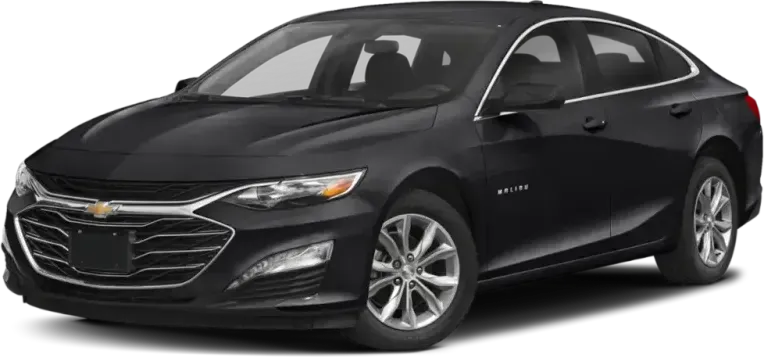
Chevrolet Malibu
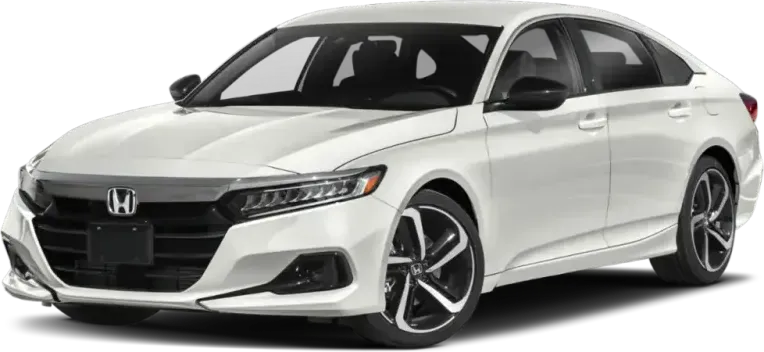
Honda Accord
Reliability is effectively tied between the Honda Accord and Chevrolet Malibu. The Accord is cheaper to repair, while the Malibu has far fewer recalls. Both rate good, and both average 0.3 unscheduled shop visits a year.
How Do the Chevrolet Malibu and Honda Accord Generations Compare?
Verdict
The Chevrolet Malibu and Honda Accord are evenly matched with a reliability score of 76/100.
Effectively tied. Both sedans sit in good standing, and both average 0.3 unscheduled shop visits a year. The Accord is cheaper to keep running and less likely to need a major repair. The Malibu has far fewer recalls and fewer complaints per 10,000 sold. Neither edge is big enough to separate them. The real choice is which failure you would rather risk: the Accord's false automatic braking and glitchy touchscreen, or the Malibu's false shifter warning and brake vacuum pump failures.
Key Differences
- 1Honda Accord costs $132 less per year to repair
- 2Chevrolet Malibu has 33 fewer total recalls
- 3Chevrolet Malibu has 2.1 fewer complaints per 10k sold
Category Scoreboard
Chevrolet Malibu vs Honda Accord: Which Is More Reliable?
| Metric | Chevrolet Malibu | Honda Accord |
|---|---|---|
| Reliability Score | 76/100 | 76/100 |
| Years Tracked | 8 | 9 |
| Total Recalls | 13 | 46 |
| Complaints per 10k Sold | 3.6 | 5.7 |
| Annual Repair Cost | $532/yr | $400/yr |
| Repair Frequency | 0.3/yr | 0.3/yr |
| Major Repair Risk | 11% | 9% |
| Safety RatingNHTSA overall | 2025 NHTSA | 2026 NHTSA |
| Frontal | ||
| Side | ||
| Rollover | ||
| Year Wins | 5 | 3 |
What Are the Common Problems With the Chevrolet Malibu and Honda Accord?
Each car has its own signature failures. Accord owners report ghost touches on the touchscreen, automatic emergency braking that clamps down with nothing ahead, and head gasket failures with sudden overheating. The braking area is crash-linked, and the Malibu has no matching area. Malibu owners report a false "Shift to Park" warning that keeps power on and drains the battery, sudden power loss at highway speed, and brake vacuum pump failures that can break the camshaft, with quotes of $10,000 to $12,000. Vehicle speed control, where the car loses power with little warning, is crash-linked on the Malibu and absent from the Accord's list.
| Component | Chevrolet Malibu | Honda Accord |
|---|---|---|
| ELECTRICAL SYSTEM | 0.7Very Low | 0.9Very Low |
| POWER TRAIN | 0.9Very Low | 0.3Very Low |
| ENGINE | 0.4Very Low | 0.6Very Low |
| UNKNOWN OR OTHER | 0.5Very Low | 0.2Very Low |
| SERVICE BRAKES | 0.2Very Low | 0.5Very Low |
| FORWARD COLLISION AVOIDANCE | —None | 0.7Very Low |
| STEERING | 0.2Very Low | 0.4Very Low |
| VEHICLE SPEED CONTROL | 0.2Very Low | 0.2Very Low |
| FUEL/PROPULSION SYSTEM | 0.1Very Low | 0.3Very Low |
| FUEL SYSTEM | —None | 0.4Very Low |
| AIR BAGS | 0.1Very Low | 0.1Very Low |
| STRUCTURE | —None | 0.1Very Low |
| ENGINE AND ENGINE COOLING | —None | —None |
| TIRES | —None | —None |
| SUSPENSION | —None | —None |
| LANE DEPARTURE | —None | —None |
| SEAT BELTS | —None | —None |
Complaints per 10,000 units sold, aggregated across all tracked model years from NHTSA owner reports.
Which Is Cheaper to Maintain: Chevrolet Malibu or Honda Accord?
How Does Chevrolet Malibu vs Honda Accord Reliability Compare by Year?
| Year | Chevrolet Malibu | Honda Accord | Edge |
|---|---|---|---|
| 2025 | 80/1000R / 3C | 84/1001R / 65C | Honda Accord |
| 2024 | 80/1001R / 8C | 76/1006R / 166C | Chevrolet Malibu |
| 2023 | 81/1001R / 23C | 74/10010R / 199C | Chevrolet Malibu |
| 2022 | 80/1001R / 66C | 77/1003R / 201C | Chevrolet Malibu |
| 2021 | 74/1002R / 61C | 78/1005R / 215C | Honda Accord |
| 2020 | 74/1001R / 178C | 73/1008R / 344C | Chevrolet Malibu |
| 2019 | 74/1001R / 181C | 70/1005R / 574C | Chevrolet Malibu |
| 2018 | 62/1006R / 673C | 63/1008R / 1739C | Honda Accord |
Best years to cross-shop: The 2023 Chevrolet Malibu scored 81/100 and the 2021 Honda Accord scored 78/100 — the strongest shared model years that have been on the road for at least two years, where available.
Who Should Buy the Chevrolet Malibu vs the Honda Accord?
Chevrolet Malibu vs Honda Accord: Common Questions
- Is the Honda Accord more reliable than the Chevrolet Malibu?
- Not clearly. The two are effectively tied, and both stand in good territory. The Accord costs less to repair and has a lower chance of a major repair. The Malibu has fewer recalls and fewer complaints per 10,000 sold. Both average 0.3 unscheduled shop visits a year.
- Which has more recalls, the Accord or the Malibu?
- The Accord. Federal recall records show 46 recalls across its 9 model years, against 13 across 8 model years for the Malibu. A larger recall count is not automatically worse, since recalls mean problems get fixed, but it points to more issues to check.
- Which costs less to repair?
- The Accord, at about $400 a year versus $532 for the Malibu. Over five years that is roughly $660 less. Only 9% of Accord repairs are major, compared with 11% for the Malibu.
- What is the Malibu's "Shift to Park" problem?
- The dash says the car is not in Park when the shifter is in Park. The car may not shut off or lock, and power left on can drain the battery. Dealers have traced it to a failed shift lever, and owners past warranty pay for the repair.
- Does the Accord have a braking problem?
- Owners report automatic emergency braking that stops the car hard with nothing ahead. Complaints cover speeds from 30 mph to highway speed, and 8 are crash-linked. Two describe rear-end crashes after the car stopped on its own. Dealers usually find no codes and offer no fix.
Related Reliability Comparisons
More Chevrolet Malibu comparisons
Decided between Chevrolet Malibu and Honda Accord? Run a VIN check before you buy — uncover hidden accidents, title issues, and open recalls.
How we score the Chevrolet Malibu and Honda Accord
Scores weight complaint severity at 35%, repair costs at 30%, recall impact at 20%, and the spread of complaints across systems at 15%, with complaint counts adjusted for US sales. Read the full methodology.
See incorrect data? Report an issue