Last updated: 2026-10-10
Lexus TX vs Mercedes-Benz GLE: Reliability Compared
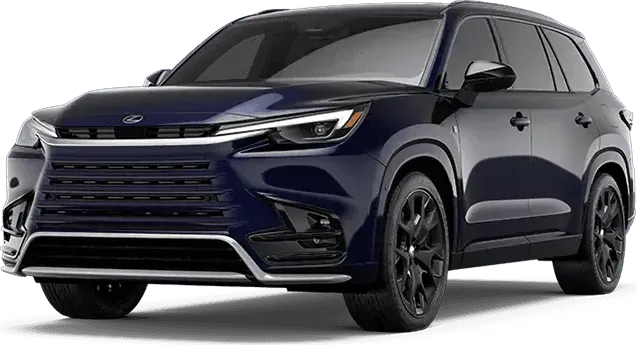
Lexus TX

Mercedes-Benz GLE
On reliability, the Lexus TX comes out well ahead of the Mercedes-Benz GLE. The deciding fact is the GLE's pattern of serious engine, transmission, and braking faults, with crash-linked reports in four areas, against the TX's narrower list of problems and far fewer recalls.
How Do the Lexus TX and Mercedes-Benz GLE Generations Compare?
Verdict
The Lexus TX is more reliable than the Mercedes-Benz GLE, scoring 81/100 vs 67/100.
Reliability favors the Lexus by a wide margin. Federal recall records show 7 recalls across its three model years, against 98 across eight for the Mercedes-Benz. Owners also file far fewer complaints per car sold. The GLE's problems are heavier: cylinder head failure, harsh shifting, and phantom braking. The TX record is young, so more reports may still arrive. Its biggest open issue is a curtain air bag recall repair stalled by missing parts.
Key Differences
- 1Lexus TX has 91 fewer total recalls
- 2Lexus TX scores 14 points higher in reliability
- 3Lexus TX has 0.5 fewer complaints per 10k sold
Category Scoreboard
Lexus TX vs Mercedes-Benz GLE: Which Is More Reliable?
| Metric | Lexus TX | Mercedes-Benz GLE |
|---|---|---|
| Reliability Score | 81/100 | 67/100 |
| Years Tracked | 3 | 8 |
| Total Recalls | 7 | 98 |
| Complaints per 10k Sold | 0.1 | 0.6 |
| Year Wins | 2 | 0 |
What Are the Common Problems With the Lexus TX and Mercedes-Benz GLE?
Air bags dominate the TX file, mostly a curtain air bag recall repair stuck waiting on parts. One crash report describes the driver and passenger air bags failing to deploy in a side impact. Smaller TX complaints include a power liftgate that closes on people and a shift knob that unscrews. The GLE spreads across more systems: water in the footwells, cylinder head failure with quoted repairs of $7,000 to $13,500, harsh shifts, and adaptive cruise braking hard for no reason. GLE crash-linked reports cover electrical, power train, speed control, and brakes. The TX has them only in air bags and electrical.
| Component | Lexus TX | Mercedes-Benz GLE |
|---|---|---|
| UNKNOWN OR OTHER | —None | 0.1Very Low |
| ELECTRICAL SYSTEM | —None | 0.1Very Low |
| POWER TRAIN | —None | 0.1Very Low |
| ENGINE | —None | 0.1Very Low |
| AIR BAGS | —None | —None |
| SEATS | —None | —None |
| STRUCTURE | —None | —None |
| VISIBILITY/WIPER | —None | —None |
| VEHICLE SPEED CONTROL | —None | —None |
| SERVICE BRAKES | —None | —None |
| FUEL SYSTEM | —None | —None |
| TIRES | —None | —None |
| VISIBILITY | —None | —None |
| STEERING | —None | —None |
| EXTERIOR LIGHTING | —None | —None |
| SUSPENSION | —None | —None |
| ENGINE AND ENGINE COOLING | —None | —None |
| FUEL/PROPULSION SYSTEM | —None | —None |
| FORWARD COLLISION AVOIDANCE | —None | —None |
| BACK OVER PREVENTION | —None | —None |
| SEAT BELTS | —None | —None |
Complaints per 10,000 units sold, aggregated across all tracked model years from NHTSA owner reports.
How Does Lexus TX vs Mercedes-Benz GLE Reliability Compare by Year?
| Year | Lexus TX | Mercedes-Benz GLE | Edge |
|---|---|---|---|
| 2026 | 81/1001R / 0C | 65/1001R / 3C | Lexus TX |
| 2024 | 82/1003R / 35C | 70/1008R / 59C | Lexus TX |
Best years to cross-shop: The 2024 Lexus TX scored 82/100 and the 2024 Mercedes-Benz GLE scored 70/100 — the strongest shared model years that have been on the road for at least two years, where available.
Who Should Buy the Lexus TX vs the Mercedes-Benz GLE?
Lexus TX vs Mercedes-Benz GLE: Common Questions
- Is the Lexus TX more reliable than the Mercedes-Benz GLE?
- Yes, by a large margin. The TX has 7 recalls across three model years and 50 owner complaints. The GLE has 98 recalls across eight model years and 410 complaints. The TX has had less time on the road, but its problems are also less varied and less severe.
- Which has more recalls, the TX or the GLE?
- The GLE has far more. Federal recall records show 98 recalls across its eight model years, against 7 for the TX across three. The GLE covers more years, so the totals are not like for like, but the gap is still wide.
- What is the biggest problem with the Lexus TX?
- Air bags. Of 50 complaints, 17 involve air bags, mostly curtain air bag recall repairs held up by unavailable parts. Owners describe cars parked for months. Two reports are crash-linked, and one describes front air bags not deploying in a side impact.
- What goes wrong with the Mercedes-Benz GLE engine?
- Cylinder head failure leads the engine complaints. It starts with a check engine light, misfires, or limp mode, and dealers find leaking valve seats or a failed head. Many cases land near 50,000 miles, with quoted repairs from $7,000 to $13,500.
- Does the GLE have phantom braking problems?
- Yes. Owners report adaptive cruise misreading speed limit signs, then braking hard on the highway. Others describe sudden braking in stop-and-go traffic. Some dealers can reproduce it but have no fix. The speed control and brake complaints include several crash-linked reports.
Related Reliability Comparisons
More Lexus TX comparisons
Decided between Lexus TX and Mercedes-Benz GLE? Run a VIN check before you buy — uncover hidden accidents, title issues, and open recalls.
How we score the Lexus TX and Mercedes-Benz GLE
Scores weight complaint severity at 35%, repair costs at 30%, recall impact at 20%, and the spread of complaints across systems at 15%, with complaint counts adjusted for US sales. Read the full methodology.
See incorrect data? Report an issue