Last updated: 2026-10-10
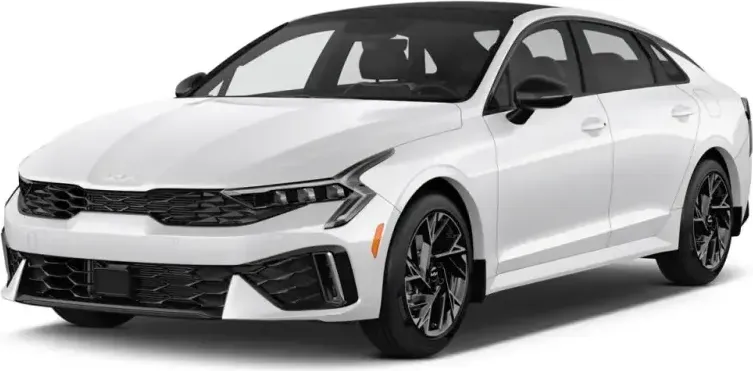
Kia K5 Years to Avoid
6 scored model years (2021–2026) · model average 75/100
Skip the 2022 model year. Owners report a melting HVAC fuse that kills heat and AC, sudden loss of power, and a fuel tank that swells and pushes the rear seat up. The 2024 is the year to buy, with far fewer complaints per car sold.
Verdict
- Avoid
- 2022 69/100
- Buy
- 2024 77/100
- Model average
- 75/100
Kia K5 Years to Avoid
These model years score significantly below the Kia K5 average of 75/100.
| # | Year | Score | Rating | Recalls | Complaints | Top Issue |
|---|---|---|---|---|---|---|
| 1 | 2022 | 69/100 | Good | 5 | 106 | Electrical System (19) |
Why These Years Should Be Avoided
2022 Kia K5
Three problems stack up. The under-hood fuse box overheats and melts at the HVAC fuse, ending heat, AC and defrost. Many owners report sudden loss of power, with the engine revving but the car not accelerating. The fuel tank can expand with a loud bang and lift the rear seat. Several owners say Kia offered to buy the car back.
Top issues: Electrical System (19), Power Train (14), Fuel Propulsion System (13), Air Bags (9), Unknown Or Other (6), Structure (6)
View full 2022reliability report →What Are Common Kia K5 Problems?
ELECTRICAL SYSTEM
60 complaintsMost reported in 2021, 2022, 2025
2021: The HVAC blower circuit fails most often.
POWER TRAIN
45 complaintsMost reported in 2022, 2021, 2023
2022: The most common complaint is a sudden loss of power.
FUEL/PROPULSION SYSTEM
42 complaintsMost reported in 2023, 2021, 2022
2023: The fuel tank swells while driving, often with a loud bang from the rear, and pushes the back seat up by several inches.
UNKNOWN OR OTHER
33 complaintsMost reported in 2021, 2023, 2025
2021: Air conditioning that cuts out for hours or days is the most common report.
STRUCTURE
29 complaintsMost reported in 2023, 2021, 2022
2023: Exterior trim works loose and falls off.
AIR BAGS
23 complaintsMost reported in 2022, 2021, 2023
2022: All 9 complaints come after crashes, and most say the front air bags or all of them failed to deploy.
Best Kia K5 Year to Buy Instead
2024 Kia K5
Among years on the road at least two years, 2024 draws far fewer complaints per car sold than 2022 or 2023, and it has two recalls against five for 2022. Its reports lean toward loose exterior trim, not melting fuses or swelling fuel tanks. A few engine power-loss reports exist, so ask for service records.
Found a Safe Year? Check the Specific Car
Even the 2024 Kia K5 has 2 recalls on file. A VIN check confirms the recall work on the exact car and shows its accident, title, and service history.
- Accidents
- Open Recalls
- Title History
- Odometer Rollback
All Kia K5 Years by Generation
Kia K5 Reliability Scores by Year
Fifth generation (DL3; 2019) (2021–2023)
Frequently Asked Questions
Which KIA K5 years should I avoid?
Which KIA K5 years have transmission problems?
Is the 2023 KIA K5 a bad year?
Is the 2021 KIA K5 worth buying?
Are the 2025 and 2026 KIA K5 safe to buy?
How we score every Kia K5 model year
Scores weight complaint severity at 35%, repair costs at 30%, recall impact at 20%, and the spread of complaints across systems at 15%, with complaint counts adjusted for US sales. Read the full methodology.
See incorrect data? Report an issue