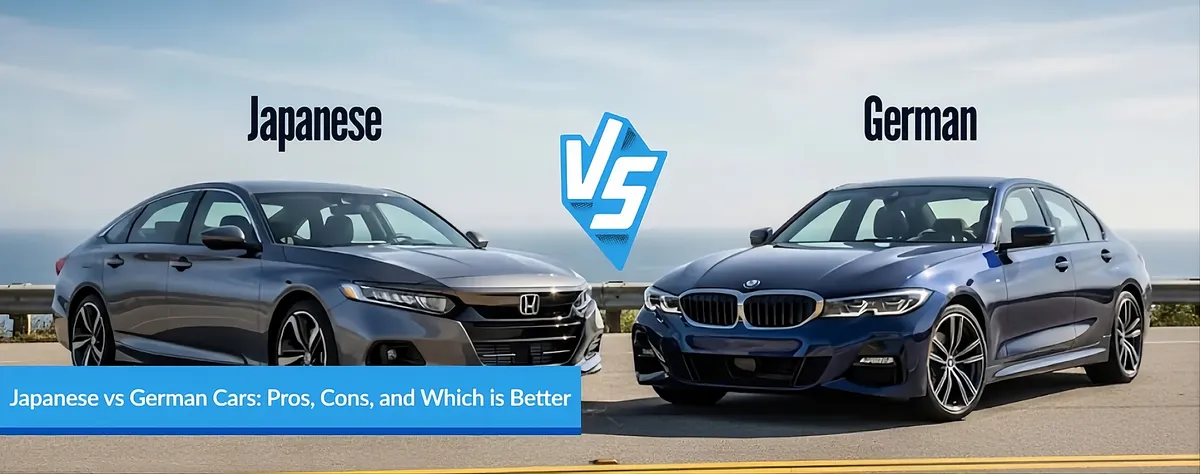
Japanese cars are bulletproof. German cars are money pits after the warranty expires. That's the common wisdom — but how much of it holds up when you look at the actual data?
We scored every Japanese and German vehicle in our database on a 0-100 reliability scale using four weighted factors: complaint severity normalized by sales volume, independent repair cost data, recall impact weighted by severity, and issue diversity across complaint categories. No manufacturer sponsorships, no subjective ratings — just numbers.
Here's how the two automotive giants stack up.
How the AutoReliabilityIndex Works
Every vehicle in our database receives a composite reliability score from 0 to 100, calculated from four weighted data sources:
- Complaint severity (35%) — owner-filed complaints with NHTSA, weighted by component type (engine/powertrain issues count more than cosmetic ones) and normalized by sales volume so high-volume models aren't penalized by sheer scale
- Independent repair cost data (30%) — drawn from repair frequency, cost, and severity data across thousands of service records
- Recall impact (20%) — the number and seriousness of manufacturer-issued safety recalls, with park-it and park-outside recalls weighted more heavily
- Issue diversity (15%) — the breadth of distinct complaint categories, penalizing vehicles with problems across many systems
The index covers 700+ model-years across 20+ brands, spanning 2018 to present. Scores are recalculated as new recall and complaint data is filed with NHTSA, so rankings reflect the latest available information. A score of 80 or above indicates excellent reliability, 60–79 is good, 40–59 is mixed, and below 40 is poor. See our About page for the full methodology.
The Scoreboard
| Brand | Country | Avg Score | Repair Rating (out of 5) | Reliability Tier |
|---|---|---|---|---|
| Lexus (7) | Japan | 81.8 | 4.2 | Excellent |
| Nissan (12) | Japan | 76.6 | 3.8 | Good |
| Mitsubishi (1) | Japan | 75.6 | 4.0 | Good |
| Toyota (19) | Japan | 75.6 | 3.9 | Good |
| Infiniti (1) | Japan | 74.9 | 3.5 | Good |
| Mazda (7) | Japan | 74.7 | 3.4 | Good |
| Acura (5) | Japan | 74.6 | 4.1 | Good |
| Honda (9) | Japan | 74.1 | 4.1 | Good |
| Subaru (8) | Japan | 73.0 | 3.6 | Good |
| Audi (10) | Germany | 67.6 | 3.0 | Good |
| Volkswagen (8) | Germany | 67.1 | 3.1 | Good |
| BMW (11) | Germany | 65.7 | 2.8 | Good |
| Porsche (5) | Germany | 63.6 | 2.2 | Good |
| Mercedes-Benz (10) | Germany | 60.0 | 2.6 | Good |
Japan: 75.7 avg across 69 models
Excellent: 1 · Good: 8· Mixed: 0 · Poor: 0
Germany: 64.8 avg across 44 models
Excellent: 0 · Good: 5· Mixed: 0 · Poor: 0
Japanese automakers lead by roughly 10 points on average — a meaningful gap, though less dramatic than raw perception might suggest. But the averages only tell part of the story. The spread within each group reveals just as much about what you can expect from each country's vehicles.
Japanese: A Consistent Floor
The Japanese group has the highest floor of any country in our database. No Japanese model in the index falls below 60. Even the lowest-scoring Japanese models clear the "good" threshold, which no other country group can claim.
At the top, seven models score 80 or above — placing them in Excellent territory:
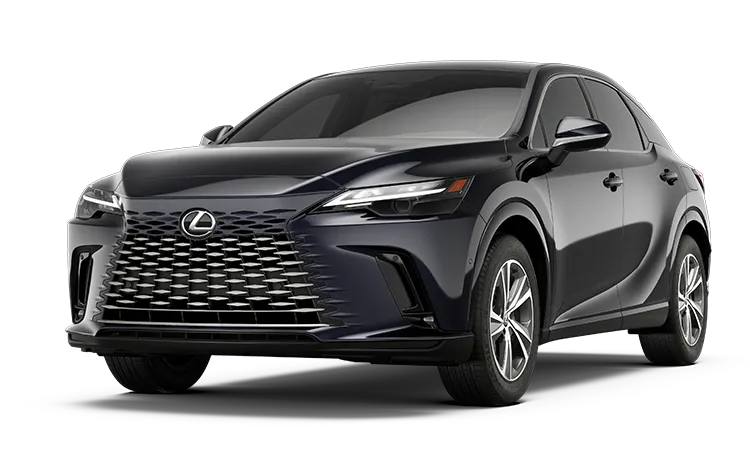
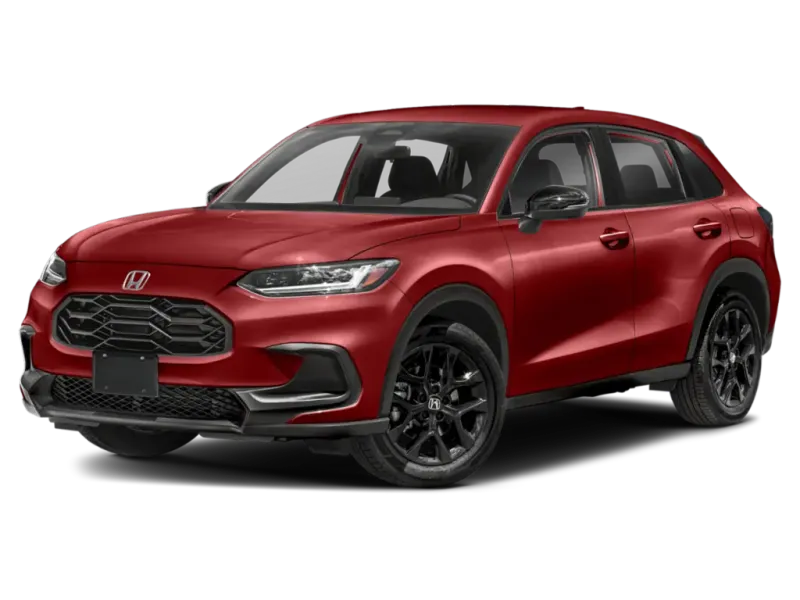
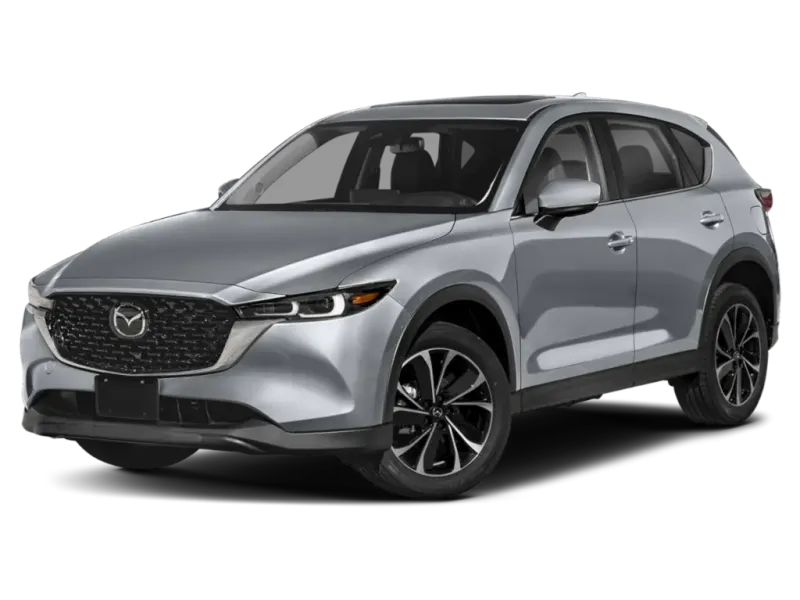
The Lexus RX leads the Japanese lineup with an average of 86.3. Behind it, the Honda HR-V (82.9), Mazda CX-5 (82.6), Toyota Corolla Cross (82.2), and Toyota Corolla (80.9) all score in the Excellent range.
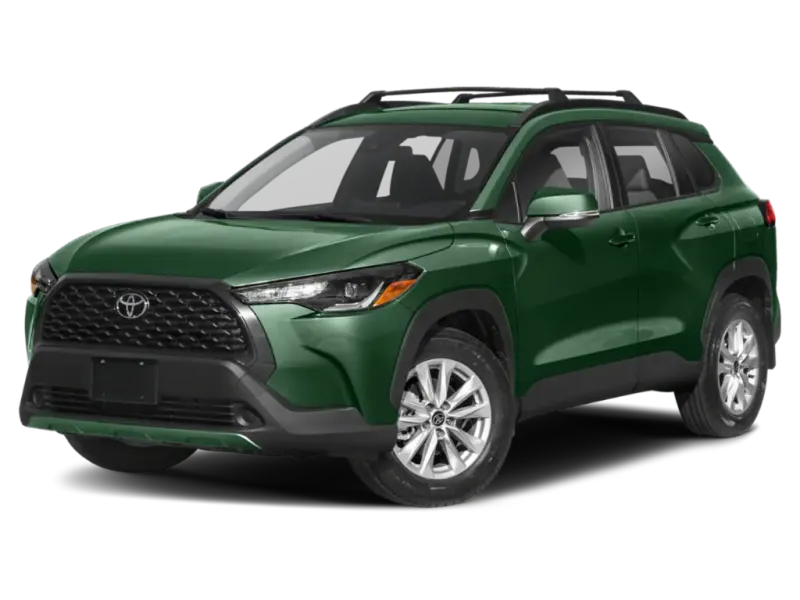
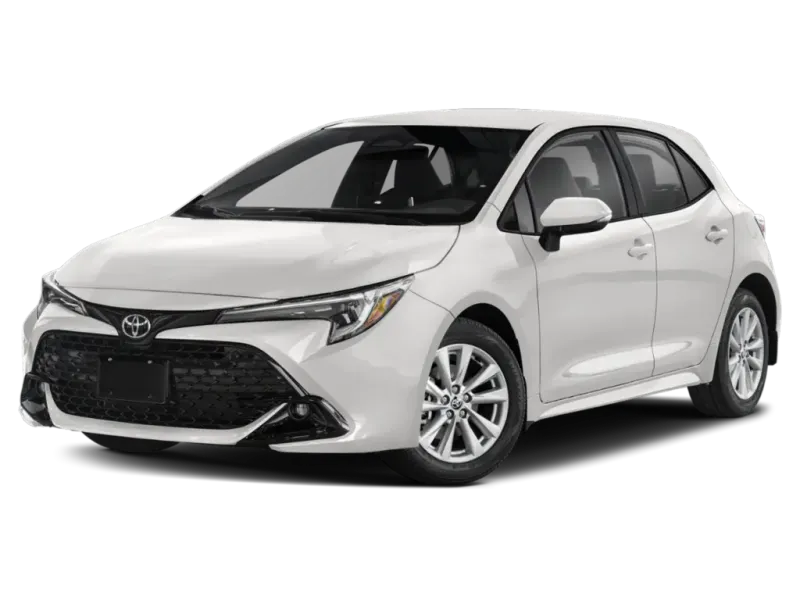
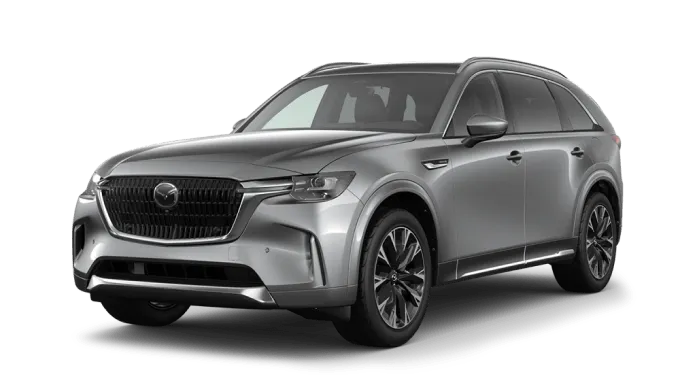
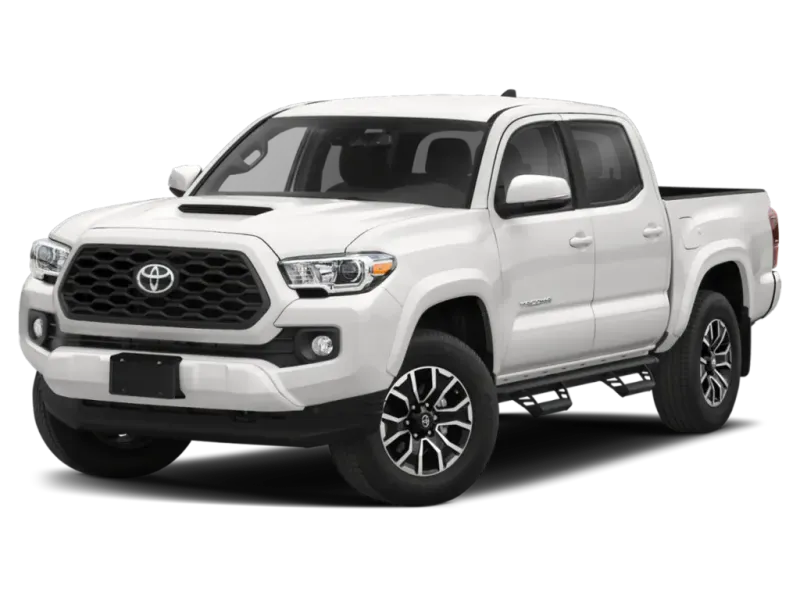
What separates Japanese automakers isn't just the standout models — it's that even the lower tier stays above 60. The Mazda CX-90 (57.7) and Toyota Tacoma (65.2) represent the floor, and both still rate as Good reliability. The Japanese lineup delivers a narrow range of outcomes: you're very unlikely to buy a Japanese vehicle that scores below 60.
German: A Wide Range
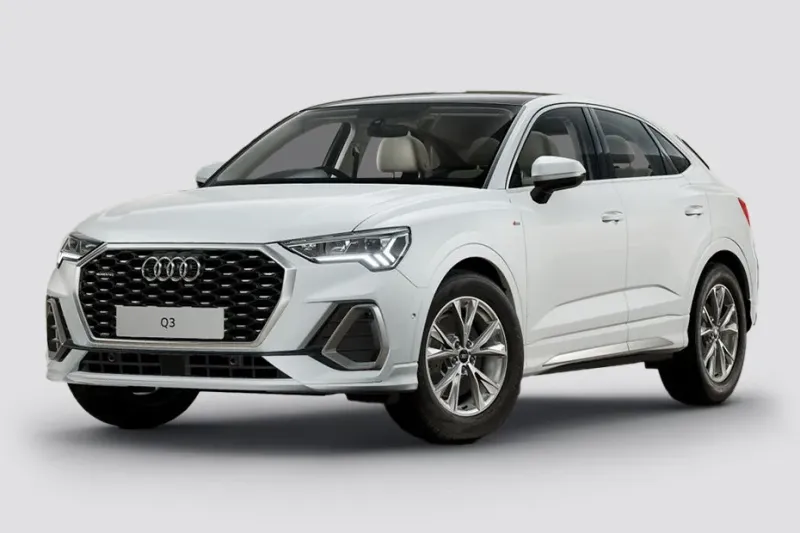
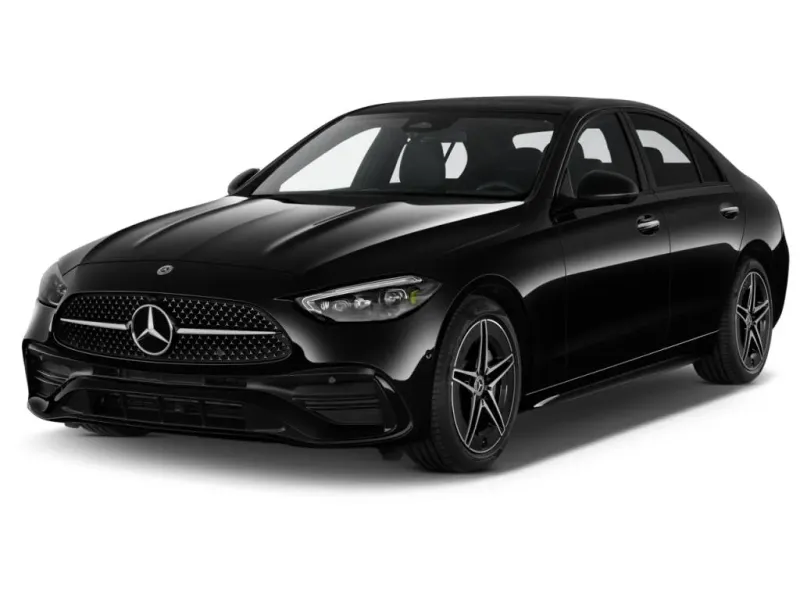
German cars show the widest spread of any group. The Audi Q3 scores 73.9 while the Mercedes-Benz C-Class sits at 55.3. That's a range nearly as wide as the gap between the two countries' averages.
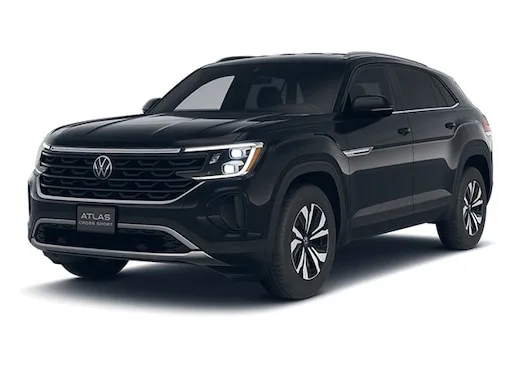
The smaller German models score noticeably higher than the larger ones: the Audi Q3 (73.9), BMW X1 (71.2), and BMW 3 Series (68.9) all break into the upper 60s or 70s. But the larger vehicles — the BMW X5 (59.2), Mercedes-Benz C-Class (55.3), and Volkswagen Atlas (53.8) — pull the group average down.


The pattern is size-dependent: every increase in vehicle size correlates with a drop in reliability score. Larger German SUVs with advanced electronics, air suspensions, and elaborate powertrains accumulate recalls and complaints at rates their compact siblings avoid. The majority of German models cluster in the 60–69 range, with only two breaking above 70.
The BMW X5 averages 59.2 — among the lowest-scoring German models. Its combination of air suspension, complex electronics, and turbo powertrains drives a recall count that averages well above its segment.

Real-World Reliability: Model Examples
Individual model data shows the gap more concretely than brand averages. Here are three Japanese and three German models from the AutoReliabilityIndex rankings.
Japanese
Lexus RX — 86.3 average (Excellent). The highest-scoring Japanese vehicle in the database. Across all indexed model years, the RX maintains a 5.0/5.0 independent repair rating. Complaint counts remain minimal relative to sales volume.
Toyota Corolla — 80.9 average (Excellent). The Corolla scores consistently across generations, with low repair costs and a 4.5/5.0 repair rating. Its powertrain durability keeps complaint rates among the lowest of any sedan in the index.
Honda CR-V — 74.8 average (Good). Honda's best-selling SUV holds a 4.5/5.0 repair rating. It demonstrates that high-volume production doesn't preclude solid reliability — the CR-V's complaint-to-sales ratio stays below the segment average.
German
Audi Q3 — 73.9 average (Good). The highest-scoring German model. The Q3 benefits from relative simplicity — it's Audi's smallest SUV — but its repair rating still falls below even mid-tier Japanese models.
BMW 3 Series — 68.9 average (Good). BMW's core sedan scores in the mid-Good range, with electronics and drivetrain complaints increasing after year 3 of ownership. The 3.0/5.0 repair rating reflects higher-than-average service costs compared to Japanese sedans like the Corolla (80.9) or Civic (78.2).
BMW X5 — 59.2 average (Mixed). Among the lowest-scoring models in the German group. The X5's complexity drives a recall count well above its segment average. Its repair rating masks above-average repair frequency and cost.
The best German model (Audi Q3, 73.9) would place in the bottom half of the Japanese lineup, where the majority of models score above 70.
The Verdict
The AutoReliabilityIndex data reveals a roughly 10-point average gap between Japanese and German vehicles — smaller than the stereotype suggests, but consistent and meaningful. The distribution tells the fuller story: seven Japanese models score 80 or above (Excellent); zero German models do. Zero Japanese models fall below 60; two German models do.
Post-warranty ownership costs diverge accordingly: Japanese brands average higher on independent repair ratings than German brands, indicating materially lower maintenance expenses over a vehicle's lifetime.
The nuance worth noting is that German compact models — the Audi Q3 (73.9), BMW X1 (71.2), and BMW 3 Series (68.9) — score within striking distance of the Japanese average. This suggests that vehicle complexity, not country of origin alone, is a primary reliability driver. Buyers who prefer German engineering can mitigate reliability risk by choosing simpler, smaller models.
The data is clear: Japanese automakers deliver more consistent reliability across their entire lineup, while German brands offer a wider range of outcomes — from competitive to concerning — depending on model size and complexity.
Methodology
Every vehicle is scored 0–100 using four weighted factors: complaint severity normalized by sales volume (35%), independent repair cost data (30%), recall impact weighted by severity (20%), and issue diversity across complaint categories (15%). Scores are recalculated as new data becomes available. See our About page for full methodology details.
Scores represent the data as of the last update. Individual model scores change as new recalls and complaints are filed with NHTSA.